
Traditional German Onion Pie (Zwiebelkuchen): A Savory Autumn Delight
Discover the authentic taste of Germany with our Traditional German Onion Pie (Zwiebelkuchen) recipe! Loaded with smoky bacon and sweet, perfectly caramelized onions, this savory pie is an essential fall bake. It’s ideal for cozy wine nights, effortless family dinners, and vibrant Oktoberfest gatherings.
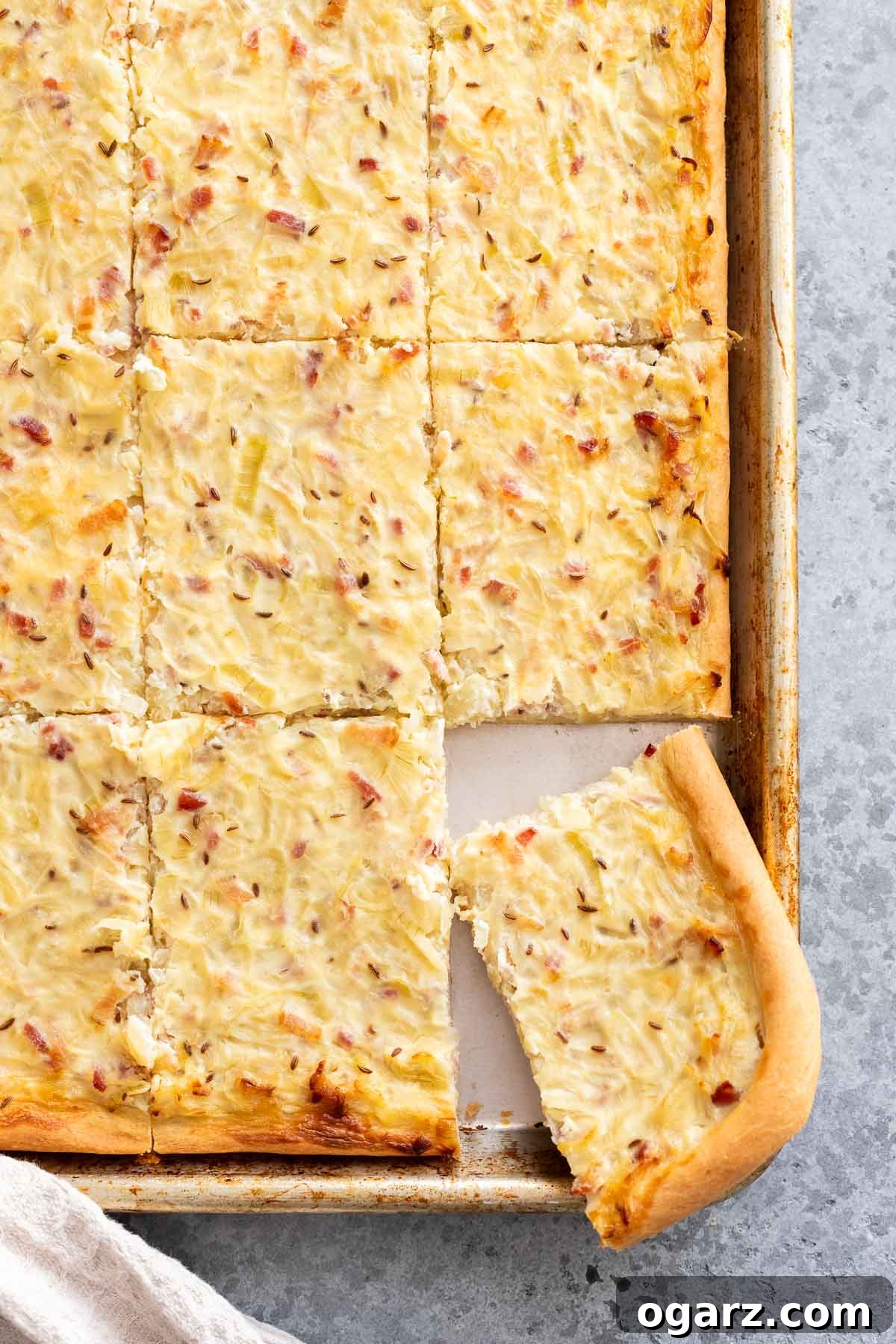
There’s an undeniable magic in a warm, fragrant slice of German Onion Pie, known in Germany as Zwiebelkuchen. Imagine sinking your teeth into layers of tender, sweet caramelized onions, interwoven with crisp, smoky bacon, all resting on a light, fluffy yeast dough base, subtly spiced with a hint of caraway. This isn’t just a meal; it’s a comforting embrace, a culinary journey to the heart of German autumn. It’s the quintessential cozy fall dish you’ll find yourself craving and baking time and again – and yes, it truly shines when paired with a glass of wine, especially a crisp German varietal.
Zwiebelkuchen is a cherished traditional favorite across southern Germany, particularly during the harvest wine festivals. It’s a staple enjoyed warm with “Federweißer,” the young, fermenting white wine that makes its seasonal appearance in late summer and early autumn. While the core concept of an onion pie remains, different regions boast their unique variations. This particular recipe presents a Bavarian-style onion tart, often referred to as Zwiebelplootz in Franconia. Characterized by its generous size, baked on a large baking sheet, it features a tender yeast dough base and a relatively thinner, yet incredibly flavorful, topping compared to its Swabian cousin, which is typically baked in a springform pan with a thicker custard-like filling. Each variation offers a delightful exploration of German regional cuisine, but this Bavarian rendition stands out for its balanced textures and rich, savory depth.
Craving more authentic German flavors for the fall season? Be sure to explore our other delightful German recipes. Try our classic Flammkuchen recipe for another savory tart, indulge in the sweet comfort of German Apple Cake, or savor the seasonal delight of German Plum Cake.
Why You’ll Love This Authentic Zwiebelkuchen Recipe
- Authentically German: Hailing from Bavaria, my deep appreciation for Zwiebelkuchen ensures this recipe is as traditional and genuine as it gets. It embodies the true flavors and spirit of this beloved German classic.
- Surprisingly Easy to Make: Despite its impressive appearance and rich flavor, this Zwiebelkuchen recipe is straightforward to prepare, making it perfect for feeding a crowd or enjoying a relaxed meal at home. It’s delicious served lukewarm, equally wonderful cold, and reheats beautifully for convenient leftovers.
- Simple, Accessible Ingredients: You won’t need to hunt for exotic items. All the ingredients are readily available at any standard grocery store. In fact, you likely already have most of them in your pantry, making this a fuss-free baking project.
Essential Ingredients for Your Zwiebelkuchen
Creating the perfect German Onion Pie starts with selecting the right ingredients. Here’s a detailed overview of what you’ll need, along with helpful tips and potential substitutions. For precise quantities, please refer to the full recipe instructions below.
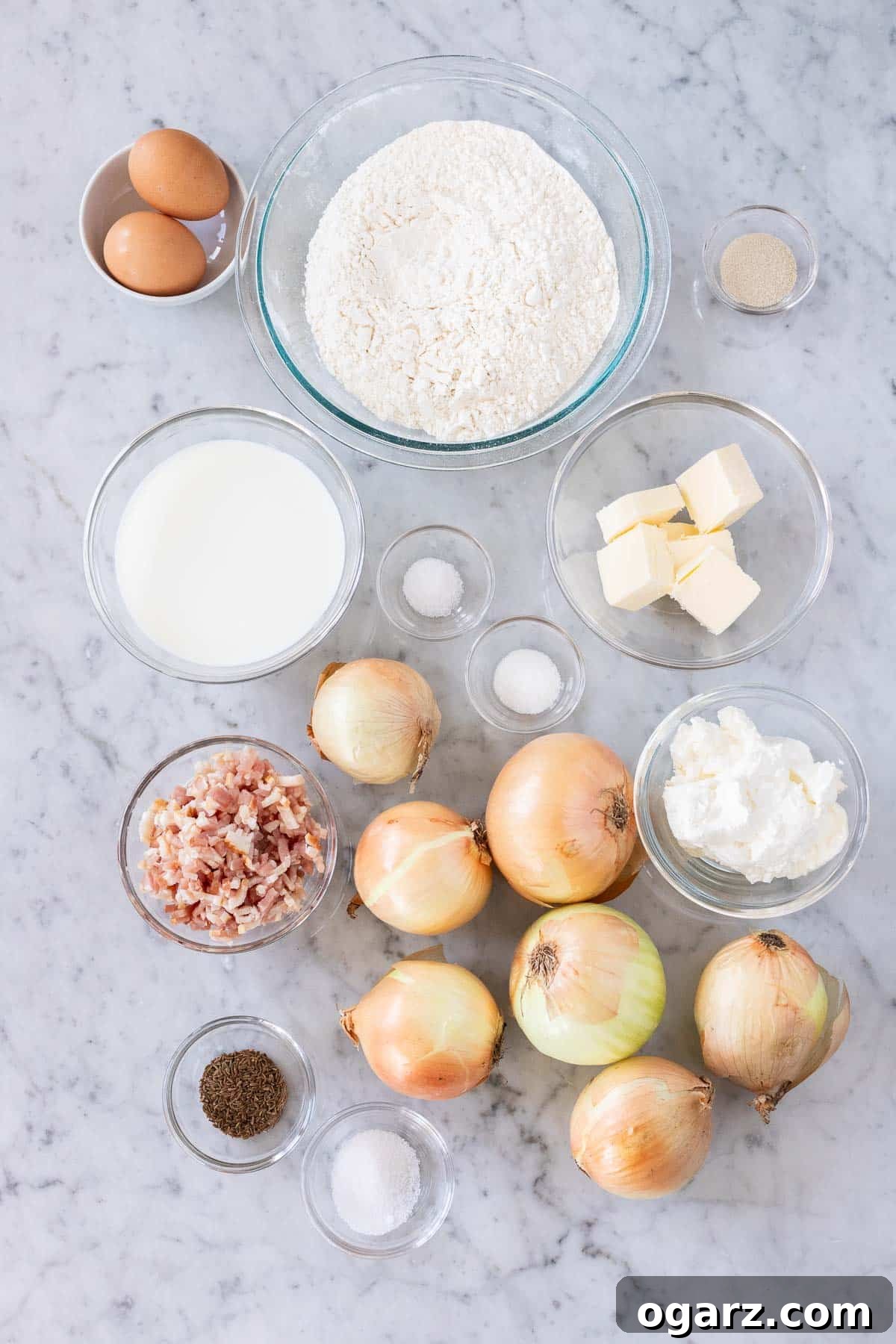
- Milk: Crucial for activating the yeast and creating a tender dough. Ensure your milk is just lukewarm, not hot, to avoid killing the yeast. Around 105-115°F (40-46°C) is ideal.
- Yeast: We use instant dry yeast for convenience. It doesn’t require proofing beforehand, making the dough preparation quicker and simpler. Active dry yeast can also be used, but may require a short proofing period with a pinch of sugar in the lukewarm milk.
- Flour: All-purpose flour provides the perfect texture for the yeast dough—light yet sturdy enough to hold the savory topping. For accuracy in baking, I highly recommend using a kitchen scale and switching to metric measurements if available, as flour can be easily over-measured by volume.
- Butter: Unsalted butter is preferred as it gives you control over the overall saltiness of the dish. Make sure the butter is softened, but not melted or liquid, to properly incorporate into the dough and achieve that rich, tender crumb.
- Onions: Yellow onions are the traditional choice for Zwiebelkuchen due to their balanced sweetness when caramelized. White onions or sweeter varieties like Vidalia can also be used, offering a slightly milder flavor profile. The key is to dice them finely for even cooking and distribution.
- Bacon: Thick-cut bacon adds an incredible depth of smoky, savory flavor and a delightful texture to the onion topping. It’s traditionally cut into small lardons or diced. For a vegetarian version, simply omit the bacon and use a knob of butter or a neutral oil to sauté the onions, ensuring they still caramelize beautifully.
- Sour Cream: This forms the creamy, tangy base of our topping, binding the onions and eggs together. While American sour cream is slightly different from German Saure Sahne, it serves as an excellent, readily available substitute that maintains the authentic taste and consistency of this dish.
- Eggs: Eggs are essential for thickening the onion topping, creating a custardy texture that sets beautifully during baking and complements the soft onions.
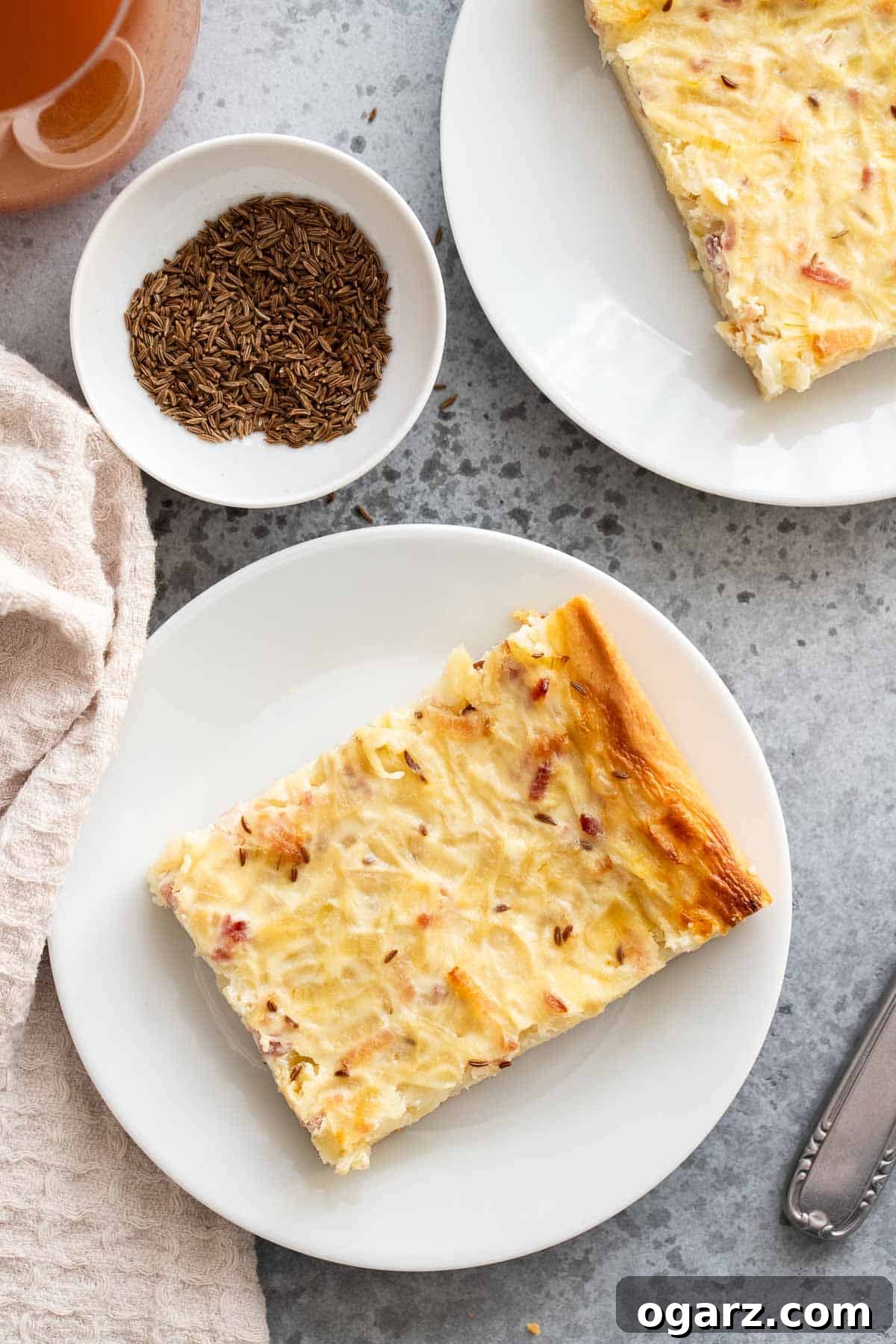
- Caraway Seeds: This spice is the secret ingredient that truly defines Zwiebelkuchen. Caraway seeds impart a unique, aromatic, and slightly peppery flavor that is central to the traditional taste of this German pie. Do not skip them if you want an authentic experience!
Expert Tips for a Perfect German Onion Pie
- Master the Caramelization: This is arguably the most crucial step for incredible flavor. Cook the finely diced onions over a medium-low heat. This gentle heat allows the onions to slowly soften, release their natural sugars, and caramelize beautifully without burning. This patient process typically takes about 20 minutes, yielding sweet, deeply flavorful onions that are the soul of Zwiebelkuchen. Don’t rush it!
- Don’t Skip Dough Resting: Yeast dough requires time to rise fully. Allowing the dough to rest in a warm spot until it doubles in size is vital. This fermentation process develops flavor and creates a light, airy, and tender crust that is characteristic of traditional Zwiebelkuchen. A well-risen dough provides the perfect foundation for the rich topping.
- Cool the Onion Mixture Before Mixing with Eggs: After caramelizing the onions and bacon, it’s important to let the mixture cool down for several minutes before adding it to the sour cream and eggs. Introducing hot onions to the egg mixture can prematurely cook or scramble the eggs, leading to an undesirable texture in the filling. A lukewarm or room-temperature onion mixture ensures a smooth, custardy topping.
- Bake Until Golden Perfection: Monitor your Zwiebelkuchen as it bakes. You want the topping to achieve a lovely light golden-brown hue and for the filling to be completely set in the center. A wobbly center indicates it needs more time. The golden crust will be an indicator of rich flavor development.
- Allow for Resting Time Post-Baking: Just like many baked goods, Zwiebelkuchen benefits from a short resting period after it comes out of the oven. Letting the pie cool for a few minutes allows the topping to fully set, making it much easier to cut into clean slices. More importantly, this brief rest allows the complex flavors to meld and deepen, enhancing the overall taste experience.
How to Make Authentic German Onion Pie: Step-by-Step
Crafting Zwiebelkuchen is a delightful process, combining simple ingredients into a dish bursting with flavor. Follow these detailed steps to create a truly authentic German Onion Pie.

1. Prepare the Yeast Dough:
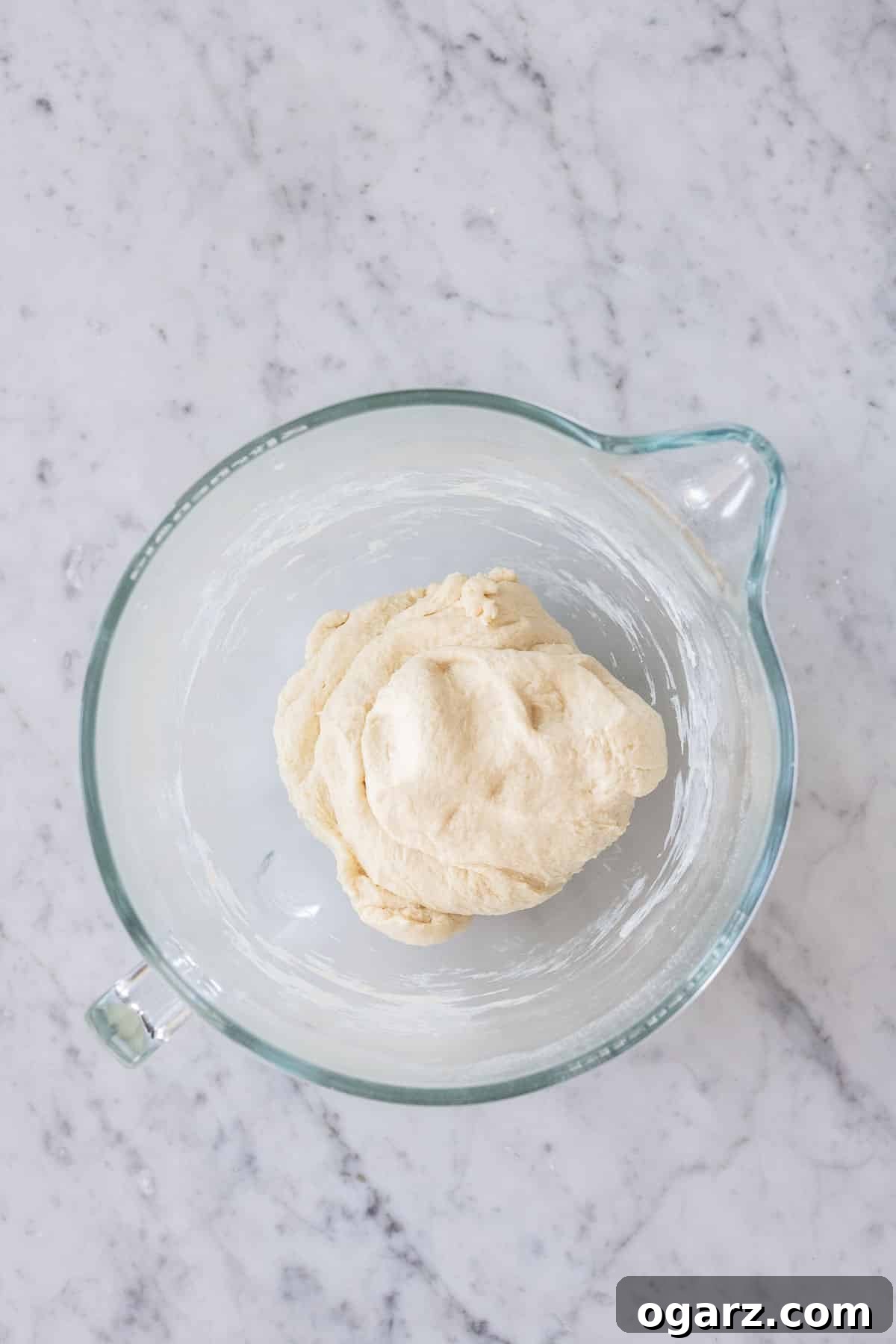
- In the bowl of a stand mixer fitted with a dough hook, combine the lukewarm milk, instant dry yeast, all-purpose flour, optional sugar, salt, and softened unsalted butter. Begin kneading on low speed, then increase to medium, continuing for about 5 minutes until a soft, pliable dough forms that pulls away from the sides of the bowl.
- Carefully transfer the dough to a lightly floured surface and knead by hand for one additional minute, just to ensure it’s smooth and elastic.
- Lightly grease a clean large bowl with a tiny bit of oil or butter. Place the dough in the bowl, turning it once to coat lightly. Cover the bowl with plastic wrap or a clean kitchen towel and let it rest in a warm, draft-free spot for approximately 40 minutes, or until the dough has visibly doubled in size. This rising time is crucial for a light and airy crust.


2. Cook the Onion Topping:
- While the dough is rising, prepare your savory topping. In a large skillet or frying pan, cook the finely diced bacon over medium heat until it is crispy and has rendered its fat. Remove the cooked bacon with a slotted spoon and set aside, reserving some of the bacon fat in the skillet.
- Add the finely diced yellow onions to the skillet with the reserved bacon fat (or a tablespoon of butter/oil if making vegetarian). Reduce the heat to medium-low and let the onions slowly caramelize. Stir occasionally, allowing them to soften, become translucent, and then gently turn a beautiful golden brown. This process should take about 20 minutes, coaxing out their natural sweetness without burning.
- Once caramelized, remove the onion mixture from the heat and allow it to cool for several minutes. This step is crucial to prevent the eggs from cooking prematurely when added.
3. Mix the Filling:
- In a separate medium-sized bowl, whisk together the sour cream, eggs, salt, and caraway seeds until well combined. The caraway seeds will infuse the filling with their distinctive German aroma.
- Once the cooked onion mixture has cooled, add it to the sour cream and egg mixture. Stir thoroughly to ensure all ingredients are evenly distributed and coated, creating a rich, uniform filling.
4. Assemble and Bake the Zwiebelkuchen:
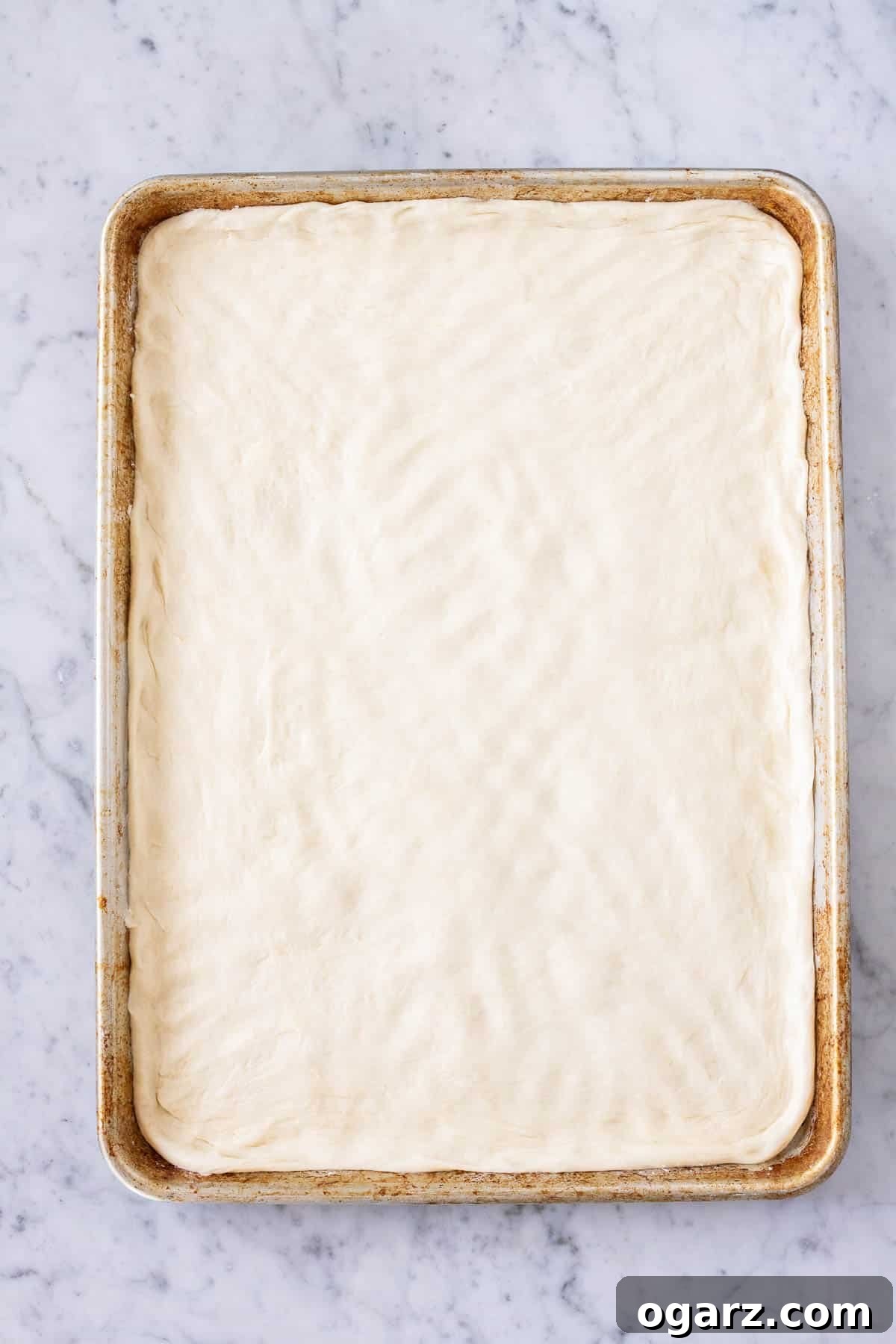
- Grease an 18×13-inch baking sheet thoroughly. Once your yeast dough has risen, punch it down gently to release the air. Transfer the dough to the prepared baking sheet.
- Using floured hands, carefully spread the dough evenly across the entire baking sheet, aiming for a thickness of about 1/2 inch. You can let the dough rest for another 10-15 minutes on the baking sheet to relax and rise slightly more while you preheat your oven.
- Preheat your oven to 390°F (200°C).
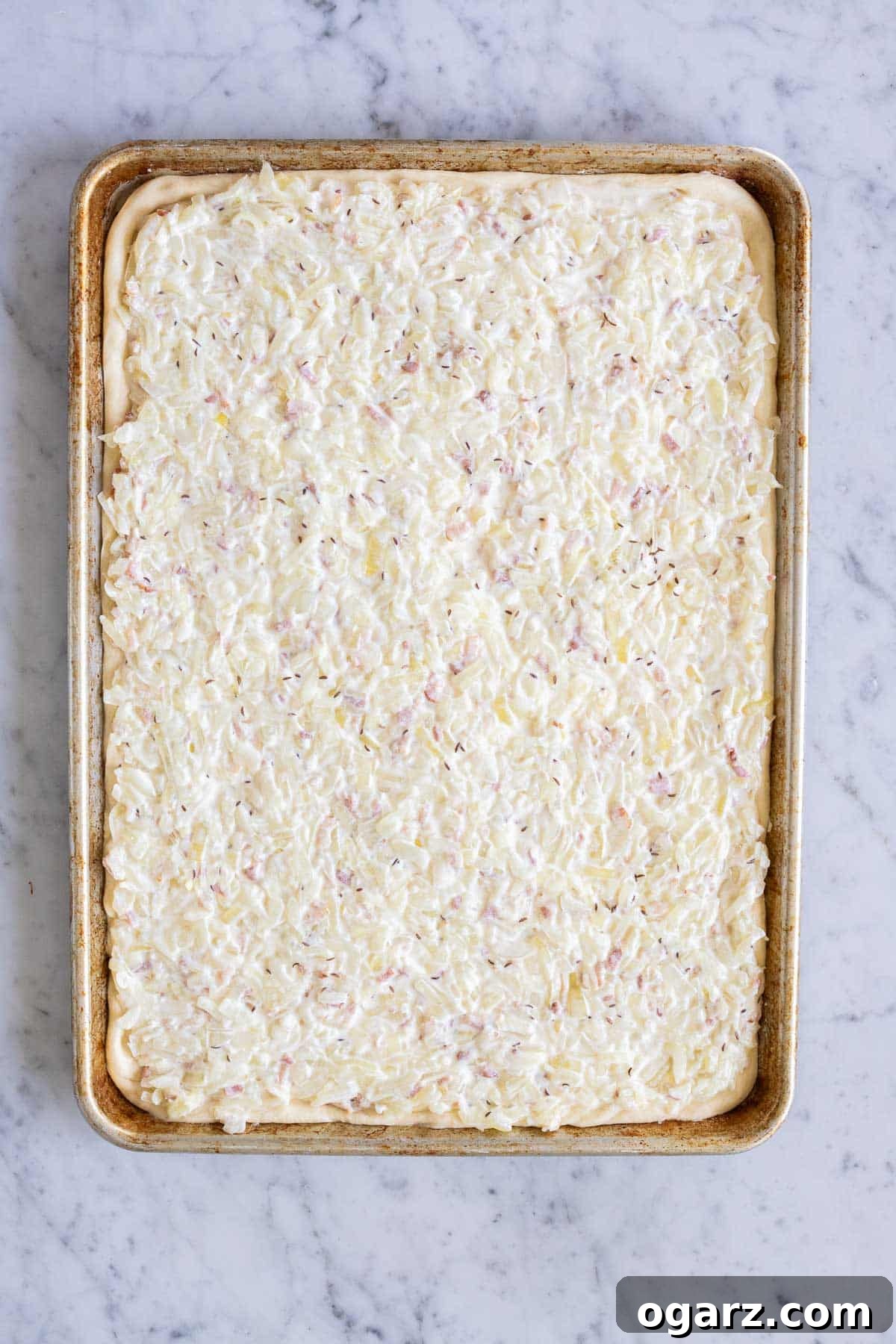
- Pour the onion-egg mixture (along with the reserved crispy bacon, if using) evenly over the spread-out yeast dough. Ensure the topping is distributed from edge to edge.
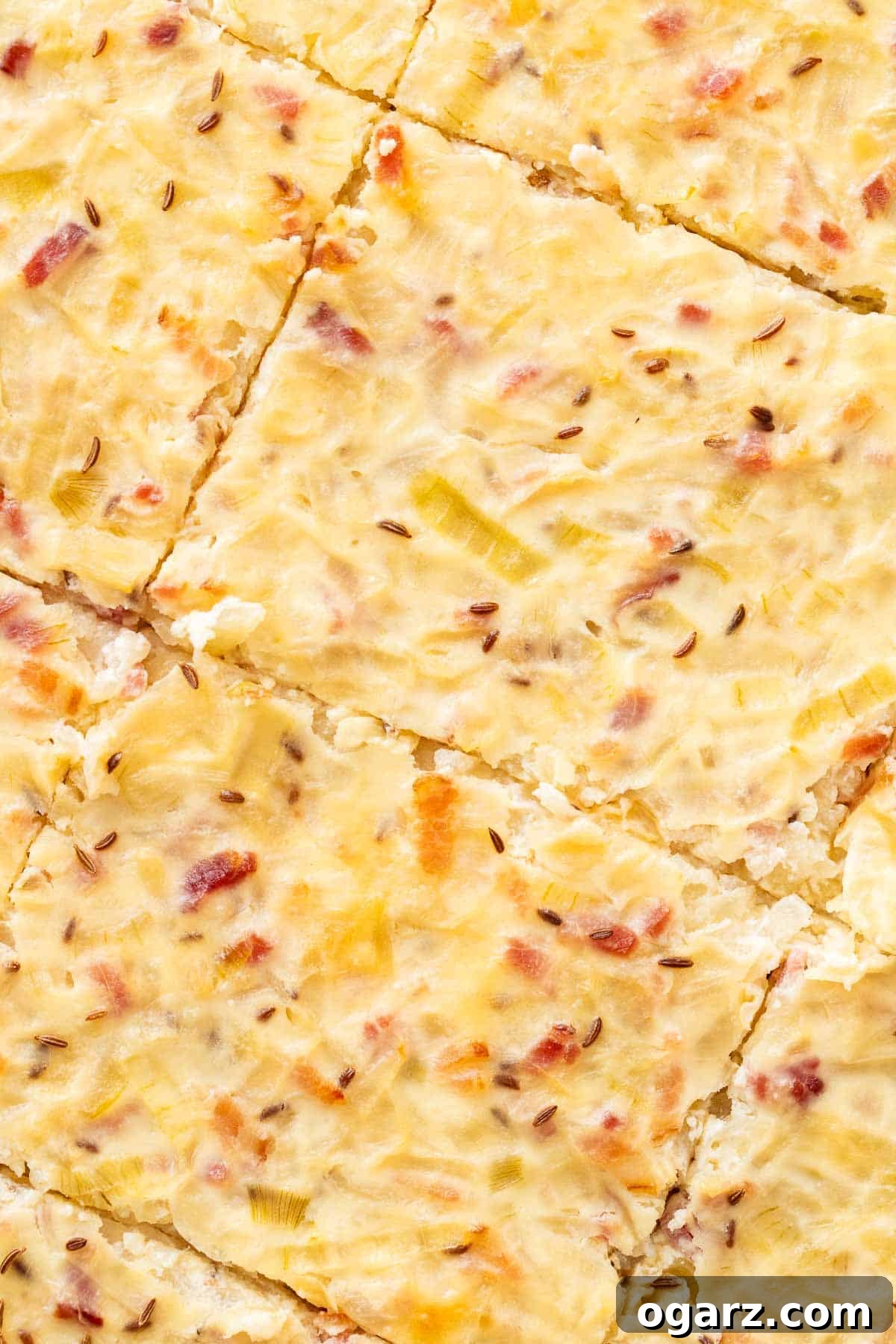
- Bake in the middle rack of the preheated oven for 35-40 minutes, or until the top is beautifully light golden brown and the filling is completely set and no longer wobbly in the center.
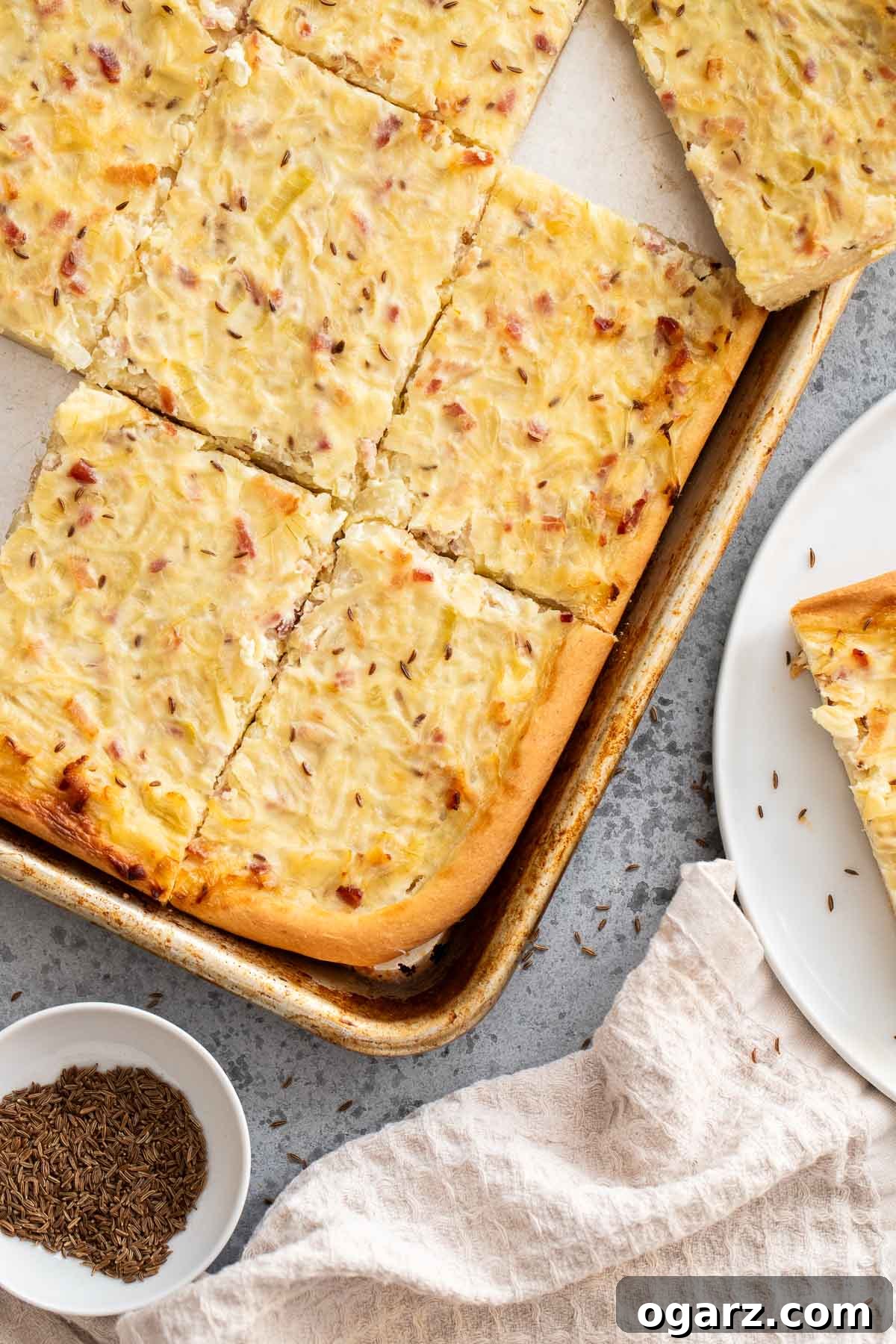
- Once baked, remove the Zwiebelkuchen from the oven and let it cool on the baking sheet for a few minutes before slicing and serving. This allows the flavors to settle and the pie to cut more cleanly. This savory tart truly tastes its best when enjoyed lukewarm.
Serving Your Delicious Zwiebelkuchen
Zwiebelkuchen is a versatile dish that fits many occasions. Here are some traditional and complementary serving suggestions to enhance your culinary experience:
- Optimal Temperature: For the most authentic and delightful experience, Zwiebelkuchen truly tastes its best while it’s still lukewarm, allowing the textures of the tender dough and creamy, flavorful topping to shine.
- Perfect Sidekick: Serve this rich pie with a simple, refreshing green salad dressed with a light vinaigrette to cut through the richness. Our German Cucumber Salad (Gurkensalat) also makes an excellent, traditional accompaniment with its tangy dill dressing.
- Traditional Pairings: In Germany, Zwiebelkuchen is inextricably linked with Federweißer, the young, partially fermented white wine available only during harvest season. If Federweißer isn’t available, a glass of semi-dry Riesling is a superb choice, as its crisp acidity and subtle sweetness perfectly complement the savory onions and bacon. Other light-bodied white wines, such as a dry Silvaner or Müller-Thurgau, would also be excellent.
- Occasion Versatility: This savory pie is wonderfully adaptable for various meals. Enjoy it as a hearty lunch, a comforting dinner, a unique brunch item, or a delightful centerpiece for wine nights and especially Oktoberfest gatherings. For an authentic Oktoberfest spread, consider pairing it with homemade Bavarian Pretzels and some good German beer!
Storage and Make-Ahead Tips
Zwiebelkuchen is a dish that, while best fresh, can be prepared in advance or enjoyed as leftovers with great success.
Make-Ahead: While the pie is truly at its peak when served lukewarm shortly after baking, you can certainly prepare Zwiebelkuchen a few hours ahead of time. It tastes delicious served cold, or you can gently reheat it in the oven just before serving to bring back its warmth and some of its fresh-baked appeal.
Storing Leftovers: Any leftover Zwiebelkuchen should be stored in an airtight container in the refrigerator. It will keep well for about 3 days. The pie maintains its delicious flavor whether enjoyed cold directly from the fridge or warmed up. For the best texture when reheating, use an oven at a moderate temperature until heated through. A microwave can also be used for quick reheating, but the crust might not be as crisp.
Freezing Instructions: Zwiebelkuchen freezes exceptionally well, making it a fantastic make-ahead option. Allow the pie to cool completely after baking. Then, cut it into individual slices or larger portions and wrap each piece tightly in plastic wrap, followed by a layer of aluminum foil to prevent freezer burn. Store the wrapped slices in a freezer-safe bag or container. It can be frozen for up to 2-3 months. To enjoy, thaw overnight in the refrigerator, then warm in a preheated oven until hot and slightly crisp.
Explore More Authentic German Recipes
German Recipes
German Onion Pie
Cakes
Black Forest Cake
Main Dishes
Flammkuchen
Sides & Salads
Wurstsalat
Recipe Summary: German Onion Pie (Zwiebelkuchen)
By: Julia Foerster
Traditional German Onion Pie (Zwiebelkuchen) is loaded with bacon and sweet, caramelized onions! A savory, easy fall bake for wine nights, easy dinners, and Oktoberfest gatherings.
- Prep Time: 30 minutes
- Cook Time: 35 minutes
- Resting Time: 40 minutes
- Total Time: 1 hour 45 minutes
- Servings: 20 slices
Ingredients for the Yeast Dough:
- 1 cup milk, lukewarm
- 2 teaspoons instant dry yeast
- 3 cups all-purpose flour
- 1 teaspoon sugar (optional, helps activate yeast)
- ½ teaspoon salt
- 6 tablespoons unsalted butter, softened
Ingredients for the Onion Topping:
- 2 ½ lbs yellow onions, finely diced
- 5 slices bacon, finely diced (omit for vegetarian)
- ¾ cup sour cream
- 2 eggs
- 1 teaspoon salt
- 1 teaspoon caraway seeds
Nutrition Facts (per slice, approximately):
- Calories: 177 kcal
- Carbohydrates: 21g
- Protein: 5g
- Fat: 8g
- Saturated Fat: 4g
- Polyunsaturated Fat: 1g
- Monounsaturated Fat: 3g
- Trans Fat: 0.1g
- Cholesterol: 36mg
- Sodium: 228mg
- Potassium: 154mg
- Fiber: 2g
- Sugar: 4g
- Vitamin A: 206 IU
- Vitamin C: 4mg
- Calcium: 44mg
- Iron: 1mg