
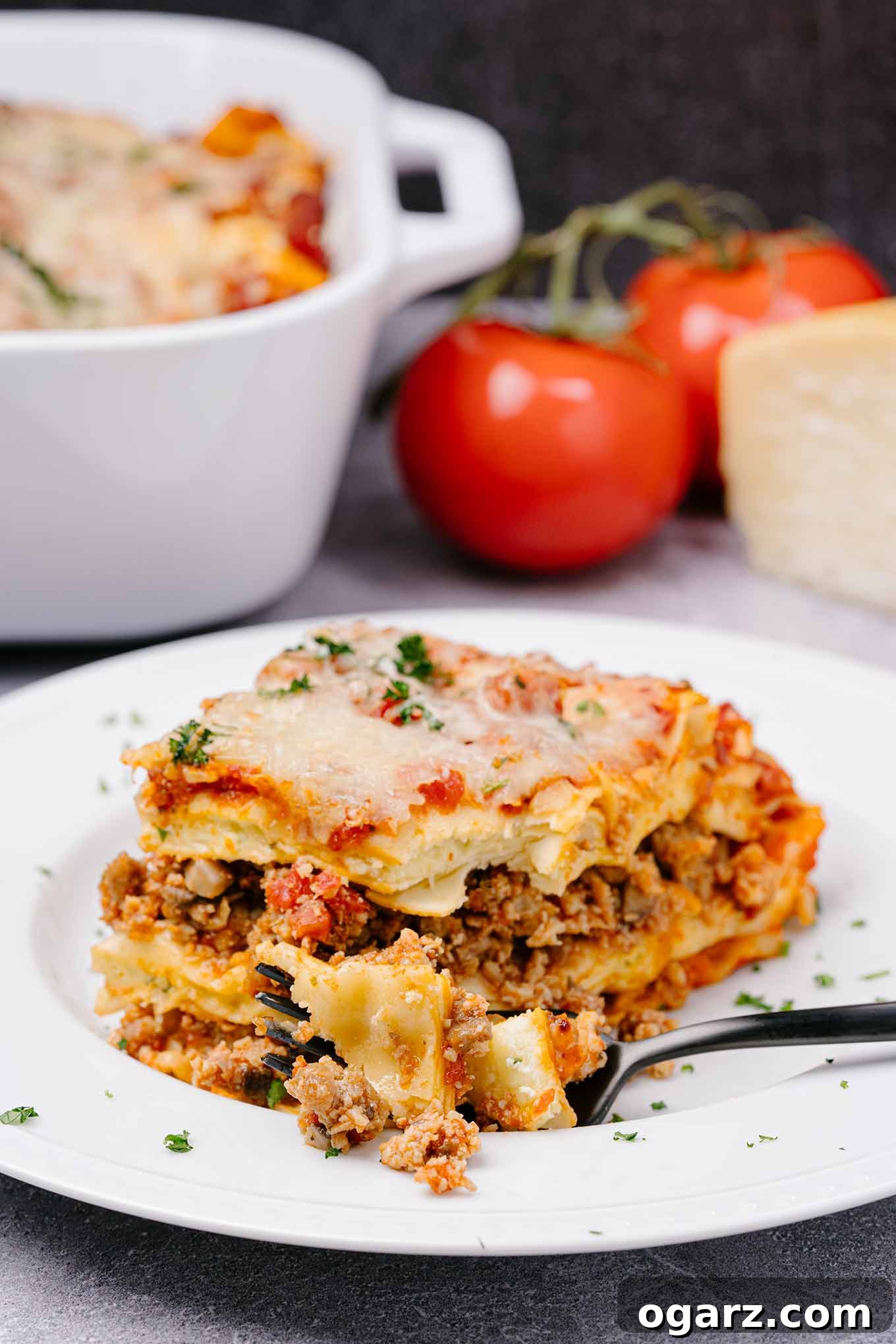
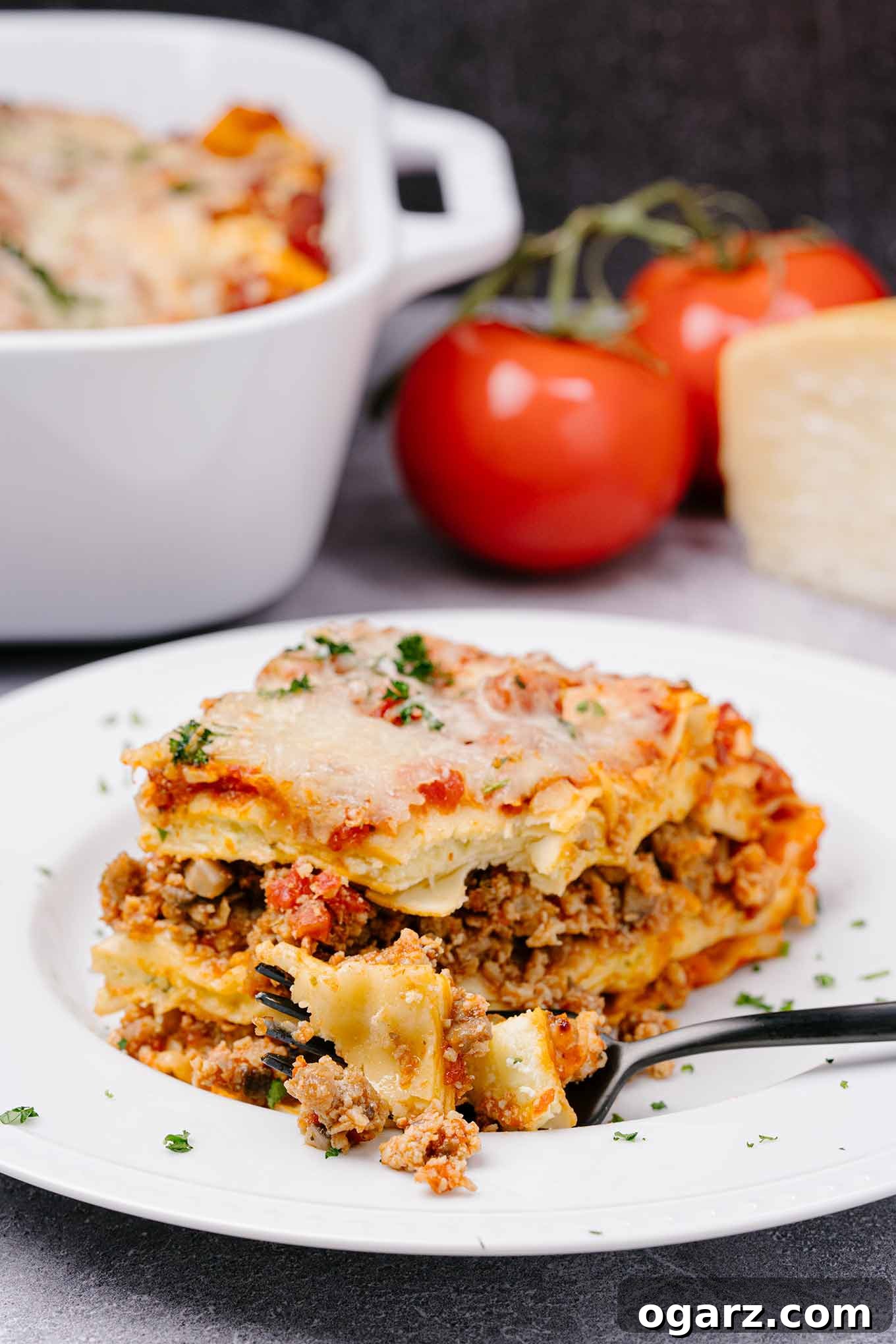
Savoring a Lighter, Fresher Sausage Lasagna Experience
Lasagna, the quintessential Italian comfort food, is beloved for its rich layers of pasta, meat, and cheese. However, traditional versions can often feel heavy and indulgent. Our signature sausage lasagna recipe presents a delightful modern twist, delivering all the classic flavors you adore in a lighter, fresher package. Crafted with a thoughtful combination of crumbled Italian sausage, lean ground meat, sautéed cremini mushrooms, a quartet of premium cheeses, and a vibrant homemade marinara sauce, this dish consistently garners rave reviews from family and friends alike. It’s a sophisticated yet approachable take on a timeless classic, designed to be both satisfying and surprisingly light.
The secret to our lasagna’s fresh taste and less dense texture lies primarily in our meticulous selection of ingredients, rather than overly complicated cooking techniques. While we do offer a few expert tips to enhance your culinary journey, the emphasis is on quality components that contribute to a brighter, more balanced flavor profile.
Admittedly, preparing homemade lasagna is not a quick endeavor that can be whipped up in minutes. Yet, it is remarkably straightforward and accessible for cooks of all skill levels. This makes it an ideal choice for a make-ahead meal, perfect for elegant entertaining or a cherished Sunday dinner with loved ones. Beyond its immediate appeal, this sausage lasagna is a fantastic “cook once, eat twice (or more)” meal. It freezes exceptionally well, allowing you to enjoy delicious leftovers that reheat beautifully, bringing a taste of Italy to your table whenever the craving strikes.
Crafting Perfection: Essential Ingredients for Our Sausage Lasagna
Understanding the role of each ingredient is key to mastering this exquisite sausage lasagna. Our choices are deliberate, aiming for a harmonious balance of flavor and a lighter overall dish. Here’s a detailed look at the core components and potential substitutions:
- Oven-Ready (No-Boil) Lasagna Noodles: These thin, delicate pasta sheets are a true game-changer. Beyond being incredible time-savers by eliminating the need for pre-boiling, they offer a taste and texture remarkably similar to freshly made pasta. Their slender profile contributes significantly to the lighter feel of our lasagna, preventing the dish from becoming overly dense or bready.
- Italian Chicken (or Turkey) Sausage: To maintain the desired lighter taste and texture, our preferred choice is sweet Italian chicken sausage. It provides all the robust, aromatic flavor of traditional Italian sausage without the heaviness. However, if you have a preference or can’t find chicken sausage, classic Italian pork sausage can be used. The dish will be slightly richer, but still incredibly delicious.
- Ground Chicken (or Turkey): We strategically combine our Italian sausage with lean ground chicken to keep the meat layers light and flavorful. For those who prefer alternatives, a mix of pork sausage and ground beef or pork can be substituted. This will result in a richer meat layer and a slightly heavier overall dish, but the flavors will remain exceptional.
- Cremini (Baby Portobello) Mushrooms: Sautéed mushrooms introduce a wonderful earthy umami flavor and a satisfying texture to the meat mixture. Cremini mushrooms are our top pick for their depth of flavor. White button mushrooms can be substituted, though they are milder. If mushrooms aren’t to your taste, feel free to omit them entirely without compromising the core integrity of the dish.
- Ricotta Cheese: This creamy, fresh cheese forms the heart of our luscious filling. We’ve experimented with both part-skim and whole milk ricotta, finding that the whole milk version yields a notably smoother and more luxurious texture. Both options will work beautifully, so choose based on your personal preference for richness.
- Asiago Cheese: A semi-soft cow’s milk cheese, Asiago adds a distinct nutty flavor and a subtle sharpness to the ricotta filling. For the best texture and melt, select a version aged for less than six months. Brands like BelGioioso, often found in many supermarkets, are excellent choices and regularly feature in our kitchen.
- Mozzarella Cheese: Finely shredded mozzarella is essential for that classic gooey, melty texture. We strategically scatter it over each meat layer and generously on top of the lasagna during the final minutes of baking to achieve a perfect golden-brown crust.
- Parmesan Cheese: With its bold, sharp, and intensely savory umami profile, shredded Parmesan is incorporated into both the ricotta filling and sprinkled over the finished lasagna. It acts as a flavor enhancer, harmonizing the various cheese notes and bringing a complex depth to the entire dish. For superior flavor and texture, we highly recommend grating fresh Parmesan, as pre-grated varieties can often be dry and grainy.
- Fresh Basil: Fresh basil is a star in this recipe, lending a bright, herbaceous note and a touch of vibrant color to both the ricotta filling and the homemade marinara sauce. If fresh basil is unavailable, fresh parsley can be a good substitute, or a smaller quantity (about one-third) of dried basil can be used.
- Marinara Sauce: Our recipe includes a versatile homemade marinara sauce, which yields approximately six to seven cups. You might have some left over, but that’s a bonus! It keeps well in the refrigerator for 4-5 days and freezes beautifully, making it perfect for other Italian dishes throughout the week. Using homemade marinara ensures optimal freshness and flavor control, elevating the entire lasagna.
Mastering the Art of Sausage Lasagna: A Step-by-Step Guide
Creating this delicious sausage lasagna involves several distinct stages, each contributing to the final, unforgettable flavor. While we provide a comprehensive overview here, detailed measurements, ingredients, and precise timing are available in the recipe section below.
Crafting the Marinara Sauce: The Heart of Your Lasagna
A truly great lasagna starts with an exceptional marinara sauce. Our homemade version is fresh, vibrant, and packed with authentic Italian flavors:
- In a spacious frying pan, heat the olive oil over medium heat. Add the finely chopped onion and sauté gently until it becomes soft and wonderfully translucent, typically taking 4 to 6 minutes. Introduce the minced garlic and continue cooking for another 2 minutes, stirring constantly to prevent any browning, until the garlic is fragrant and lightly golden.
- Carefully add the canned peeled plum tomatoes along with their liquid into the pan. Using a sturdy wooden spoon, break the tomatoes into smaller pieces, allowing them to release their juices. Bring this mixture to a gentle simmer and let it cook for approximately five minutes, stirring occasionally. This crucial step allows the various flavors to meld and deepen, forming a robust base for your sauce.
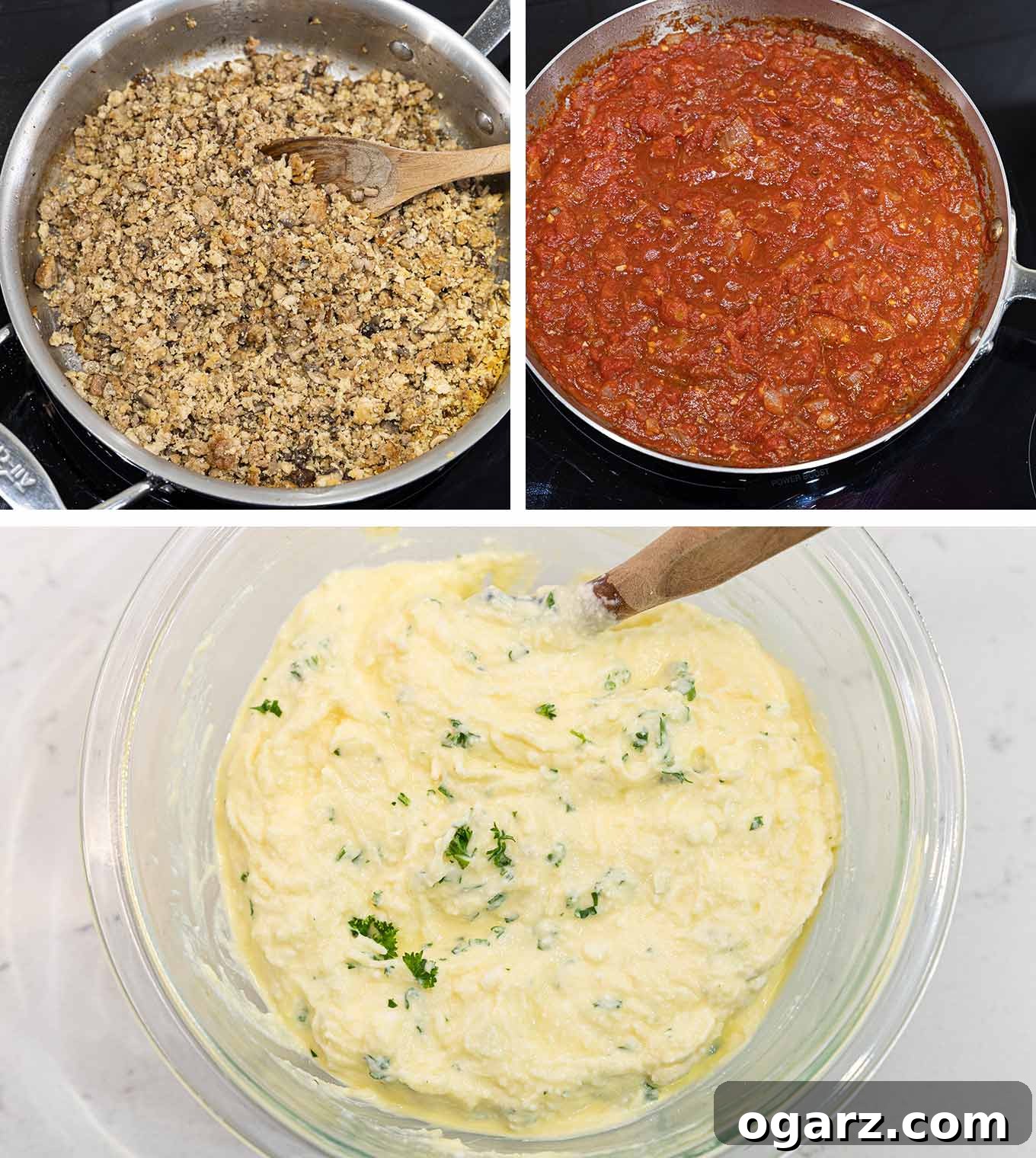
- Season the simmering sauce generously to taste with salt and freshly ground black pepper. Stir in a pinch of dried oregano for an aromatic lift. Continue to simmer the sauce for an additional 8 to 12 minutes, or until it has achieved a slightly thickened consistency. Taste and adjust the seasoning one last time if necessary, then fold in the freshly chopped parsley and basil. Transfer this aromatic marinara to a separate bowl and set aside to cool slightly.
Preparing the Rich and Flavorful Meat Sauce
The meat sauce provides a savory counterpoint to the creamy cheese and delicate pasta. Here’s how to build its complex flavors:
- Lightly coat the bottom of a large frying pan with olive oil and place it over medium heat on your stove.
- Carefully remove the Italian sausage from its casing and add it to the heated pan. As the sausage begins to sizzle, use a wooden spoon to break it apart into small, uniform crumbles. Next, add the ground meat and continue to break up the entire mixture as finely as possible while it cooks. This ensures an even distribution of meat throughout the lasagna and contributes to its lighter texture.
- Increase the heat to medium-high. Add the diced onion, chopped cremini mushrooms, and minced garlic to the pan with the meat mixture.
- Continue cooking, stirring frequently, until the entire meat mixture is lightly browned, a process that should take about 12 to 15 minutes. This browning develops deep, rich flavors.
- Spoon approximately half of your freshly prepared marinara sauce into the browned meat mixture. Stir thoroughly to combine all ingredients. Reduce the heat to medium-low and allow the sauce to simmer for about 10 minutes, stirring occasionally. This simmering period is essential for the flavors to fully blend and harmonize. Remove the pan from the heat and allow the meat sauce to cool for at least 10 minutes before you begin assembling the lasagna.
Crafting the Creamy Cheese Filling
This luscious ricotta filling provides the creamy, tangy counterpoint that makes lasagna so irresistible:
- In a large mixing bowl, combine the ricotta cheese, lightly beaten eggs, a pinch of salt, and a dash of freshly ground black pepper. Using an electric mixer set to medium speed, beat the mixture until it becomes wonderfully light and fluffy. This aeration contributes to the overall lighter texture of the lasagna. Gently fold in the grated Asiago, mozzarella, and Parmesan cheeses, along with the fresh chopped basil. Set this rich cheese filling aside.
Assembling Your Masterpiece: Layering the Lasagna
Now comes the exciting part – bringing all the prepared components together into a magnificent lasagna! Patience and careful layering are key here:
- Begin by preheating your oven to 350°F (175°C). Thoroughly coat a deep lasagna pan (approximately 13″ x 9-1/2″ x 3″) with nonstick cooking spray. Pour about half of a standard can of plain tomato sauce into the bottom of the pan and gently tilt the pan back and forth to ensure an even coating. This layer helps prevent the first set of noodles from sticking and adds moisture.
- Carefully arrange four of the no-boil lasagna noodles in the bottom of the pan, overlapping them slightly to fit snugly. Top this noodle layer with half of your prepared meat sauce, gently spreading it evenly over the noodles with a spatula. Be mindful not to dislodge the noodles as you spread.
- Scatter approximately 1/4 cup of the finely shredded mozzarella cheese evenly over the meat layer. Next, add another layer of no-boil noodles. On top of these noodles, spread about half of your creamy cheese mixture, ensuring it’s evenly distributed. Leave a small border, approximately 1/2 inch from the edges all around, as the cheese will expand slightly during baking.
- Add a third layer of noodles, then top with the remaining meat sauce. Scatter another 1/4 cup of shredded mozzarella over the meat. Finish with four more noodles and the remaining cheese mixture, spreading it as you did on the prior cheese layer, maintaining the slight border.
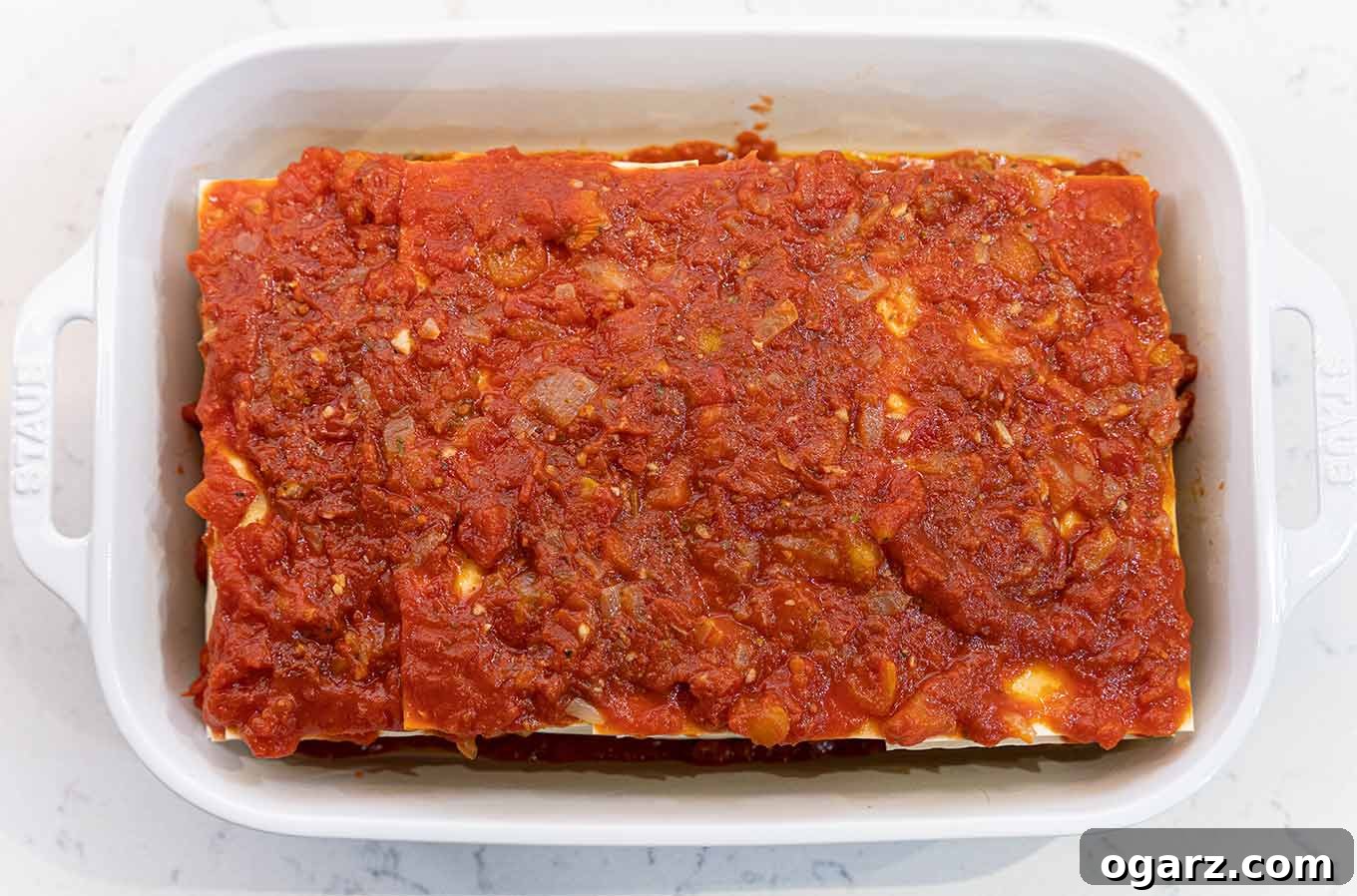
- For the grand finale, add one more layer of noodles on top. Lightly coat these top noodles with some of the marinara sauce. To ensure no noodles dry out during baking, spoon the remainder of the plain tomato sauce around the edges of the lasagna, covering any bare portions of the pasta sheets. This thoughtful detail contributes to a perfectly moist and tender lasagna throughout.
Baking Your Lasagna to Golden Perfection
The final step is to bake your lasagna until it’s bubbly, golden, and utterly irresistible:
- Tear off a piece of heavy-duty aluminum foil large enough to completely cover your lasagna pan. Lightly coat one side of the foil with nonstick cooking spray. Carefully crimp the edges of the foil around the pan to form a tight seal, but try to leave a slight airspace between the foil and the top of the lasagna. This prevents the cheese from sticking to the foil during baking. Place the covered lasagna in your preheated oven and bake for one hour.
- To test your lasagna for perfect doneness, carefully remove it from the oven and gently pierce the center with a thin paring knife. If the noodles are tender and cooked through, your knife should meet no resistance. The internal temperature should ideally register between 160° to 165°F (71° to 74°C).
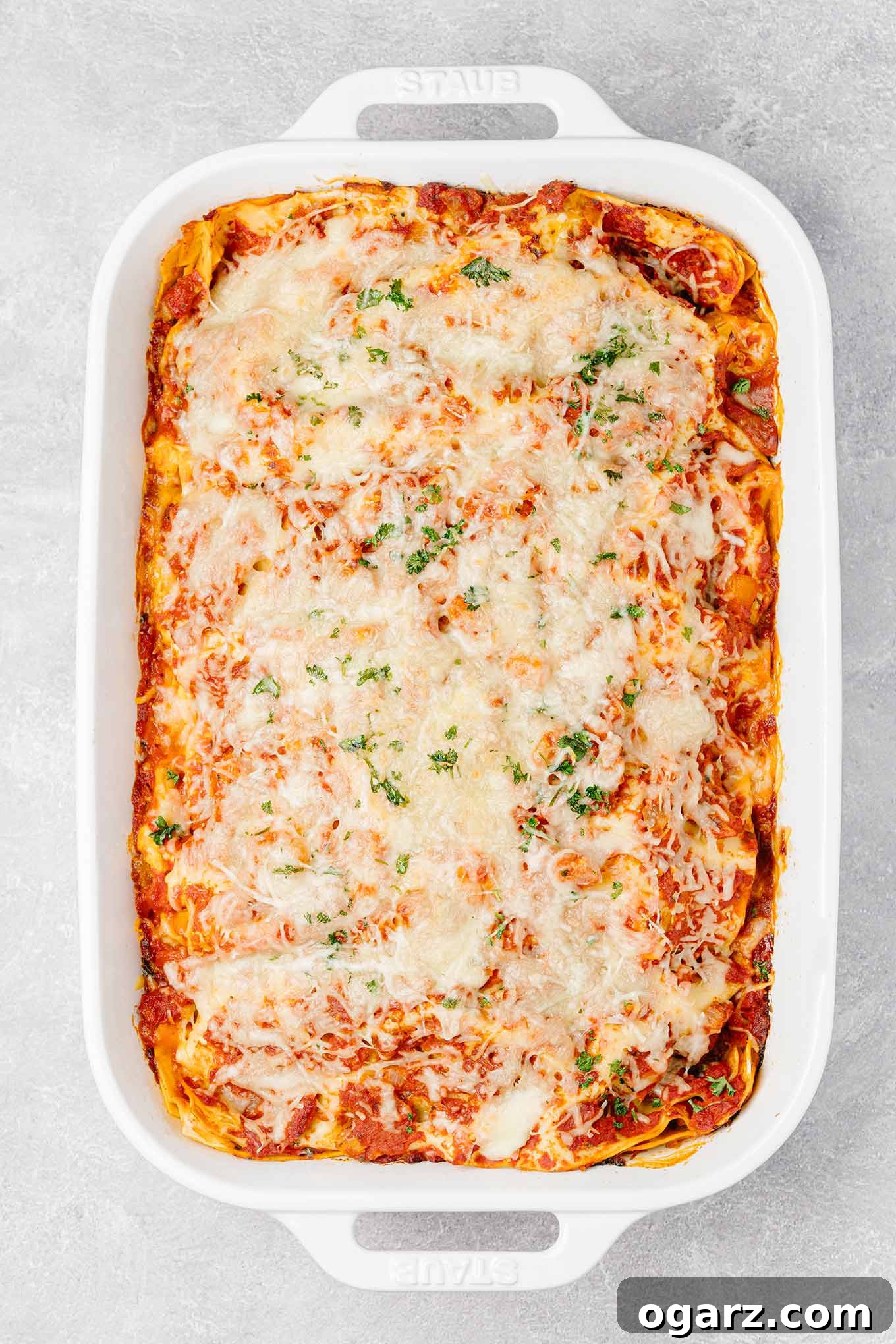
- Once the lasagna is cooked, remove it from the oven and carefully uncover it. Generously sprinkle the top with additional grated Parmesan and grated mozzarella cheese. Return the lasagna to the oven for a few more minutes, just until the newly added cheese has melted into a beautiful, golden, bubbling crust.
- This final step is crucial: allow the baked lasagna to rest for at least 15 minutes before attempting to cut and serve. This resting period allows the layers to set and the juices to redistribute, ensuring clean, intact slices and preventing the lasagna from falling apart when served.
Essential Tips for Lasagna Success
Achieving a flawless homemade sausage lasagna is simpler with these expert tips:
- Select the Right Lasagna Pan: The dimensions of your pan significantly impact the final dish. Standard deep lasagna pans measure approximately 13″ x 9-1/2″ x 3″, representing the edge-to-edge measurements of the upper rim. Be aware that some pans may taper slightly inward, creating a small gap between your noodles and the pan’s edge at the top. This is precisely why we recommend spooning a little extra plain tomato sauce around the bare noodle edges – it acts as a moistener, preventing those exposed pasta portions from drying out during baking and ensuring every bite is tender.
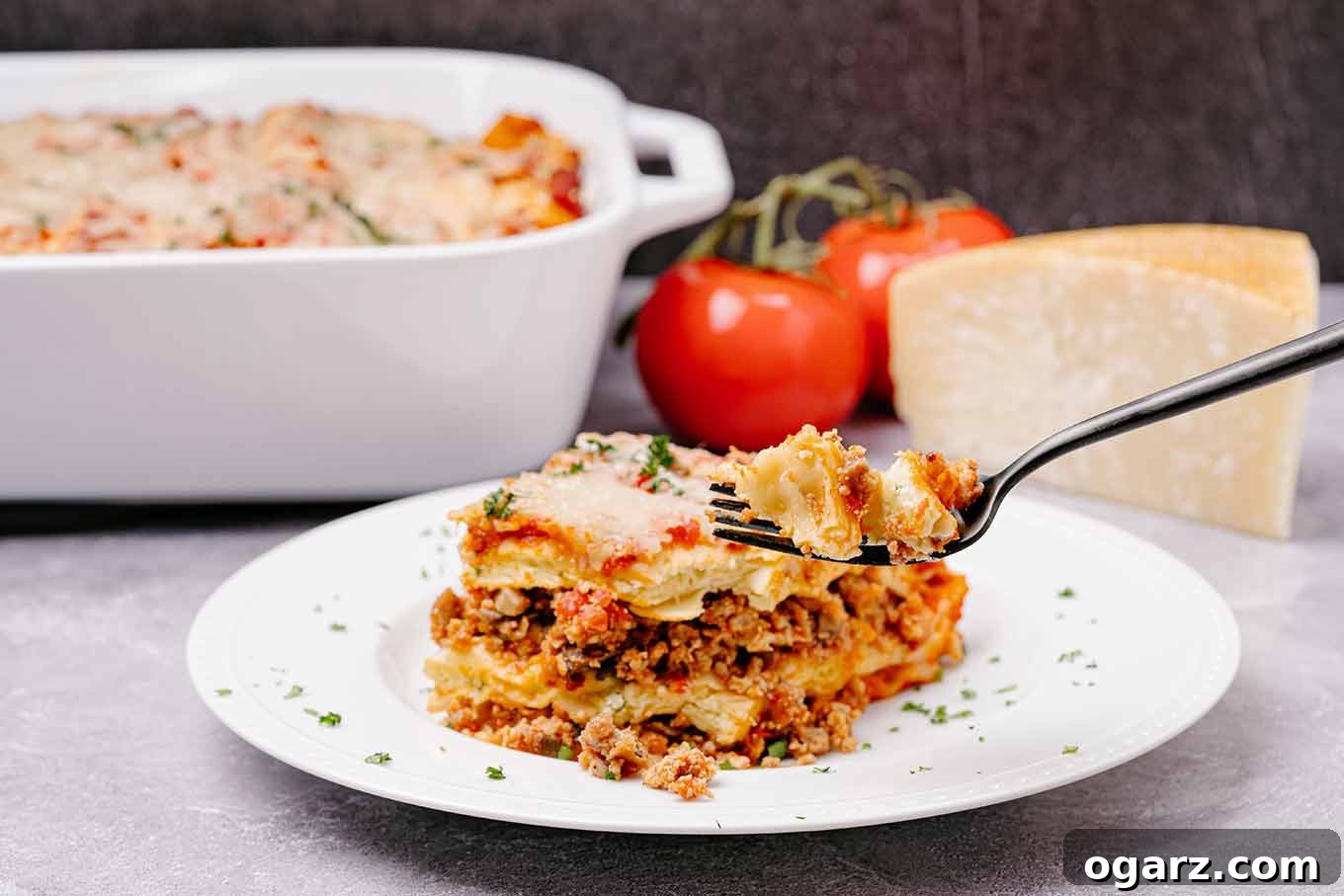
- Achieve a Fine Meat Texture: The texture of your meat sauce plays a crucial role in the overall “lighter” consistency of this lasagna. Strive to break up the Italian sausage and ground meat as finely as possible while browning. A fine, crumbly texture allows for more even distribution throughout the layers, integrates seamlessly with the sauce and cheese, and makes for cleaner cuts and a more appealing presentation when serving.
- Whip Your Ricotta and Eggs: For an exceptionally light and airy cheese filling, employ an electric mixer to beat the ricotta cheese and eggs until they are light and fluffy. This aeration introduces tiny air pockets, resulting in a creamier, less dense filling. Additionally, opting for whole milk ricotta will further enhance the creamy richness of your cheese layers.
- Embrace No-Boil Lasagna Noodles: Always choose oven-ready (no-boil) lasagna noodles. These thin, delicate pasta sheets not only save considerable preparation time but also contribute directly to the dish’s light and flavorful character. They absorb moisture from the sauce during baking, cooking to a perfect al dente texture without making the lasagna heavy.
- Start with a Meat Layer: When assembling your lasagna, always begin with a layer of meat sauce (over the initial tomato sauce base) before adding your first layer of cheese filling. Placing a cheese layer directly on the bottom can lead to it becoming overly compressed under the weight of the subsequent layers, resulting in a less desirable texture. The meat layer provides a sturdy foundation for the layers that follow.
Planning Ahead: Make-Ahead Lasagna Instructions
One of the many benefits of this sausage lasagna recipe is its suitability for make-ahead preparation, offering ultimate convenience for busy schedules or upcoming events. To prepare your lasagna in advance without baking it immediately, ensure that both the meat sauce and the marinara sauce have cooled completely to room temperature before you begin assembling the layers. Once fully assembled, tightly cover the lasagna pan with two layers of plastic wrap to prevent freezer burn or drying. You can then either freeze the lasagna for up to 2 months or refrigerate it for up to 2 days. If frozen, remember to thaw the lasagna in the refrigerator for a full 24 hours before baking. When ready, simply bake the lasagna according to the original recipe instructions, adding perhaps an extra 10-15 minutes to account for its chilled state.
Preserving the Flavor: Storing Leftover Lasagna
Proper storage is essential to maintain the quality and safety of your delicious leftover lasagna. Always allow the lasagna to cool down to room temperature before transferring it to the refrigerator or freezer.
- Refrigerated Storage: If you anticipate enjoying your leftover lasagna within 4 days, securely wrap it in heavy-duty aluminum foil or transfer it to an airtight container. Place it in the coldest section of your refrigerator to ensure maximum freshness and inhibit bacterial growth.
- Frozen Storage: For longer preservation, wrap individual portions or the entire leftover lasagna tightly in several layers of aluminum foil. Then, place the foil-wrapped lasagna into a zip-top freezer bag, squeezing out as much air as possible, or an airtight freezer-safe container. Properly stored, it will maintain its quality for up to 3 months. For best results, thaw frozen lasagna overnight in the refrigerator before reheating.
Reheating Your Lasagna to Perfection
Reheating lasagna successfully ensures that every bite is as delicious as when it was first served. During refrigeration or freezing, some of the moisture in your leftover lasagna will naturally be absorbed by the pasta and cheese. Therefore, it’s always a wise idea to have a little extra marinara sauce on hand to prevent dryness during reheating.
To reheat, place the covered lasagna in a preheated 350°F (175°C) oven. The reheating time will vary depending on the portion size, typically ranging from 40 minutes to 1 hour. Approximately halfway through the baking time, check the lasagna to see if any portions appear dry. If so, spoon a little extra sauce over those areas and return it to the oven. Once thoroughly heated, allow the reheated lasagna to rest for about 10 minutes before serving. This resting period allows the flavors to settle and prevents the filling from spilling out when cut.
Ensuring Optimal Internal Temperature: Naturally, you want to serve your lasagna piping hot and ready to enjoy. For precision, use an instant-read digital thermometer to check the internal temperature of the center. An ideal reading of 160° to 165°F (71° to 74°C) indicates that it’s perfectly heated. Remember, the temperature will slightly drop as the lasagna rests before you cut into its delightful layers.
Elevate Your Meal: Pairing Suggestions for Sausage Lasagna
While a crisp green salad tossed with a simple vinaigrette is an obvious and always welcome companion to rich lasagna, consider these additional suggestions to create a truly unforgettable Italian feast:
- Spinach Stuffed Mushrooms: A savory appetizer that introduces another layer of umami and fresh flavors, perfectly complementing the lasagna.
- Prosciutto Wrapped Melon: This elegant appetizer offers a refreshing sweet and salty contrast, acting as a wonderful palate cleanser before the main course.
- Italian Green Beans With Pancetta and Garlic: A flavorful and slightly rustic side dish that brings vibrant color and a garlicky, savory crunch to balance the creamy lasagna.
- Sweet Pepper, Mushroom, and Onion Medley: This sautéed vegetable medley adds sweetness, earthiness, and a tender texture, providing a delightful accompaniment to the hearty pasta.
- Italian Ricotta Cookies: A light, citrus-infused dessert that perfectly rounds off a rich Italian meal without being overly heavy.
Beverage Pairings: For a classic Italian dining experience, robust red wines are an excellent choice. Consider pairing your sausage lasagna with traditional Italian varietals such as Chianti, Valpolicella, or Barbera, which offer the acidity and fruit notes to cut through the richness of the dish. Alternatively, a smooth Pinot Noir also makes for a delightful and approachable pairing.
Sausage Lasagna
Lynne Webb
55 mins
1 hr 15 mins
2 hrs 10 mins
10
servings
Ingredients
For the marinara sauce:
- 1/4 cup olive oil
- 3/4 cup chopped onion
- 8 cloves garlic, minced
- 2 cans peeled plum tomatoes (28 ounces each), undrained
- 1 teaspoon dried oregano
- 2 tablespoons fresh parsley, chopped
- 2 tablespoons fresh basil, chopped
- Salt and freshly ground black pepper to taste
For the meat sauce:
- 2 tablespoons olive oil
- 1 lb sweet Italian chicken, turkey, or pork sausage
- 1 lb ground chicken, turkey, pork, or beef
- 3 cloves garlic, minced
- 1/2 cup onion, diced
- 8 ounces cremini (baby portobello) mushrooms, chopped
- Salt and freshly ground black pepper to taste
For the ricotta filling:
- 2 eggs, lightly beaten
- 2-3/4 cups ricotta cheese (1-1/2 containers, 15 ounces each)
- 1-1/2 cups finely shredded mozzarella cheese (6 ounces)
- 1/2 cup grated asiago cheese
- 1/2 cup grated Parmesan cheese
- 1/4 cup chopped fresh basil (or parsley)
- Freshly ground black pepper to taste
For the assembly:
- 20 oven-ready (no-boil) lasagna noodles (1-1/2 packages)
- 1 cup tomato sauce (plain)
- 1/2 cup finely shredded mozzarella cheese (for topping)
- 1/2 cup grated Parmesan cheese (for topping)
Instructions
Make the marinara sauce:
-
Heat the olive oil in a large frying pan over medium heat. Sauté the chopped onion for 4 to 6 minutes, until soft and translucent. Add the minced garlic and continue cooking for 2 minutes longer, stirring constantly until fragrant and golden (prevent browning).
-
Add the tomatoes along with their liquid, breaking them up with a wooden spoon. Bring to a slow simmer and cook, stirring occasionally, for about 5 minutes to allow flavors to blend.
-
Season to taste with salt and freshly ground black pepper, add the dried oregano, then simmer until slightly thickened (10 to 14 minutes). Adjust seasoning, then stir in chopped parsley and basil. Transfer to a bowl, set aside, and wipe out the pan.
Prepare the meat sauce:
-
Coat the bottom of the frying pan with olive oil and place over medium heat.
-
Remove sausage from casing and add to the pan, breaking it up with a wooden spoon as it sizzles. Add ground meat and continue breaking the mixture up to as fine a texture as possible.
-
Increase heat to medium-high and add diced onion, chopped mushrooms, and minced garlic. Continue cooking until the entire mixture is lightly browned (12 to 15 minutes total).
-
Spoon about half of the prepared marinara sauce into the meat mixture. Combine and cook over medium-low heat for about 10 minutes, stirring occasionally. Remove from heat and let cool for another 10 minutes before assembling.
Prepare the cheese filling:
-
Add ricotta cheese, eggs, salt, and pepper to a mixing bowl. Using an electric mixer on medium speed, beat until light and fluffy. Gently fold in the asiago, mozzarella, Parmesan cheeses, and fresh basil. Set aside.
Assemble the lasagna:
-
Preheat oven to 350°F (175°C) and coat a deep lasagna pan (13″ x 9-1/2″ x 3″) with nonstick cooking spray. Pour about half the plain tomato sauce into the bottom and tilt to coat.
-
Arrange four no-boil lasagna noodles in the bottom, overlapping to fit. Top with 1/2 of the meat sauce and gently spread it over the noodles with a spatula.
-
Scatter about 1/4 cup shredded mozzarella cheese on top of the meat, then add another layer of noodles. Top this layer with about half of the cheese mixture and spread over the noodles, stopping about 1/2 inch from the edges.
-
Add another layer of noodles, top with the remaining meat sauce, scatter another 1/4 cup shredded mozzarella, and top with four more noodles and the remaining cheese mixture, spreading it as before.
-
Top with one more layer of noodles, and coat those with some marinara sauce. Spoon the remainder of the plain tomato sauce around the edges to cover any bare noodles.
Bake the lasagna:
-
Cut heavy-duty aluminum foil large enough to cover the pan, and coat with nonstick spray. Crimp the foil around the edges to form a tight seal, leaving space between foil and lasagna. Bake for 1 hour.
-
Test for doneness by piercing the center with a paring knife. If noodles are tender, the knife should meet no resistance. Internal temperature should be 160 to 165°F (71-74°C).
-
Remove from oven, uncover, and top with grated Parmesan and mozzarella. Return to oven for a few minutes until cheese has melted. Allow to rest for about 15 minutes before cutting.
Notes
- Pan Size Matters: Lasagna pans are typically 13″ x 9-1/2″ x 3″. Some may slope inward, leaving gaps at the edges; use plain tomato sauce to moisten these exposed noodles.
- Finely Crumble Meat: A fine texture for the meat sauce contributes to a lighter consistency, easier cutting, and a better presentation.
- Whip Ricotta for Lightness: Use an electric mixer to beat ricotta and eggs until light and fluffy. Whole milk ricotta enhances creaminess.
- Use No-Boil Noodles: Always opt for oven-ready (no-boil) lasagna noodles for a lighter and more flavorful dish.
- Meat Layer First: Always start your layering with the meat sauce (after the initial tomato sauce base) to provide a stable foundation, preventing cheese layers from compacting.
Nutrition
Total Fat: 31g,
Cholesterol: 189mg,
Sodium: 1140mg,
Carbohydrates: 40g,
Fiber: 5g,
Sugar: 8g,
Protein: 43g
Nutrition information is automatically calculated, so should only be used as an approximation.