
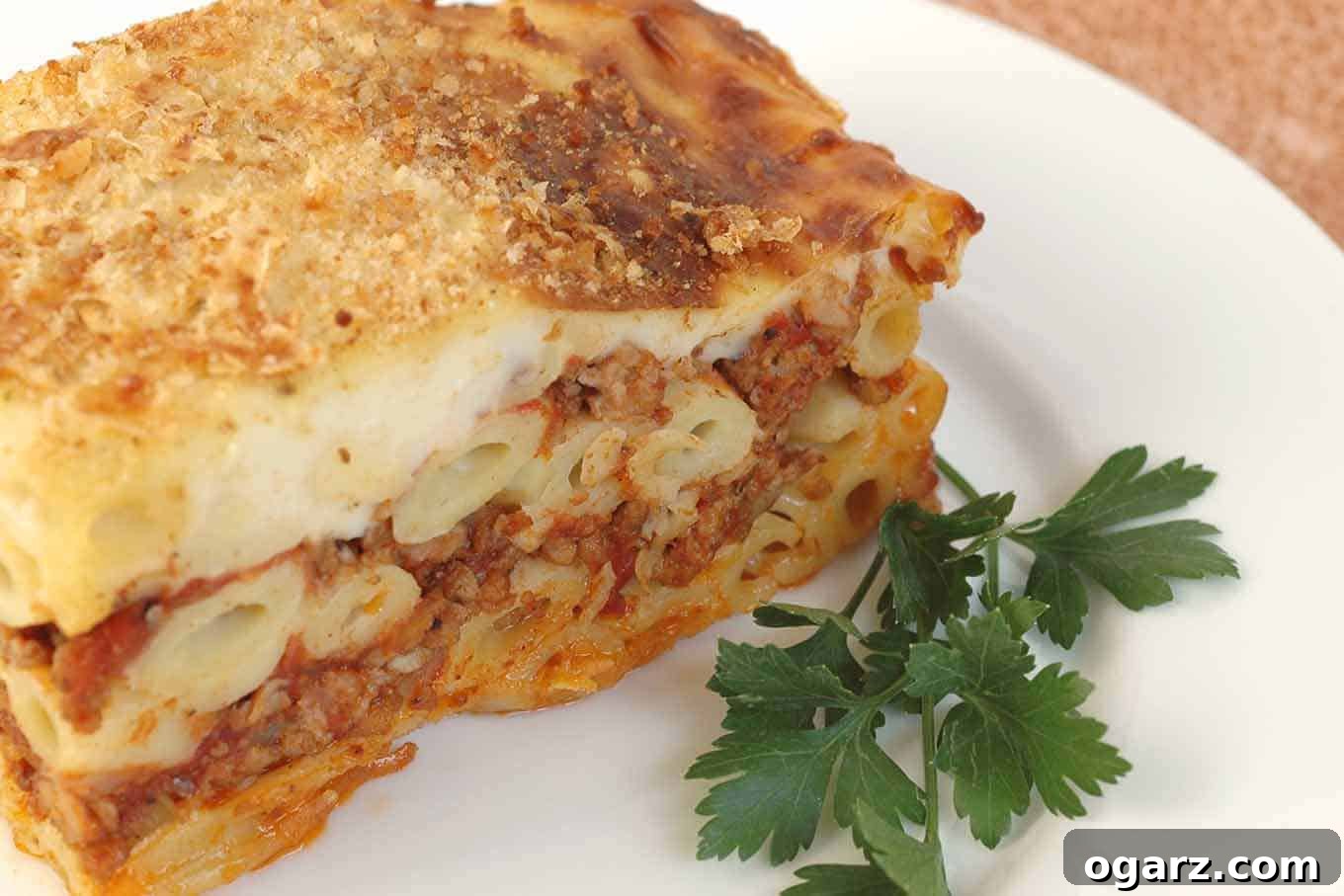
Authentic Pastitsio: The Ultimate Greek Meat and Pasta Pie Recipe
Pastitsio, often hailed as the “Greek lasagna,” is a beloved classic in Greek cuisine that boasts layers of perfectly cooked tubular pasta, a rich, spiced meat sauce, and a creamy, golden béchamel topping. This iconic dish is more than just a meal; it’s a culinary journey, a staple for family gatherings, and a comforting taste of Greece. While it may appear intricate, the process is incredibly rewarding, yielding a hearty casserole that is not only economical but also ideal for meal prepping, freezing, and reheating. In fact, many believe that its flavors truly deepen and meld beautifully on the second day, making it an excellent choice for entertaining or satisfying weeknight dinners.
This comprehensive guide will walk you through creating an authentic Pastitsio, offering insights into each crucial layer and providing tips to ensure your dish is nothing short of spectacular. Get ready to impress your family and friends with this timeless Greek comfort food!
The Allure of Pastitsio: A Greek Culinary Icon
Pastitsio stands as a testament to the rich culinary traditions of Greece, a dish that has gracefully evolved over centuries to become a household favorite. Its appeal lies not just in its delicious taste but also in its ability to bring people together. The preparation might be a labor of love, but the outcome is always worth it: a magnificent, comforting casserole that satisfies both body and soul. Unlike its Italian cousin, lasagna, Pastitsio distinguishes itself with its unique blend of spices in the meat sauce, typically featuring cinnamon and allspice, which impart a distinctly Mediterranean aroma and flavor. The use of tubular pasta, often ziti or bucatini, and a luxurious béchamel sauce instead of ricotta, creates a different texture and richness that is uniquely Greek.
This dish is remarkably versatile, serving as a robust main course perfect for any occasion, from a casual family dinner to a festive holiday spread. Its ability to be prepared in advance and its excellent freezing qualities make it a practical choice for modern home cooks seeking delicious, wholesome meals without the last-minute rush. When you serve a slice of Pastitsio, you’re not just offering food; you’re sharing a piece of Greek heritage, a dish that embodies warmth, tradition, and culinary excellence.
A Culinary Journey: The History and Evolution of Pastitsio
The origins of Pastitsio are a fascinating blend of culinary influences, particularly from Italy, where similar layered pasta dishes are common. The term “Pastitsio” itself is derived from the Italian word “pasticcio,” meaning a “mess” or “pie,” often referring to a baked savory pie. During the Venetian rule and later Italian presence in Greece, culinary exchanges were frequent, leading to the adaptation of many dishes into Greek cuisine.
The modern Greek Pastitsio, as we know it today, is largely credited to Nikolaos Tselementes, a renowned Greek chef and cookbook author of the early 20th century. Tselementes, who trained in France, introduced the concept of the classic French béchamel sauce into Greek cooking, replacing older, simpler toppings. He standardized many Greek recipes, including Pastitsio, giving it the structure and elegance that has become its hallmark. His influence transformed traditional Greek dishes, elevating them with European culinary techniques and ingredients, while still maintaining their distinct Greek character.
Over the decades, Pastitsio became deeply ingrained in Greek culture, a staple in homes and tavernas across the country. It symbolizes comfort, family, and celebration. While regional variations exist, the core elements – the rich meat sauce, the hearty pasta, and the creamy béchamel – remain consistent, a testament to its enduring appeal and its place in the heart of Greek gastronomy.
Pastitsio – Classic Greek Meat and Pasta Pie
perfect for quick weeknight dinners or elegant entertaining.
Rate Recipe
Print Recipe
Ingredients
For the meat filling:
- 3 tablespoons olive oil
- 1 large onion, peeled and diced
- 2 celery stalks, peeled and diced
- 3 garlic cloves, finely chopped
- 1-1/2 lbs lean ground beef
- 1/3 cup red wine
- 2 cups chopped tomatoes (fresh or canned diced tomatoes)
- 1 tablespoon tomato paste
- 1 teaspoon cinnamon
- 1/2 teaspoon allspice
- 1 teaspoon dried oregano
- 2 bay leaves
- Salt and freshly ground black pepper to taste
- 2 tablespoons chopped fresh parsley
For the Béchamel sauce:
- 4 cups milk
- 1 bay leaf
- 3 or 4 whole allspice berries
- 8 tablespoons (1 stick) unsalted butter
- 1 cup all-purpose flour
- 3 tablespoons grated parmesan cheese
- 1/2 teaspoon freshly ground nutmeg
For the pasta mixture:
- 1 lb penne (or ziti/bucatini)
- 2 tablespoons butter
- 2 eggs, lightly beaten
- 3 tablespoons grated parmesan cheese
- 1 cup bechamel sauce (from the prepared batch)
For the topping:
- 1/4 cup fresh breadcrumbs (learn how to make
fresh breadcrumbs) - 3 tablespoons grated parmesan cheese
Instructions
First, prepare the meat filling:
- Heat 2 tablespoons of olive oil in a large skillet over medium-high heat. Add the diced onion,
celery, and finely chopped garlic. Sauté for approximately 5 minutes until the onion becomes
soft and translucent, releasing its aromatic flavors. Transfer this sautéed mixture to a bowl
and set it aside. - Add the remaining tablespoon of olive oil to the same pan. Introduce the lean ground beef and
cook thoroughly, breaking up any large chunks with a spoon. Once the meat is fully browned,
carefully drain any excess fat to ensure a lighter, less greasy sauce. - Stir in the red wine, chopped tomatoes, tomato paste, cinnamon, allspice, dried oregano, bay
leaves, and season generously with salt and freshly ground black pepper. Bring the mixture to a
gentle simmer for about 5 minutes, allowing the flavors to begin their integration. Then, return
the reserved onion, garlic, and celery mixture to the pan, combining everything well. - Reduce the heat to low and continue to simmer the meat mixture for 30 to 40 minutes. This
slow cooking time is crucial for the spices and ingredients to fully meld and develop a rich,
deep flavor profile characteristic of authentic Pastitsio. - Remove the pan from the heat and stir in the fresh chopped parsley. This vibrant addition
brightens the sauce. The meat filling should yield approximately 5 cups.
Prepare the creamy béchamel sauce:
- In a medium saucepan, gently heat the milk with the bay leaf and the whole allspice berries over
low heat. Do not boil the milk; just bring it to a warm simmer to infuse the flavors. - In a separate, heavy-bottomed pan or pot, melt the unsalted butter over medium heat. Once
melted, gradually whisk in the all-purpose flour to create a roux. Cook, stirring constantly
for 1-2 minutes, until the paste is smooth and has a pale, nutty aroma, but don’t let it brown. - Carefully remove the bay leaf and allspice berries from the warmed milk. Begin adding the
infused milk to the roux very slowly, a little at a time, whisking vigorously and constantly to
prevent lumps. Continue whisking until the sauce is smooth, thick, and creamy. This process
requires patience but is key to a perfect béchamel. - Remove the béchamel sauce from the heat. Allow it to cool slightly before stirring in the grated
Parmesan cheese and freshly ground nutmeg. The nutmeg adds a subtle, warm undertone that
complements the other flavors beautifully. Set the finished béchamel aside. This recipe should
yield about 4 cups of sauce.
Cook the pasta to perfection:
- Bring a large pot of heavily salted water to a rolling boil. Add the penne (or your chosen
tubular pasta like ziti or bucatini) and cook according to package directions until it is tender
but still firm to the bite – al dente. This ensures the pasta holds its shape when baked. Drain
the pasta thoroughly and transfer it to a large mixing bowl to cool slightly. - Once the pasta has cooled a bit, add the 2 tablespoons of butter, the lightly beaten eggs, 3
tablespoons of grated Parmesan cheese, and 1 cup of the prepared béchamel sauce. Combine all
ingredients well, ensuring the pasta is evenly coated. This step creates a rich, binding layer
for the base of the Pastitsio.
Assemble and bake the Pastitsio:
- Preheat your oven to 350°F (175°C). Generously grease the bottom and sides of a 13 x 9 inch
baking dish with butter. This prevents sticking and helps achieve a golden crust. - Begin layering your Pastitsio:
- Spread approximately 1/3 of the pasta mixture evenly over the bottom of the prepared
baking dish. - Next, spoon 1/2 of the spiced meat filling on top of the pasta layer, spreading it out
gently. - Follow with another 1/3 of the pasta mixture, carefully arranging it over the meat.
- Add the remaining meat filling, ensuring it forms an even layer.
- Finally, spread the last portion of the pasta mixture on top, creating the final pasta
layer. - Pour and spread the remaining 3 cups of the creamy béchamel sauce over the entire
surface of the casserole, ensuring it covers all the pasta.
- Spread approximately 1/3 of the pasta mixture evenly over the bottom of the prepared
- For a perfect golden crust, sprinkle the fresh breadcrumbs and the remaining 3 tablespoons of
grated Parmesan cheese evenly over the béchamel topping. - Bake in the preheated oven for about 40 minutes, or until the top is beautifully golden brown
and the edges are bubbling. - Once baked, remove the Pastitsio from the oven and allow it to rest for at least 10 minutes
before cutting into individual portions and serving. This resting time helps the layers set,
making for cleaner, more intact slices.
Notes
Recipe Notes & Expert Tips:
- Meat Variation: While this recipe traditionally calls for lean ground beef,
feel free to experiment with other ground meats. A combination of ground chicken and pork or
even lamb can offer a unique and delicious twist. Many find that a blend enhances the depth of
flavor, so don’t hesitate to vary the meat choice to suit your personal taste preferences. - Lump-Free Béchamel: The secret to a smooth béchamel lies in gradually adding
the warm milk to the roux while whisking constantly. If lumps appear, don’t panic! You can
strain the sauce through a fine-mesh sieve or use an immersion blender to achieve a silky
smooth consistency. - Pasta Choice: Penne is a popular choice, but traditional Pastitsio often uses
thick tubular pasta like bucatini or ziti. Choose a pasta that can hold up to the hearty meat
sauce and creamy béchamel. - Make Ahead Option: Pastitsio is an excellent dish for making ahead. You can
assemble the entire casserole up to the point of baking, cover it tightly with foil, and
refrigerate for up to 2 days. When ready to bake, let it sit at room temperature for about 30
minutes before baking, then follow the baking instructions, adding an extra 10-15 minutes if
needed. - Freezing Instructions: To freeze, bake the Pastitsio as directed, then let it
cool completely. Wrap individual slices or the entire casserole tightly in plastic wrap and
then in aluminum foil. It can be frozen for up to 3 months. Thaw overnight in the refrigerator
before reheating. Reheat in the oven at 300°F (150°C) until warmed through. - Spice Adjustment: The cinnamon and allspice are key to Pastitsio’s distinctive
flavor. If you’re new to these spices in savory dishes, you can start with slightly less and
adjust to your liking. - Fresh Herbs: Don’t skip the fresh parsley! It adds a vibrant freshness that
balances the richness of the dish.
What Makes a Perfect Pastitsio? Understanding the Key Elements
The magic of Pastitsio lies in the harmonious interplay of its three distinct layers: the pasta, the succulent meat filling, and the velvety béchamel sauce. Each component plays a vital role in creating the ultimate Greek comfort food.
The Pasta Layer: A Sturdy Foundation
Unlike many pasta dishes, Pastitsio calls for a specific type of pasta: usually thick, tubular varieties such as ziti, bucatini, or large penne. The key is to cook the pasta just to “al dente” – tender yet still firm to the bite. This ensures that it maintains its structural integrity during baking and doesn’t become mushy under the weight of the other layers. Coating the cooked pasta with butter, beaten eggs, and a touch of béchamel before layering adds richness and helps bind the pasta together, creating a solid foundation for the casserole.
The Meat Filling: The Heart of the Dish
The meat sauce, or “kimas,” is arguably the most flavorful component of Pastitsio. Typically made with lean ground beef, this sauce is anything but ordinary. It’s deeply flavored with a unique blend of Mediterranean spices, notably cinnamon and allspice, which give it a warm, aromatic character distinct from Italian meat sauces. Tomatoes, red wine, onions, garlic, and sometimes celery contribute to its savory depth. Simmering the meat sauce for an extended period allows these flavors to meld and intensify, resulting in a rich, savory filling that’s both robust and incredibly aromatic.
The Béchamel Sauce: The Crown Jewel
The crowning glory of Pastitsio is its thick, creamy béchamel sauce. This classic French mother sauce, adapted for Greek tastes, is made by cooking flour and butter (a roux) and then gradually whisking in warm milk until a smooth, velvety sauce forms. What sets Pastitsio béchamel apart is the addition of Parmesan cheese and a generous grating of fresh nutmeg. The nutmeg provides a subtle, warm, and slightly sweet counterpoint to the savory meat, while the Parmesan adds a salty, umami kick. When baked, this béchamel transforms into a golden, custardy layer that encapsulates the rich flavors beneath, providing a luxurious finish.
Mastering each of these components individually, then combining them with care, is the secret to a truly unforgettable Pastitsio. Each layer contributes its unique texture and flavor, culminating in a dish that is deeply satisfying and quintessentially Greek.
Serving Suggestions for Your Homemade Pastitsio
A hearty and fulfilling dish like Pastitsio deserves to be accompanied by sides that complement its rich flavors without overpowering them. Here are some excellent serving suggestions to complete your Greek feast:
- Simple Green Salad: A crisp green salad with a light vinaigrette is the perfect counterbalance to the richness of Pastitsio. Fresh lettuce, cucumber, and tomatoes with a lemon-oregano dressing can cut through the creamy béchamel and savory meat.
- Crusty Bread: A warm, crusty loaf of bread is essential for soaking up any lingering sauces and flavors on your plate. A good sourdough or a simple baguette would be ideal.
- Roasted Vegetables: Lightly roasted vegetables such as asparagus, green beans, or broccoli, seasoned with olive oil, lemon, and a touch of garlic, provide a healthy and flavorful side that pairs beautifully.
- Greek Salad (Horiatiki): For an authentic Greek experience, serve your Pastitsio with a traditional Greek salad. The freshness of ripe tomatoes, cucumbers, red onion, Kalamata olives, and feta cheese, dressed simply with olive oil and red wine vinegar, is a classic pairing.
Whether for a family meal or a special gathering, Pastitsio, served with thoughtfully chosen accompaniments, promises a delightful and memorable dining experience that transports you straight to the heart of Greece.
Like this recipe? Rate and comment below!
We hope you enjoy making and savoring this authentic Pastitsio recipe. Your feedback and ratings help others discover and enjoy this wonderful dish too!