
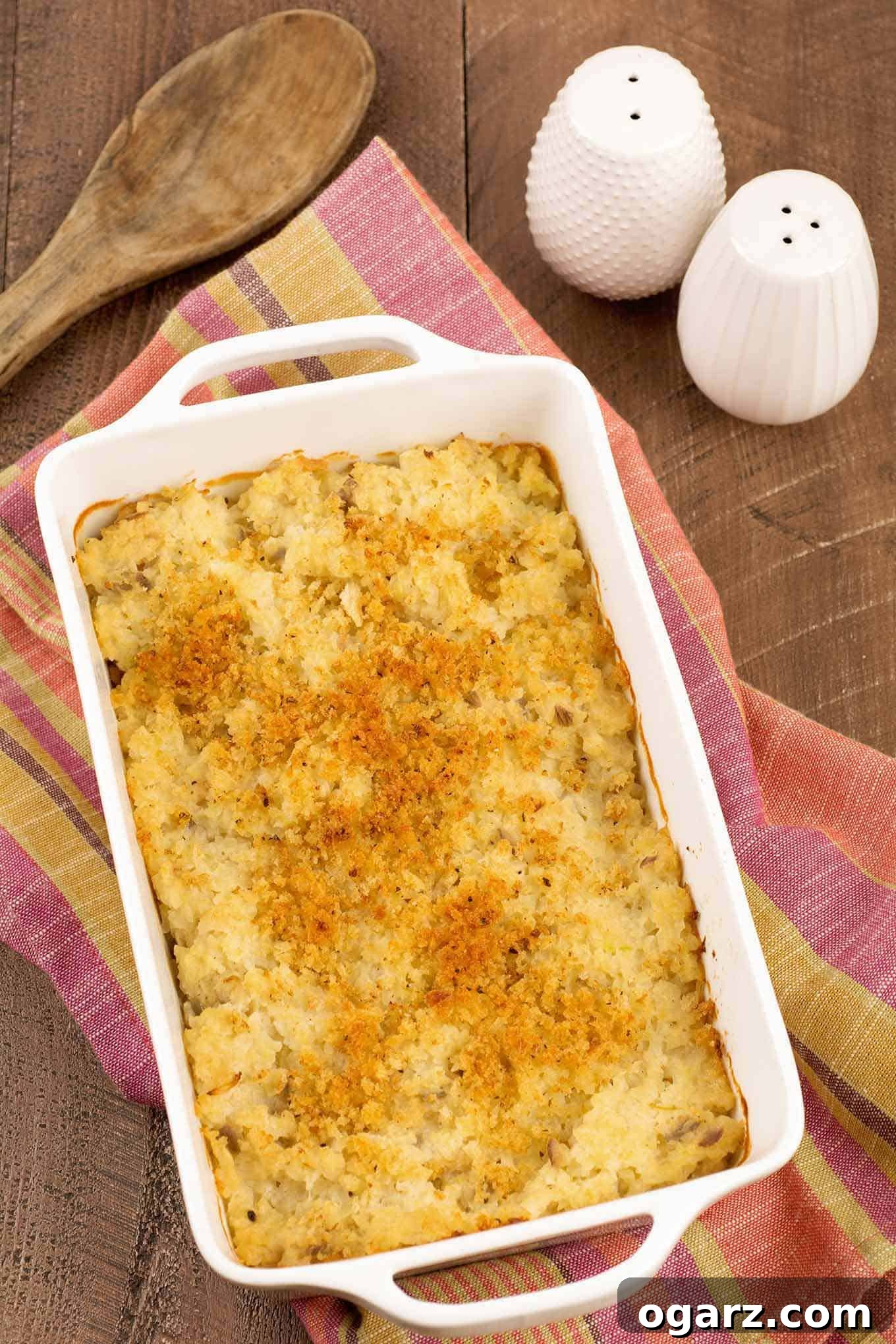
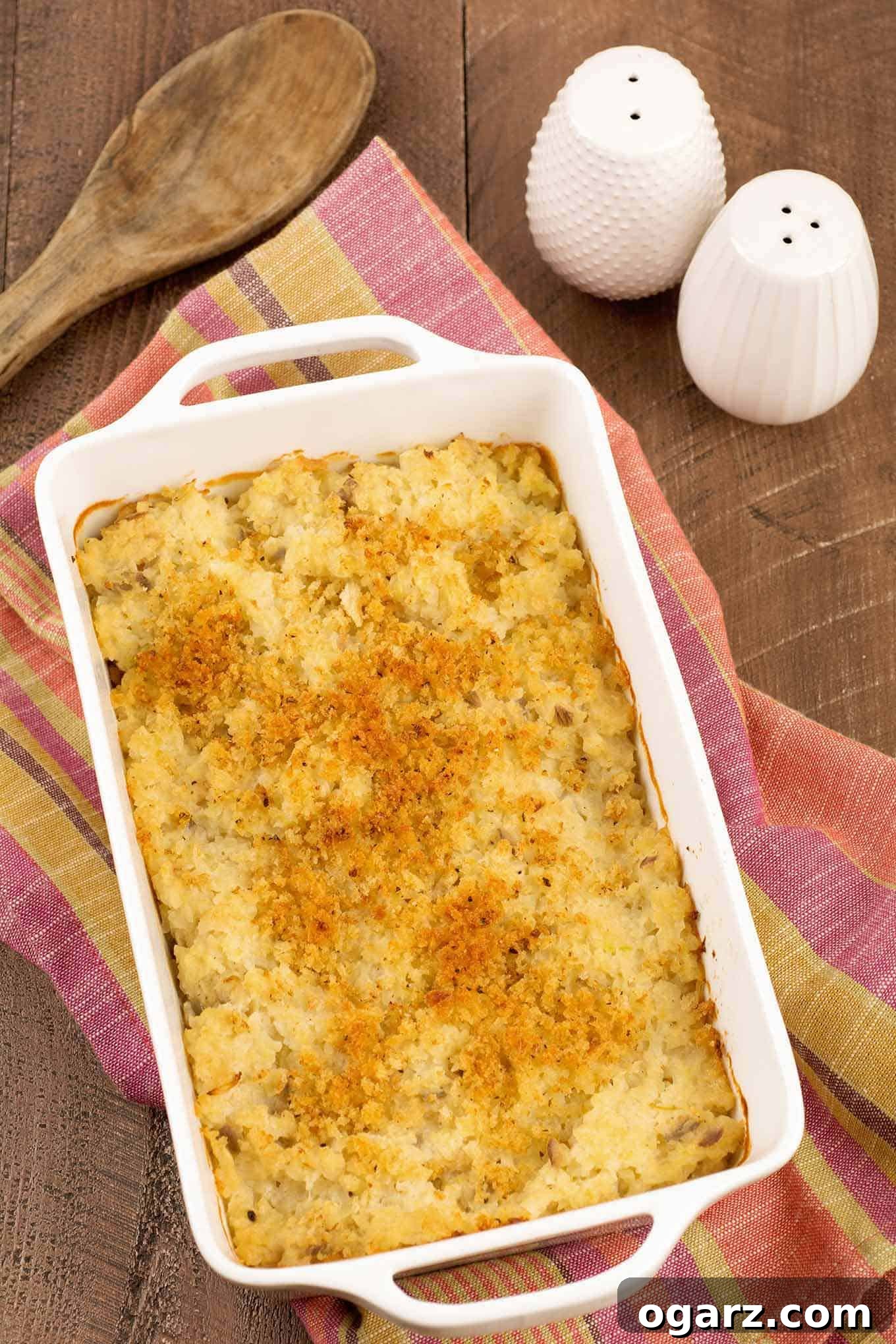
In the culinary world, cauliflower has transcended its humble origins to become a versatile superstar, particularly for those seeking healthier, low-carb alternatives to traditional starches. However, preparing raw cauliflower can sometimes be a test of patience. The florets, varying in size, often cook unevenly – smaller pieces turning mushy while larger ones remain firm. This common kitchen dilemma finds an elegant solution in riced cauliflower, a game-changer that transforms this cruciferous vegetable into a convenient and delightful ingredient. Riced cauliflower simplifies meal preparation, offering a consistent texture and quicker cooking time, making it ideal for creating satisfying, low-carb side dishes like this incredibly easy-to-fix gratin.
This Riced Cauliflower Gratin recipe stands out as a personal favorite, frequently gracing our dinner table. Its inherent deliciousness is matched only by its adaptability; it serves as an excellent canvas for incorporating a variety of other vegetables, fresh herbs, and different cheeses, allowing for endless customization to suit any palate or dietary preference. Whether you’re a seasoned chef or a home cook looking for a nutritious yet comforting meal, this gratin promises to be a delightful addition to your repertoire. It’s a perfect stand-in for potato or pasta-based gratins, delivering all the creamy richness without the high carbohydrate count, making it a fantastic option for keto, low-carb, or gluten-free lifestyles.

Why Choose Riced Cauliflower? The Ultimate Low-Carb Alternative
Riced cauliflower has gained immense popularity for a multitude of reasons. Beyond its convenience, it offers significant nutritional advantages and exceptional versatility in cooking. For those managing carbohydrate intake, riced cauliflower is an invaluable ingredient, providing a satisfying texture similar to grains or pasta without the associated carb load. It’s packed with essential nutrients, including Vitamin C, Vitamin K, folate, and dietary fiber, contributing to overall health and well-being. Its mild flavor allows it to absorb the tastes of other ingredients beautifully, making it an excellent base for various dishes.
The primary appeal of riced cauliflower lies in its ease of preparation, especially when using the frozen variety. It eliminates the chopping, steaming, or boiling often required for whole cauliflower florets, saving precious time in the kitchen. For this gratin, frozen riced cauliflower is a perfect choice, as it thaws quickly and integrates seamlessly into the creamy sauce, achieving a tender texture without becoming watery. Whether you opt for pre-packaged frozen riced cauliflower or prepare your own, the benefits remain consistent: a healthy, quick-cooking ingredient ready to be transformed into culinary masterpieces.
How To Make Fresh Riced Cauliflower at Home
While readily available in most grocery stores, making fresh riced cauliflower at home is surprisingly simple and allows you to control the freshness and texture. All you need is a head of cauliflower and a food processor. One medium to large head of cauliflower typically yields 4 to 6 cups of riced cauliflower, which is perfect for this gratin recipe and many other dishes. You can even prepare a larger batch and freeze it for future use, storing it in airtight containers for up to three months. This ensures you always have a healthy, low-carb option on hand.
Follow these straightforward steps to create perfectly riced cauliflower:
- Begin by removing all the green leaves from the base of the cauliflower head.
- Carefully cut the cauliflower into quarters, which makes it easier to handle and process.
- Locate and remove the tough core from each quarter, discarding it.
- Take one quarter of the cauliflower and break it into smaller florets. Place these florets into your food processor. Avoid overfilling the food processor; working in batches ensures an even texture.
- Pulse the cauliflower in short bursts until it is broken down into small, rice-sized pieces. Be careful not to over-process, as this can turn the cauliflower into a mushy paste rather than distinct “grains.”
- Transfer the freshly riced cauliflower to a large bowl.
- Repeat steps 4 and 5 with the remaining cauliflower quarters until all of it has been riced.
Your homemade riced cauliflower is now ready to use in this delicious gratin or any other recipe calling for this versatile ingredient. This simple process provides a fresh, cost-effective alternative to store-bought versions.
Riced Cauliflower Gratin: A Creamy Low-Carb Delight
Rate Recipe
Print Recipe
Ingredients
- 6 cups frozen, riced cauliflower (approximately 1-1/2 standard packages, if using fresh, ensure it’s finely riced)
- 3 tablespoons unsalted butter, divided
- 3/4 cup yellow onion, finely chopped
- 2 cloves fresh garlic, minced
- 1 tablespoon all-purpose flour
- 1-1/4 cups warm whole milk (or preferred dairy/non-dairy alternative)
- Salt and freshly ground black pepper, to taste
- 2 tablespoons panko breadcrumbs (for a crispy topping)
Instructions
-
Preheat your oven to 375°F (190°C). Prepare a 1-quart baking dish by lightly coating it with nonstick cooking spray or butter. This prevents sticking and ensures easy serving.
-
In a large frying pan or skillet, melt 2 tablespoons of the butter over medium heat. Add the chopped onion and sauté gently, stirring occasionally, until it becomes soft and translucent, with just a hint of golden color, which usually takes about 4 to 5 minutes. Then, add the minced garlic and continue to sauté for another minute until it is fragrant. Be careful not to let the garlic burn, as it can turn bitter.
-
Sprinkle the flour over the onion and garlic mixture in the pan. Stir well to combine, creating a roux. Continue cooking for 1 minute, allowing the flour to cook out its raw taste. Slowly whisk in the warm milk, pouring it in a steady stream while continuously whisking to prevent lumps. Bring the mixture to a gentle simmer and continue cooking, stirring constantly, until the sauce is smooth and slightly thickened, typically 2 to 3 minutes. This forms the creamy base of your gratin.
-
Add the riced cauliflower to the creamy sauce, incorporating it about 2 cups at a time. Stir thoroughly after each addition to ensure it’s well-coated. Continue cooking, stirring often, for approximately 5 minutes, or until the cauliflower is tender-crisp and thoroughly heated through. This step ensures the cauliflower absorbs the rich flavors of the sauce.
-
Season the cauliflower mixture generously with salt and freshly ground black pepper to taste. Adjust as needed. Once seasoned, carefully transfer the entire mixture into the prepared 1-quart baking dish, spreading it evenly.
-
In the same frying pan (no need to clean it), melt the remaining 1 tablespoon of butter over low heat. Add the panko breadcrumbs to the melted butter and stir to combine until the crumbs are lightly coated and golden. This creates a delicious, crispy topping.
-
Evenly sprinkle the buttered panko crumbs over the top of the cauliflower mixture in the baking dish. Place the dish in the preheated oven and bake for 12 to 15 minutes, or until the gratin is bubbly around the edges and the crumb topping is lightly browned and crisp. Serve this delightful Riced Cauliflower Gratin immediately while warm.
Notes and Customization Tips
Recipe Variation: Gratin of Riced Cauliflower and Greens
To elevate this dish with added nutrients and flavor, try this greens variation: Reduce the quantity of riced cauliflower to 4 cups (equivalent to 1 standard package of frozen riced cauliflower). Separately, sauté 1/2 pound of your favorite chopped greens—such as fresh spinach, baby kale, or escarole—until they are tender and any excess moisture has evaporated. Once cooked, fold the greens into the cauliflower mixture before transferring it to the baking dish. For a cheesy twist on the topping, you can replace the buttered panko crumbs with a generous handful (about 1/2 cup) of shredded sharp cheddar cheese, Gruyere, or a blend of your favorite gratin cheeses. Bake as directed above until bubbly and golden. This variation adds a vibrant color and an extra layer of healthy goodness to your gratin.
Further Customization Ideas:
- Cheese Power-Up: Incorporate shredded cheese directly into the cauliflower mixture (e.g., 1/2 cup Parmesan, cheddar, or Gruyere) along with the riced cauliflower for an extra rich and creamy texture.
- Herb Infusion: Add 1-2 teaspoons of fresh or dried herbs like thyme, rosemary, chives, or parsley to the onion and garlic mixture for an aromatic depth of flavor.
- Spice It Up: A pinch of cayenne pepper or a dash of nutmeg can add warmth and a subtle kick to the gratin. Nutmeg is a classic addition to béchamel-based sauces and complements cauliflower beautifully.
- Protein Boost: For a heartier meal, consider adding cooked crumbled bacon, diced ham, or shredded cooked chicken to the gratin mixture.
- Dairy Alternatives: For a dairy-free version, use plant-based butter and unsweetened almond milk or oat milk in place of dairy milk. Ensure your flour is gluten-free if catering to gluten sensitivities.
Nutrition Information (Approximate)
Nutrition information is automatically calculated, so should only be used as an approximation and can vary based on specific ingredients and brands used.