
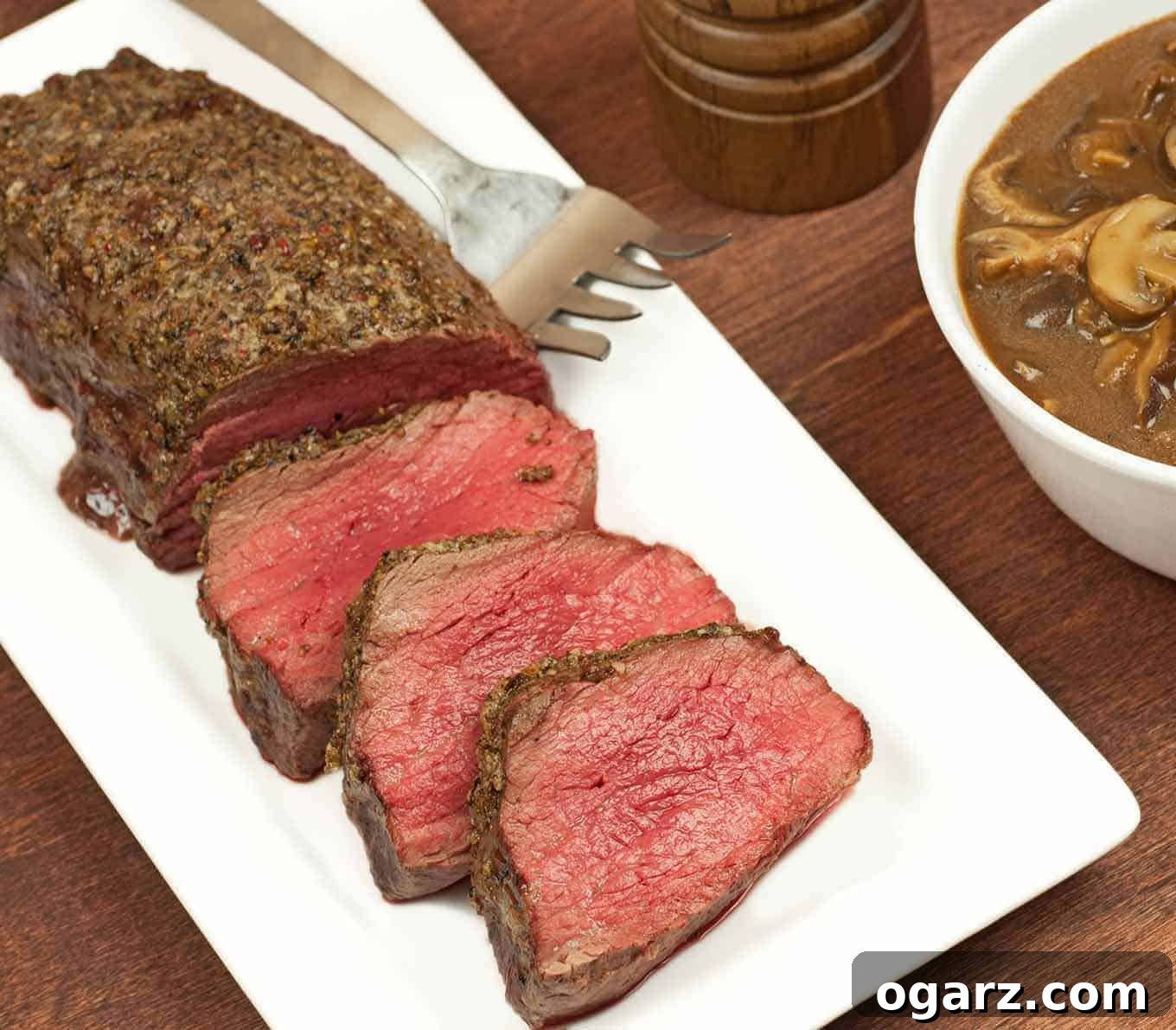

Elevate your culinary repertoire with a perfectly cooked **Beef Tenderloin Roast**, an exquisite centerpiece guaranteed to impress. Ideal for holiday gatherings, special occasions, or simply a luxurious weekend dinner, this recipe combines the inherent tenderness of beef tenderloin with a robust, earthy **Port Wine Mushroom Sauce**. Despite its elegant appearance, preparing this juicy, flavorful roast is surprisingly straightforward, promising delectable results every time.
The beauty of this dish lies in its thoughtful simplicity. A basic yet effective seasoning rub enhances the beef’s natural flavor, creating a delicious crust, while the rich, velvety sauce adds a layer of sophisticated complexity. Follow our guide to master this impressive entrée, ensuring your beef tenderloin is roasted to perfection and bathed in a sauce that will have everyone asking for seconds.
Notes From Our Kitchen: Mastering Your Beef Tenderloin Roast
Here at My Gourmet Connection, our **Beef Tenderloin Roast with Port Wine Mushroom Sauce** holds a special place, particularly as our traditional New Year’s Eve entrée. It’s a dish that effortlessly marries ease of preparation with an undeniable sense of festivity and luxury, making it perfect for ringing in the new year. The tender, succulent beef, paired with our deeply flavored mushroom and port wine sauce, transforms any meal into a memorable celebration.
To ensure every last drop of that incredible sauce is savored, we always pair this roast with creamy mashed potatoes. Their smooth texture and subtle richness are the perfect canvas for soaking up the sauce’s complex flavors. For a balanced meal, our go-to green vegetable is creamed spinach, offering a delightful contrast and complementary richness. Together, these sides complete an unforgettable dining experience, proving that elegant entertaining can also be surprisingly simple and utterly delicious.
Key Ingredients for an Unforgettable Roast
Understanding your ingredients is the first step to culinary success. Here’s what you need to know about the key components of this exceptional recipe. The complete list with precise quantities is available in the printable recipe card below.
- BEEF TENDERLOIN: The Star of the Show
For the ultimate **Beef Tenderloin Roast**, seek out the center portion of the tenderloin, often labeled as Châteaubriand, from your butcher. This cut is prized for its consistent diameter and uniform shape, which are crucial for even cooking. Don’t hesitate to ask your butcher to trim away any excess fat and the tough silver skin; this saves you time and ensures a more tender roast. Around holidays or special events, beef tenderloin can be in high demand, so consider ordering it in advance to secure your preferred cut.
When planning, allocate approximately 6 to 8 ounces of meat per guest. Our recipe typically calls for a 3-lb roast, which comfortably serves 6 people, often with a little left over for enviable next-day sandwiches. If you’re hosting a larger gathering, we highly recommend purchasing multiple roasts of similar size and diameter. Roasting them simultaneously ensures consistent cooking times and perfect doneness across all your servings, allowing everyone to enjoy a spectacular meal.
- MUSHROOMS: The Depth of Flavor in Your Sauce
Our signature **Port Wine Mushroom Sauce** owes its incredible depth to a harmonious blend of both dried and fresh mushrooms. Dried mushrooms, especially porcinis, offer an intensely concentrated, umami-rich flavor that fresh mushrooms can’t quite replicate. The magic happens during rehydration: the beef broth used to reconstitute them becomes an aromatic liquid, infused with deep mushroom essence, which then forms the flavorful base for your sauce. We generally opt for porcinis due to their excellent flavor profile, widespread availability, and reasonable cost.
For the fresh component of the sauce, cremini mushrooms are our top choice. Their slightly earthy taste and firm texture hold up beautifully in the sauce. However, common white button mushrooms are also an excellent and readily available alternative, providing a mild, pleasant mushroom note that complements the robust flavor of the porcinis and port wine. This dual mushroom approach ensures a sauce that is rich, textural, and bursting with complex flavors.
- PORT WINE: The Sweet & Savory Elixir
Port wine is the secret ingredient that transforms a simple mushroom sauce into something truly extraordinary. For our **Port Wine Mushroom Sauce**, we specifically recommend using a tawny port. Tawny port, aged longer in barrels, offers a slightly nutty, caramelized character and is less fruit-forward than ruby port, making it an ideal choice for savory applications where you want depth without excessive sweetness. While you don’t need to splurge on an expensive bottle, remember the golden rule of cooking: “don’t cook with wine you wouldn’t drink.” A decent quality port will make a noticeable difference in the final flavor of your sauce.
Unlike regular wines, port wine has a much longer shelf life once opened, typically staying fresh for 1 to 2 months when properly sealed and stored. This means any leftover port won’t go to waste. It pairs wonderfully with a variety of post-dinner delights, including aged cheeses, apple and pear desserts, and, of course, dark chocolate. So, feel free to enjoy a glass with your meal or save it for a future culinary adventure.
How to Craft a Sublime Beef Tenderloin Roast with Port Wine Mushroom Sauce
Ready to create this show-stopping dish? Here’s a quick overview of the process, designed to guide you through each step with confidence. For detailed, step-by-step instructions and precise measurements, refer to the printable recipe card below.
BEFORE YOU BEGIN: To ensure your tenderloin cooks evenly and remains juicy, remove it from the refrigerator at least 60 minutes before roasting, allowing it to come closer to room temperature. This crucial step prevents the exterior from overcooking while the interior struggles to reach the desired doneness. While the beef rests, prepare your roasting environment by coating a sturdy roasting pan and its rack with a nonstick cooking spray. This prevents sticking and makes cleanup much easier.
COAT THE TENDERLOIN WITH SEASONING: In a small bowl, combine freshly ground black pepper, kosher salt, minced garlic, softened butter, and olive oil to create a flavorful paste. This simple yet potent rub will form a delicious crust on your roast. Carefully place the tenderloin on the prepared roasting rack. Generously apply the seasoning paste to all visible surfaces – the top and sides – ensuring an even coating. Allow the tenderloin to rest for another 30 minutes with the rub on, further bringing it to room temperature and allowing the flavors to meld. During this time, preheat your oven to a precise 400°F (200°C) to ensure it’s ready for roasting.
MASTER THE PORT WINE MUSHROOM SAUCE: While your beef tenderloin continues to rest, embark on creating the rich and aromatic port wine mushroom sauce. Begin by rehydrating the dried mushrooms. Place the beef broth in a microwave-safe bowl and heat it on high for 2-1/2 to 3 minutes, until very warm. Stir in the dried mushrooms, ensuring they are fully submerged, and let them steep for 30 minutes. This process softens the mushrooms and infuses the broth with their intense, earthy flavor. Once rehydrated, carefully strain the mushroom-infused liquid into a separate clean bowl, reserving it for later. Chop the rehydrated mushrooms into bite-sized pieces.
Next, melt 3 tablespoons of butter in a medium saucepan over medium heat. Add the minced shallots and garlic, sautéing them gently until they become fragrant and softened, which should take about 2 minutes. This aromatic base is essential for the sauce’s flavor. Sprinkle 1 tablespoon of flour over the shallot-garlic mixture, stirring constantly. Continue cooking for another 3 to 4 minutes, allowing the flour to cook out its raw taste and achieve a pale golden color, forming a light roux. Transfer this mixture to a bowl and set it aside.
Pour the port wine into the same saucepan, increasing the heat to medium-high. Bring the wine to a rolling boil and let it simmer vigorously for 5 minutes. This crucial step reduces the port, concentrating its flavors and evaporating the alcohol. Stir in the reserved mushroom liquid. As soon as the mixture reaches a gentle simmer, gradually whisk in the reserved shallot and flour mixture. Reduce the heat to medium and continue cooking, stirring frequently, until the sauce visibly begins to thicken, typically within 3 minutes.
Finally, add the Worcestershire sauce and the chopped fresh and rehydrated mushrooms to the saucepan. Continue to cook, stirring often, for approximately 5 more minutes, until the sauce achieves a luscious, thick, gravy-like consistency. Taste the sauce and adjust the seasoning with salt and freshly ground black pepper as needed. Remove the sauce from the heat, cover it to keep warm, and set it aside until serving.
ROAST THE BEEF TO PERFECTION: Carefully transfer your seasoned beef tenderloin in its roasting pan into the preheated 400°F (200°C) oven. Roast the tenderloin until an instant-read meat thermometer inserted into the thickest part of the roast (avoiding bone or fat) registers your desired internal temperature. For a rare finish, aim for 120°F (49°C); for a medium-rare, target 125°F (52°C). Begin checking the temperature after 18 minutes of roasting, as oven temperatures can vary and tenderloin cooks relatively quickly. Once your beef reaches the target temperature, remove it from the oven immediately. Tent the roast loosely with aluminum foil and allow it to rest undisturbed for a full 15 minutes. This resting period is critical; it allows the juices to redistribute throughout the meat, ensuring a tender, moist, and flavorful result when carved.
HEAT THE SAUCE: While the magnificent beef tenderloin is resting, gently reheat your exquisite port wine mushroom sauce over low heat. Stir occasionally until it is warmed through and ready to be served alongside the carved roast.
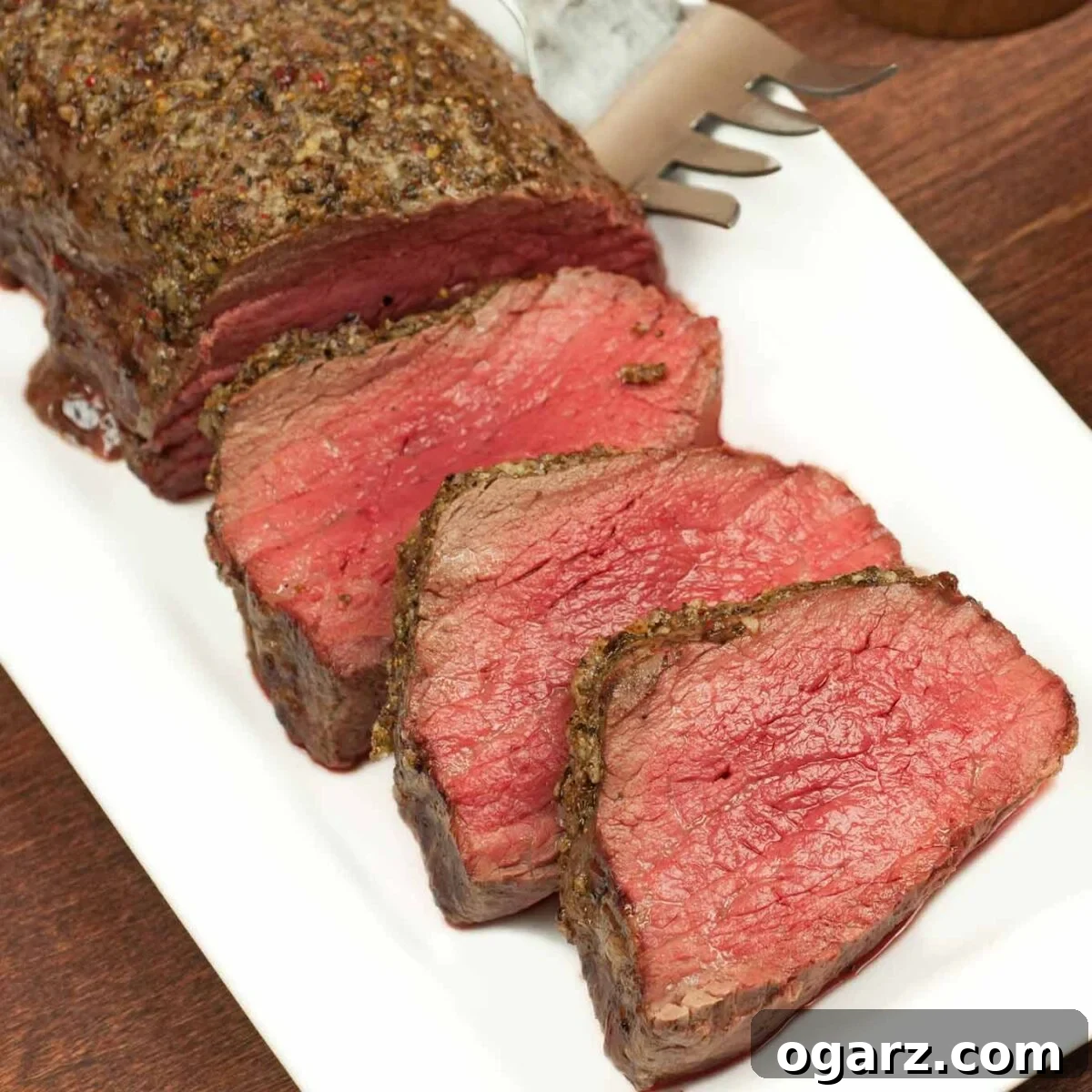
CARVE AND SERVE THE ROAST: After the beef tenderloin has completed its essential resting period, it’s time for the grand finale. Using a sharp carving knife, slice the roast against the grain into beautiful 1/2-inch thick pieces. Arrange the slices elegantly on a serving platter and generously spoon the warm, rich mushroom sauce over the top, or serve it on the side. Prepare for accolades as you present this truly impressive and delicious meal!
Expert Tips for a Flawless Beef Tenderloin Roast
- Choose the Right Cut for Optimal Results: The success of your **Beef Tenderloin Roast** begins with the cut. Always opt for the center-cut portion, often referred to as Châteaubriand. This section boasts the most uniform size and diameter along its length, which is crucial for achieving consistent cooking throughout the entire roast. An uneven cut can lead to overcooked ends and an undercooked middle, so precision in selection is key.
- Proper Trimming for Ultimate Tenderness: Before roasting, ensure that all silver skin and any excess fat are meticulously trimmed from the beef tenderloin. Silver skin is a tough, silvery membrane that, if left on, will contract during cooking, making the roast chewy and misshapen. While you can do this yourself with a sharp knife, asking your butcher to perform this task for you is highly recommended. They have the expertise and tools to prepare the tenderloin perfectly, saving you time and effort.
- Season Generously for Enhanced Flavor: Beef tenderloin is celebrated for its incredible tenderness and lean texture, but it’s not inherently the most flavorful cut of beef. Therefore, it’s paramount not to skimp on seasoning. A generous application of salt, pepper, and garlic (as in our recipe) creates a delicious crust and infuses the meat with much-needed flavor, elevating the entire dish. Don’t be shy with your seasoning blend!
- Tie the Roast for Even Cooking (Optional but Recommended): If your beef tenderloin roast has any areas that are significantly thinner or thicker, or if it tends to spread out, consider tying it with kitchen twine. Tying the roast crosswise at 1-inch intervals helps to maintain a uniform cylindrical shape. This simple technique ensures that heat penetrates the meat evenly, promoting consistent doneness from end to end and preventing thinner sections from overcooking.
- Bring the Beef Tenderloin to Room Temperature: This is a critically important step often overlooked. Remove your beef tenderloin from the refrigerator at least one hour before you plan to roast it. Allowing the meat to come closer to room temperature prevents the thermal shock of placing cold meat directly into a hot oven. It ensures that the roast cooks more evenly from edge to center, resulting in a more tender and juicy interior and a significantly reduced cooking time.
- Always Use a Meat Thermometer: The Key to Precision: Relying solely on cooking time can lead to inconsistent results. An instant-read meat thermometer is your best friend when roasting beef tenderloin. It provides an accurate internal temperature, guaranteeing your desired level of doneness. Insert the thermometer into the thickest part of the roast, being careful not to touch any bone or fat. Here are the recommended doneness temperatures:
- Rare: 115 to 120°F (46-49°C)
- Medium-Rare: 120 to 125°F (49-52°C) (Highly Recommended for optimal tenderness and juiciness)
- Medium: 130 to 135°F (54-57°C)
- Medium-Well: 140 to 145°F (60-63°C)
- The Essential Resting Period: After removing the roast from the oven, resist the urge to carve it immediately. Tent the tenderloin loosely with foil and allow it to rest for at least 15 minutes. During this crucial resting period, the internal temperature of the meat will continue to rise (this is called carryover cooking), and the juices, which have been driven to the center during roasting, will redistribute throughout the entire roast. This ensures that every slice is incredibly moist, tender, and bursting with flavor. Carving too soon will result in juices flowing out, leaving you with a drier roast.
Beef Tenderloin Roast with Port Wine Mushroom Sauce
Pin Recipe
Rate Recipe
Print Recipe
Ingredients
- 3 lb beef tenderloin roast
- 2 teaspoons freshly ground black pepper, (see notes)
- 1-1/2 teaspoons kosher salt
- 1 clove garlic, pressed (or minced)
- 1 tablespoon butter, softened
- 2 teaspoons olive oil
For the Port Wine Mushroom Sauce:
- 2 ounces dried porcini mushrooms
- 8 ounces cremini or white button mushrooms, trimmed and sliced
- 1-1/2 cups beef broth
- 1 medium shallot, minced
- 1 clove garlic, minced
- 3 tablespoons butter
- 1 tablespoon flour
- 1 cup port wine, preferably tawny
- 1/2 teaspoon Worcestershire sauce
- Salt and freshly ground black pepper
Instructions
Prepare the beef for roasting:
-
Remove the tenderloin from the refrigerator and set aside for 30 minutes to allow it to come closer to room temperature. This helps ensure more even cooking. Meanwhile, coat a roasting pan and rack with nonstick spray.
-
In a small bowl, combine the pepper, salt, garlic, softened butter, and olive oil to create a paste. Place the tenderloin on the roasting rack and generously coat its top and sides with this seasoning rub. Set it aside for another 30 minutes to further reach room temperature. During this final resting period, preheat your oven to 400°F (200°C).
Make the port wine mushroom sauce:
-
While the beef tenderloin is coming to room temperature, begin preparing the port wine mushroom sauce. Start by rehydrating the dried mushrooms: Warm the beef broth in a microwave-safe bowl for 2-1/2 to 3 minutes on high. Stir in the dried mushrooms and let them steep for 30 minutes. Once rehydrated, strain the liquid into a separate bowl, reserving it. Cut the rehydrated mushrooms into bite-sized pieces.
-
Melt 3 tablespoons of butter in a saucepan over medium heat. Add the minced shallots and garlic, and sauté until they are fragrant and softened, about 2 minutes. Sprinkle 1 tablespoon of flour over the mixture and continue cooking, stirring constantly, until the mixture turns a pale golden color, approximately 3 to 4 minutes more. Transfer this shallot-flour mixture to a bowl and set aside.
-
Add the port wine to the same saucepan, increase the heat to medium-high, and bring it to a boil for 5 minutes to reduce and concentrate its flavor. Stir in the reserved mushroom liquid. As soon as the mixture reaches a simmer, whisk in the reserved shallot and flour mixture. Reduce the heat to medium and continue cooking, stirring often, until the sauce begins to thicken, about 3 minutes.
-
Add the Worcestershire sauce and the chopped mushrooms (both fresh and rehydrated) to the saucepan. Continue cooking, stirring often, for about 5 more minutes, until the sauce reaches a thick, gravy-like consistency. Season the sauce to taste with salt and freshly ground black pepper. Remove from the heat and cover to keep warm.
Roast the beef tenderloin:
-
Roast the tenderloin in the preheated oven until an instant-read thermometer inserted into the thickest part registers 120°F (49°C) for rare or 125°F (52°C) for medium-rare. Begin checking the temperature after 18 minutes. Once the meat reaches your desired doneness, remove it from the oven, tent it loosely with foil, and allow it to rest for a crucial 15 minutes before carving. This resting period ensures a juicy and tender roast.
-
While the beef is resting, gently reheat the port wine mushroom sauce over low heat until it is warmed through and ready to serve.
-
Once the beef tenderloin has fully rested, slice it into 1/2-inch thick pieces, cutting against the grain. Serve immediately with the warm, rich mushroom sauce spooned over each slice or on the side for dipping.
Notes
Shopping For A Beef Tenderloin Roast: Key Considerations
When purchasing your beef tenderloin, always request the center portion, often referred to as Châteaubriand, from your butcher. This ensures a uniform thickness that promotes even cooking. It’s also highly recommended to have your butcher trim the silver skin for you, as this tough membrane can make the roast less tender. Plan on approximately 6 ounces of meat per guest. If you are serving more than six people, instead of buying one very large roast, we strongly suggest buying multiple smaller roasts of equal size and diameter. This approach allows for more consistent cooking results across all pieces, guaranteeing that every guest enjoys a perfectly cooked portion.
Beef Tenderloin Doneness Temperatures: Your Guide to Perfection
Achieving the ideal doneness for your beef tenderloin is paramount for taste and texture. Always use an instant-read meat thermometer inserted into the thickest part of the roast (avoiding bone or fat) for accurate results. Remember that the temperature will rise slightly during the resting period (carryover cooking), so remove the roast from the oven just before it reaches your target internal temperature.
- Rare: 115 to 120°F (46-49°C) – Very red, cool center.
- Medium-Rare: 120 to 125°F (49-52°C) (Recommended) – Red, warm center, exceptionally juicy and tender.
- Medium: 130 to 135°F (54-57°C) – Pink, warm center.
- Medium-Well: 140 to 145°F (60-63°C) – Slightly pink center.
Nutrition
Nutrition information is automatically calculated, so should only be used as an approximation.
Like this recipe? Rate and comment below!