
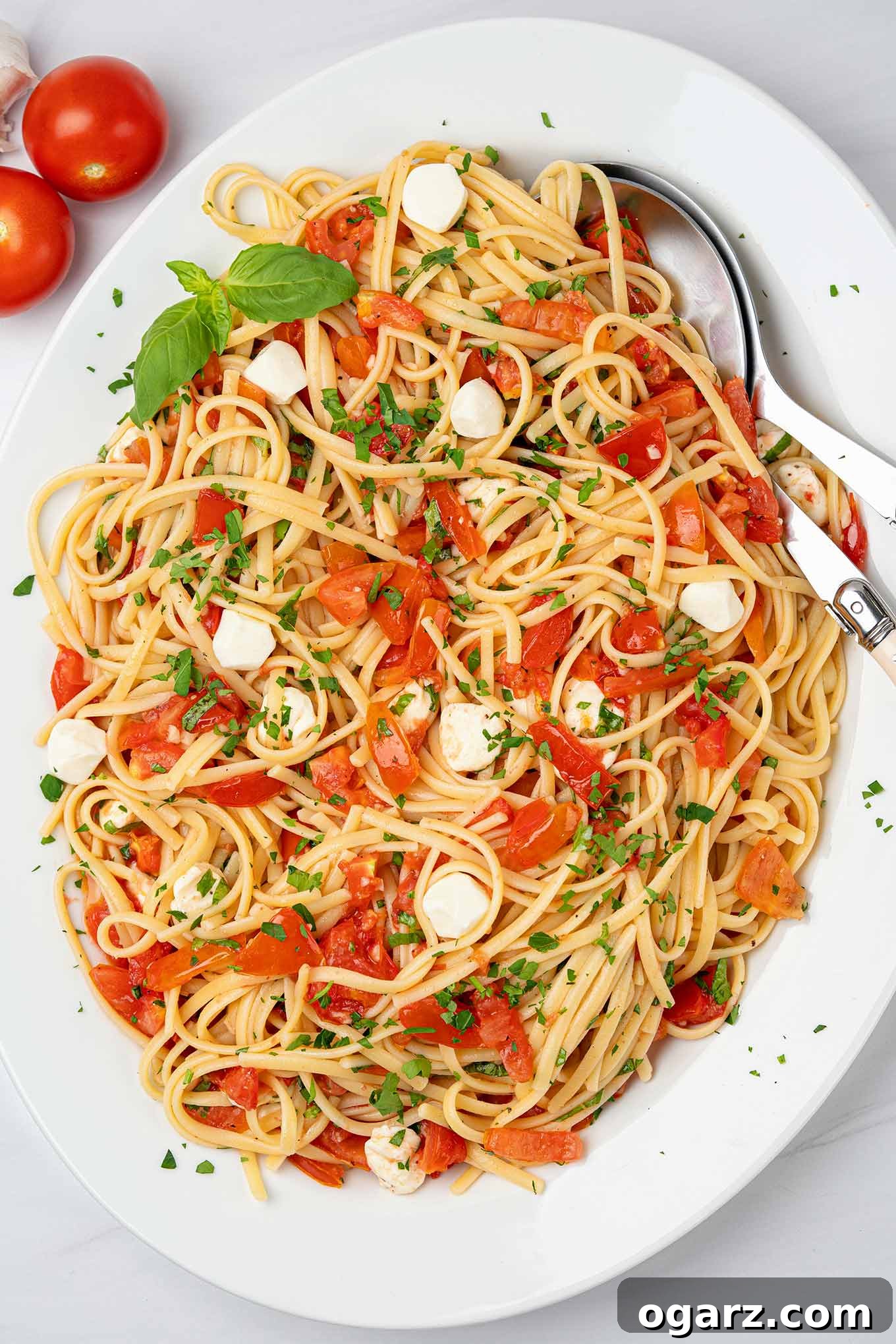
Caprese Pasta Recipe: Fresh Flavors, Fast Preparation
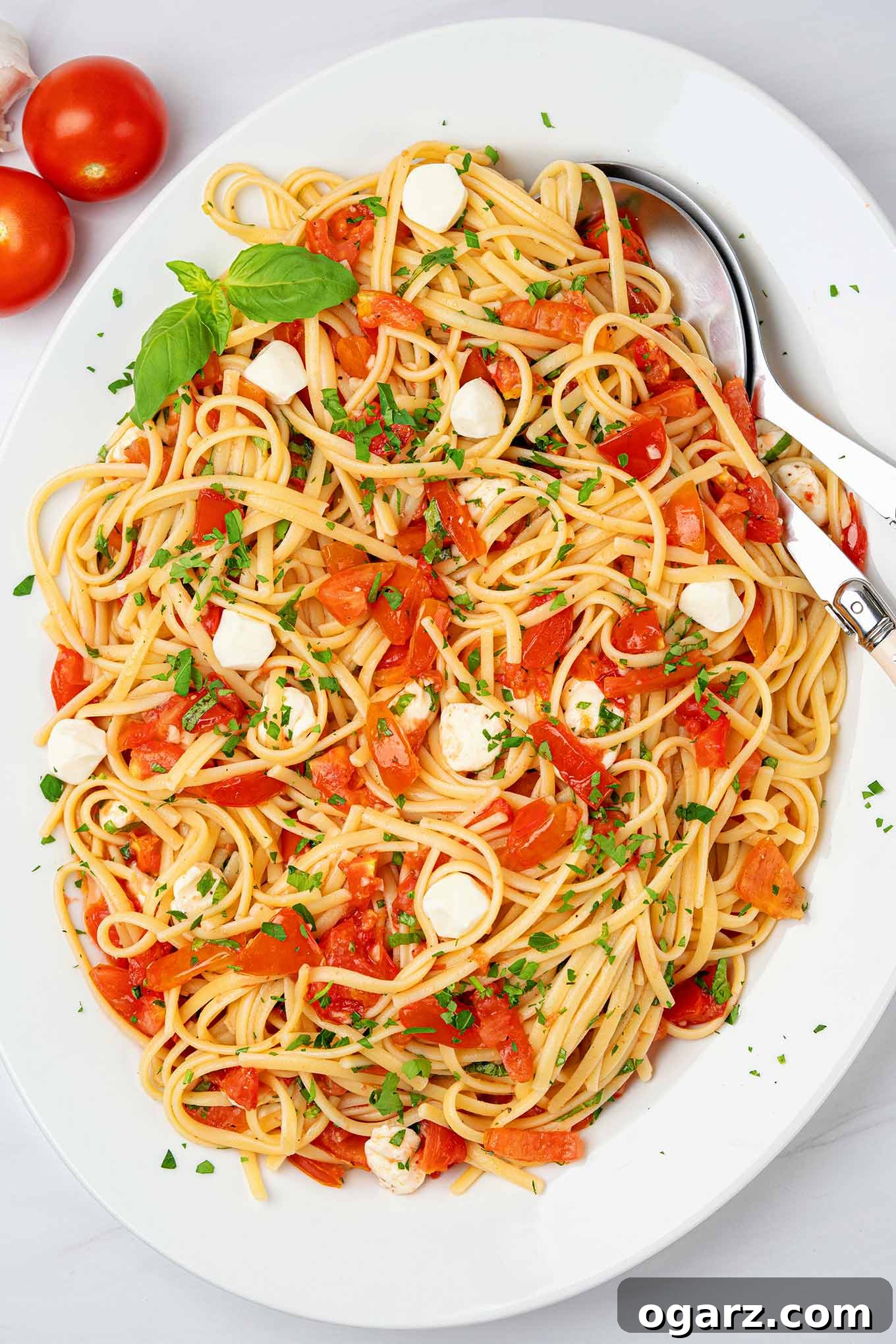
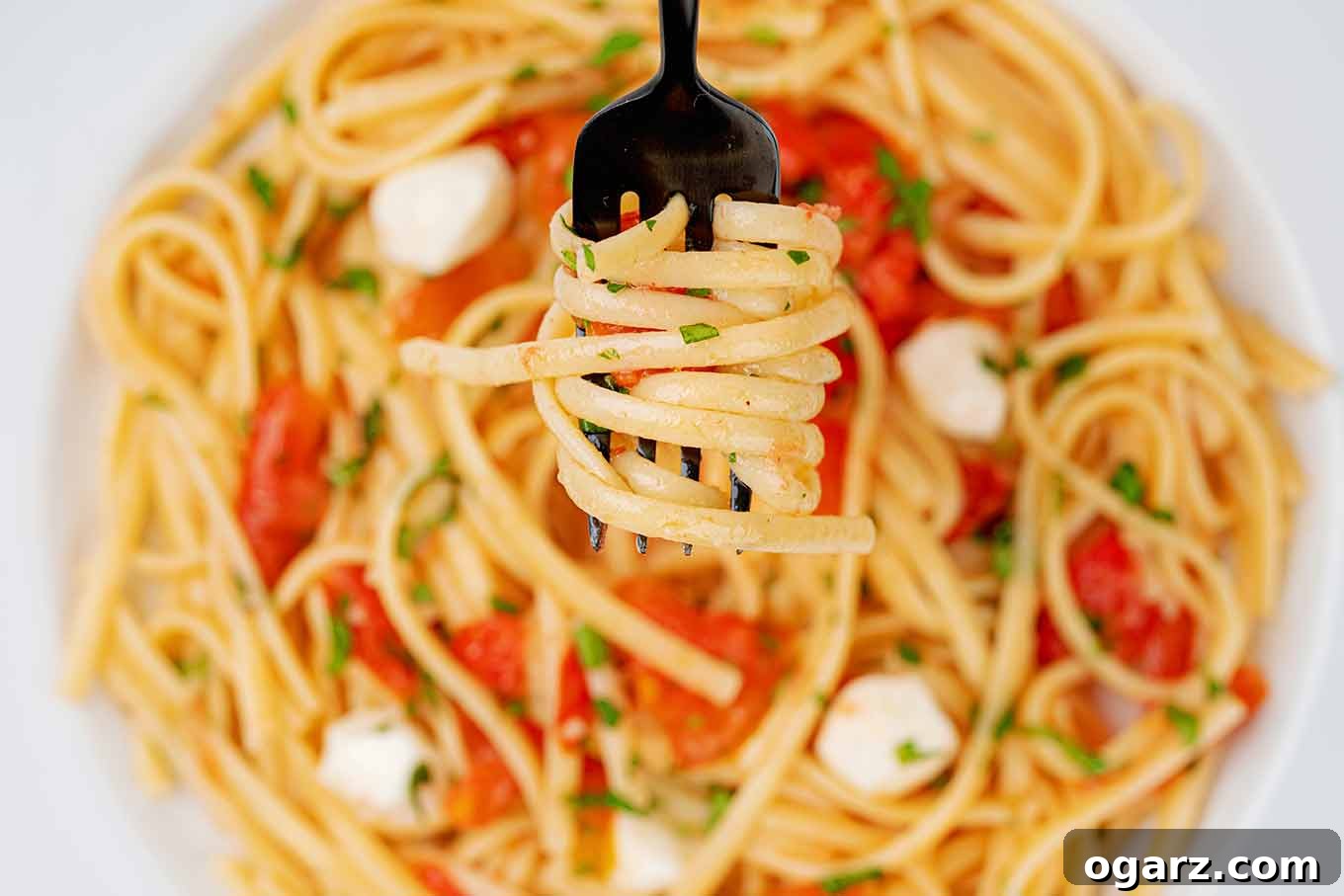
In the culinary world, true genius often lies in simplicity. This principle is perfectly embodied in Caprese pasta, a dish celebrated for its vibrant, fresh flavors and effortless preparation. Imagine ripe, sun-kissed tomatoes, delicately chopped and bathed in a luxurious blend of extra-virgin olive oil, aromatic seasonings, and a hint of balsamic vinegar. This delightful mixture is allowed to macerate, allowing the flavors to deepen and intertwine, before being gently tossed with freshly cooked pasta. The residual warmth from the pasta works magic, softening the tomatoes just enough to create a light, uncooked sauce that beautifully coats every strand, infusing each bite with an irresistible burst of Mediterranean sunshine.
For those bustling weeknights when time is short but the desire for a delicious, homemade meal is strong, quick pasta dishes are an absolute lifesaver. Caprese pasta stands out as a top contender, offering a gourmet experience without the demanding kitchen time. While traditionally a summer favorite, born from the bounty of garden-fresh tomatoes, this dish has evolved into a year-round staple. Thanks to readily available varieties like Campari (also known as cocktail tomatoes), you can now enjoy the quintessential taste of Caprese regardless of the season. It’s a versatile and satisfying meal that promises ease and flavor in equal measure. Another cherished weeknight option in our repertoire marries cheese tortellini with fresh tomatoes, fragrant basil, and tender sautéed zucchini, culminating in a wholesome, one-dish dinner that comes together in just 30 minutes.
Key Ingredients & Substitutions for Caprese Pasta
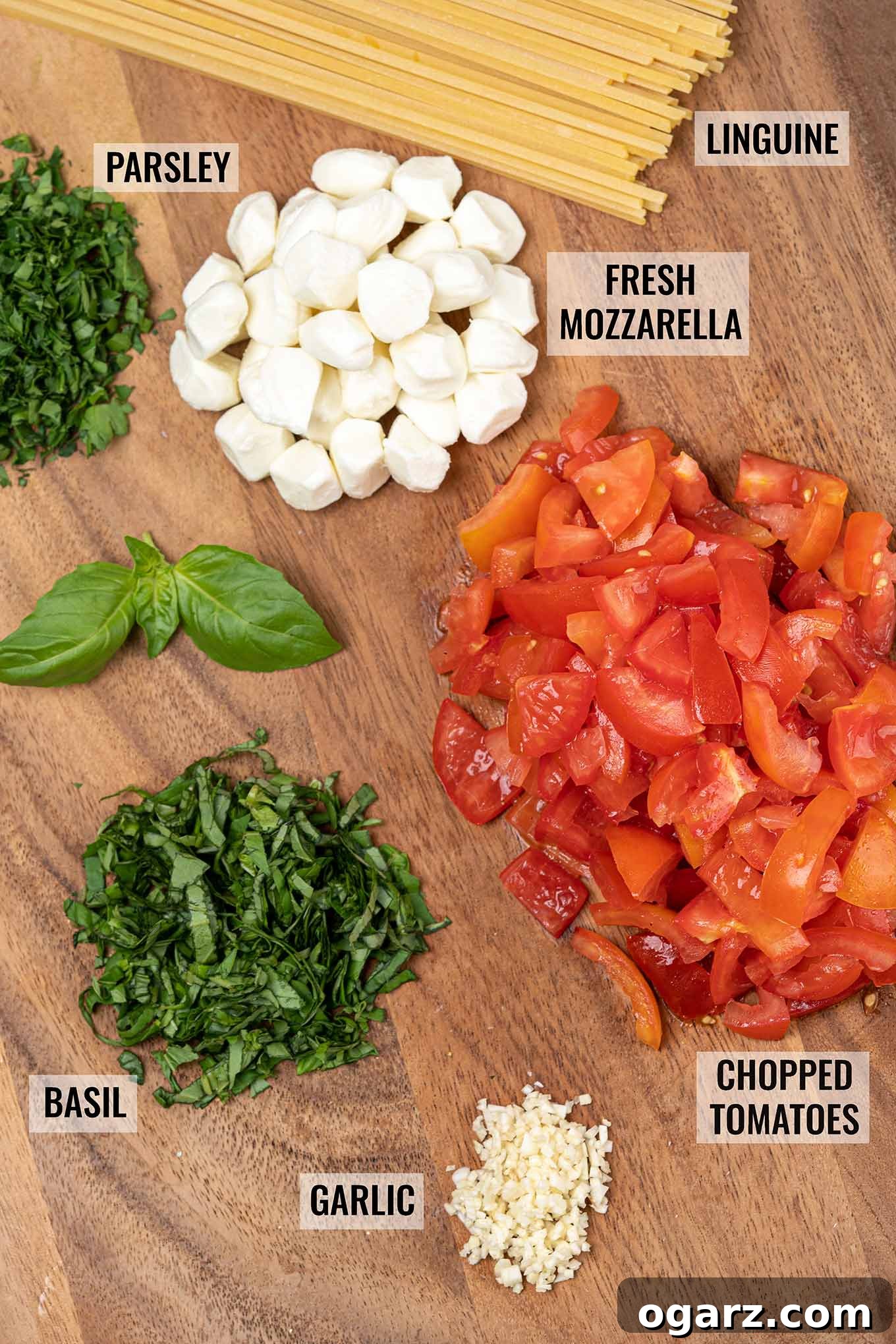
Understanding the star components of this recipe is crucial for success. Here’s an in-depth look at the key ingredients, along with helpful insights and substitution tips. The complete, quantitative list can be found in the detailed recipe card below.
Choosing the Perfect Pasta
PASTA: The choice of pasta can significantly influence the overall experience of your Caprese dish. We often gravitate towards long strands like linguine or spaghetti, as their elegant form is perfectly suited to embrace and carry the light, uncooked tomato sauce, ensuring every bite is fully coated. However, the beauty of Caprese pasta lies in its adaptability. You can absolutely opt for shorter, more delicate cuts of macaroni that are excellent at trapping the sauce within their nooks and crannies. Rotini and fusilli, with their delightful spirals, are particularly good options, offering a satisfying texture and ensuring a generous amount of sauce clings to each piece. When selecting your pasta, remember that quality matters; a good pasta provides a superior base for the fresh ingredients.
Selecting the Finest Tomatoes
TOMATOES: The heart of any Caprese dish is, undoubtedly, the tomatoes. Nearly any type of fresh, ripe tomato will yield delicious results in this recipe. The key is ripeness – a juicy, flavorful tomato will make all the difference. We do, however, advise against using plum tomatoes for this specific recipe, as their drier texture and less intense flavor when served raw might not capture the full essence of Caprese. If you’re keen to enjoy this delightful dish outside the peak of tomato season, Campari tomatoes (often marketed as cocktail tomatoes) are an exceptional choice. They consistently offer a concentrated sweetness and robust flavor that shines through, making them a fantastic alternative when garden tomatoes are not in season. Look for firm, vibrantly colored tomatoes with a sweet aroma.
The Magic of Mozzarella
MOZZARELLA: Fresh mozzarella is a non-negotiable ingredient for authentic Caprese flavor. If your local supermarket stocks them, fresh mozzarella “pearls” (bocconcini or ciliegine) are by far the most convenient option. These small, bite-sized balls require minimal preparation – simply drain them and toss directly with the pasta. If you purchase a larger block of fresh mozzarella or the cherry-sized balls (ciliegine), a quick cut into 1/2-inch pieces will prepare them perfectly. For optimal freshness, always store fresh mozzarella in the refrigerator in a tightly sealed container. If the liquid level appears low, add enough water to ensure the cheese remains fully submerged, preserving its soft texture and delicate flavor for up to 5 days.
Essential Fresh Herbs: Basil and Parsley
BASIL AND PARSLEY: Given that the sauce for this pasta is uncooked, the role of fresh herbs is paramount, contributing both invigorating flavor and delightful texture. Fresh basil is iconic in Caprese, providing a sweet, peppery aroma. To prepare basil, gently remove the leaves from their stems, stack them neatly, then roll them tightly into a cylinder before slicing them into thin ribbons (a technique known as chiffonade). This method maximizes their visual appeal and ensures even distribution of flavor. For the parsley, simply detach the leaves from any thick stems and chop them using a rhythmic rocking motion with your knife. The bright, slightly peppery notes of fresh parsley complement the basil beautifully, adding another layer of herbaceous complexity. Avoid dried herbs here, as they simply won’t deliver the same vibrant impact.
The Golden Touch: Extra-Virgin Olive Oil & Garlic
EXTRA-VIRGIN OLIVE OIL: As with any classic Italian dish, the quality of your olive oil is fundamental. A good quality extra-virgin olive oil provides the rich, fruity base for our uncooked sauce, emulsifying with the tomato juices and seasonings to create a silky coating for the pasta. It’s not just a fat; it’s a flavor enhancer.
GARLIC: Freshly minced garlic is absolutely essential here. It adds a pungent warmth and depth that grounds the brighter flavors of the tomatoes and herbs. Avoid pre-minced garlic from a jar; the fresh cloves provide a superior aroma and taste that is irreplaceable in this simple dish.
Balsamic Vinegar: An Optional Flavor Boost
BALSAMIC VINEGAR (Optional): A small splash of balsamic vinegar can introduce a wonderful depth and a subtle tangy counterpoint to the sweetness of the tomatoes and mozzarella. While not strictly essential, we find it adds an extra dimension of flavor that elevates the dish. If you choose to incorporate it, be mindful that traditional dark balsamic vinegar can sometimes discolor the pristine white fresh mozzarella cheese. To circumvent this, we highly recommend using white balsamic vinegar if it’s available. Its milder color will preserve the visual integrity of your beautiful Caprese pasta while still delivering that desired touch of acidity and complexity.
Prep Overview
How to Make Caprese Pasta: Step-by-Step
Ready to bring this delicious Caprese pasta to life? Here’s a quick overview of the process to guide you. For detailed, step-by-step instructions with exact measurements, please refer to the printable recipe card provided further down the page.
Getting Started: Preparation is Key
BEFORE YOU BEGIN: A little preparation goes a long way in ensuring a smooth cooking experience. First, place a large pot of generously salted water on the stovetop and bring it to a rolling boil for your pasta. While the water heats, gather and prepare your fresh ingredients: finely chop your chosen herbs, mince the garlic cloves, and have your fresh mozzarella conveniently at hand. This ‘mise en place’ approach ensures everything is ready when you need it, making the assembly process seamless.
Infusing Flavor: Marinating the Tomatoes
MARINATE THE TOMATOES: The secret to the rich flavor of this dish lies in the tomato marinade. Begin by seeding and chopping your ripe tomatoes into uniform 1/2-inch pieces. Transfer these vibrant pieces to a large mixing bowl. Season them generously with salt and freshly ground black pepper to draw out their natural juices and enhance their sweetness. Drizzle with a portion of your extra-virgin olive oil, add the finely minced garlic for aromatic depth, and, if using, a splash of balsamic vinegar for a touch of tangy brightness. Gently combine all the ingredients. Allow this mixture to sit aside for a minimum of 10-15 minutes. This maceration period is crucial, giving the flavors time to meld and deepen, creating a more cohesive and delicious sauce base.
Perfectly Cooked Pasta
COOK THE PASTA: Once your salted water is boiling rapidly, add the pasta and cook according to the package directions until it reaches a perfect al dente texture. Before draining, make sure to reserve about 1/4 cup of the starchy pasta cooking water – this golden liquid is invaluable for helping to emulsify and bind the sauce later. Drain the pasta thoroughly and immediately return it to the same pot. Drizzle the cooked pasta with the remaining extra-virgin olive oil and add a tablespoon or two of the reserved cooking water. Toss gently but thoroughly to coat the pasta strands. The olive oil prevents sticking, and the pasta water helps create a smooth, luscious texture when combined with the sauce.
Bringing it All Together: The Grand Finale
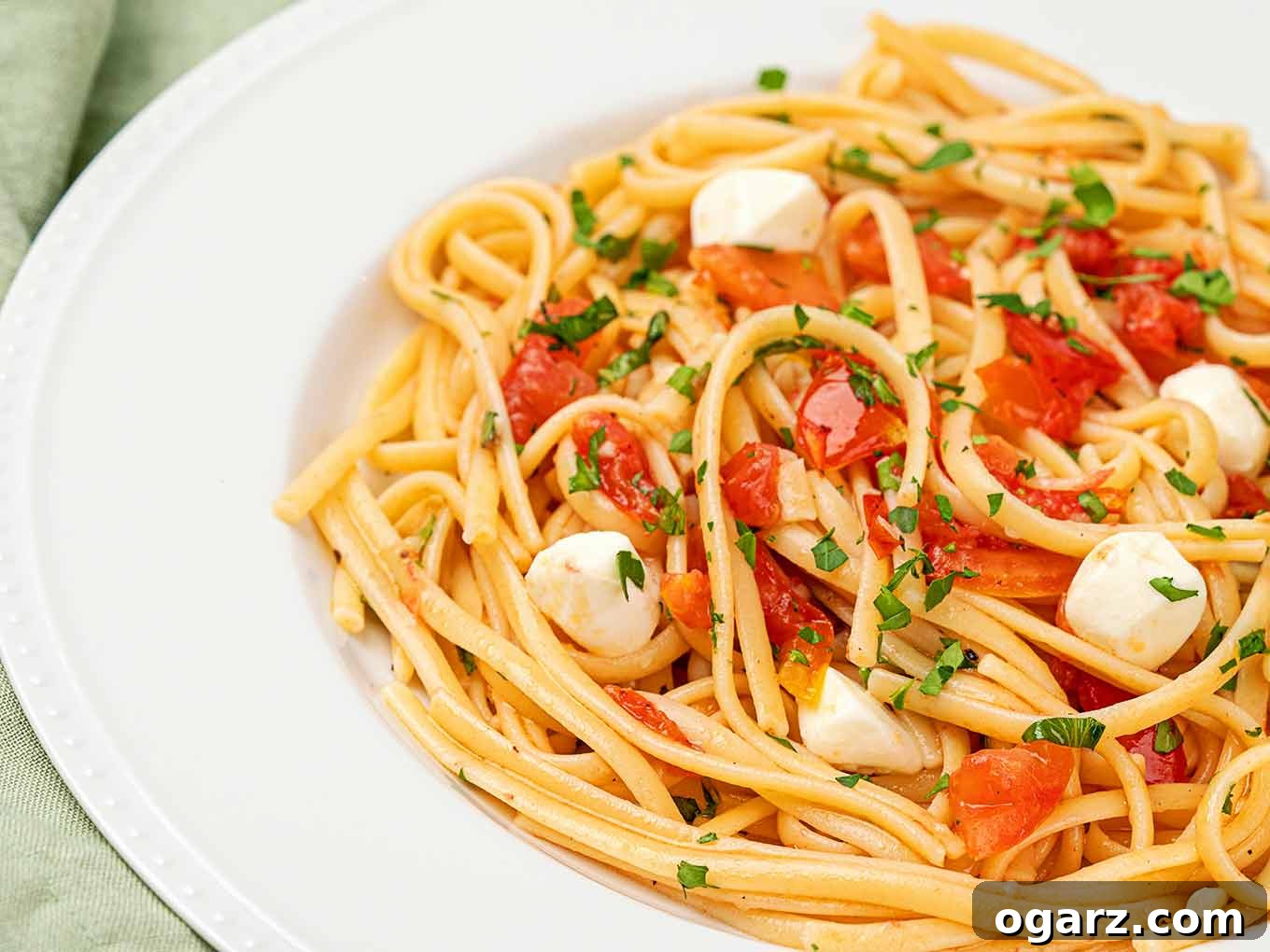
FINISH THE DISH: With the pasta perfectly coated and still warm, it’s time to unite all the flavors. Add the marinated tomatoes, the fresh basil, chopped parsley, and the creamy fresh mozzarella to the pot with the pasta. Toss everything together vigorously but carefully. The residual heat from the pasta will gently warm the mozzarella, causing it to soften slightly, and further coax the aromatic flavors from the herbs and tomatoes. Taste the dish for seasoning, adding more salt or pepper as needed to achieve perfect balance. Serve immediately on a large platter or plate individual portions, garnishing with an extra sprinkle of fresh herbs if desired for an inviting presentation. Enjoy the symphony of fresh, vibrant tastes!
Serving Suggestions and Perfect Pairings
While Caprese pasta is inherently a self-contained, satisfying one-dish dinner, its fresh, bright profile makes it an excellent candidate for pairing with complementary sides. We often find ourselves adding a crisp salad or a light green vegetable to round out the meal. A top choice is zucchini, simply seasoned with salt and pepper, drizzled with olive oil, and oven-roasted until it develops a beautiful, lightly caramelized sweetness. This adds a wonderful depth and texture contrast. Other excellent companions include grilled asparagus, steamed green beans, or a simple arugula salad with a lemon vinaigrette. For those who desire a protein boost, grilled chicken breast or shrimp would be a fantastic addition, maintaining the light and fresh character of the meal. A crusty loaf of Italian bread for soaking up any leftover sauce is also highly recommended!

Caprese Pasta
Ingredients
- 8 ounces linguine or spaghetti
- 2 lbs ripe tomatoes, (see notes for recommendations)
- Salt and freshly ground black pepper
- 4 tablespoons extra-virgin olive oil, divided
- 2 cloves garlic, finely minced
- 1 tablespoon balsamic vinegar, (optional – see notes)
- 1/4 cup chiffonade of fresh basil
- 1/4 cup chopped fresh parsley
- 6 ounces fresh mozzarella pearls, (see notes for substitutions)
Instructions
-
Bring a large pot of salted water to a rolling boil for the pasta. Ensure the water is well-salted, almost tasting like the sea, to properly season the pasta from within.
-
Carefully seed and chop the ripe tomatoes into uniform 1/2-inch pieces. There’s no need to peel the tomatoes for this recipe, as the skins add texture and nutrients. Transfer the chopped tomatoes to a large bowl and season them generously to taste with salt and freshly ground black pepper.
-
Drizzle the seasoned tomatoes with 2 tablespoons of the extra-virgin olive oil. Add the finely minced garlic and, if you’re using it, the balsamic vinegar. Gently combine all these ingredients, ensuring the tomatoes are well-coated. Set this mixture aside for at least 10 minutes to allow the flavors to truly blend and the tomatoes to macerate. Just before combining with pasta, stir in the chiffonade of fresh basil and chopped parsley.
-
Cook the pasta in the boiling salted water according to the package directions until it is perfectly al dente. Before draining, remember to reserve about 1/4 cup of the starchy pasta cooking water. This reserved water is key to achieving a silky, well-emulsified sauce.
-
Drain the cooked pasta thoroughly and return it to the same pot. Drizzle the pasta with the remaining 2 tablespoons of extra-virgin olive oil and add about half of the reserved cooking water. Toss vigorously to ensure every strand is lightly coated. This prevents the pasta from sticking and prepares it for the sauce.
-
Now, add the marinated tomatoes (with the basil and parsley), and the fresh mozzarella pearls to the pot with the warm pasta. Gently combine all the ingredients, tossing until everything is well distributed and lightly warmed by the residual heat of the pasta. Taste the dish and adjust the seasoning as needed, adding more salt or pepper for balance.
-
Transfer the Caprese pasta to a large serving platter or plate individual portions. For an extra touch of freshness and visual appeal, garnish with additional chopped parsley and fresh basil, if desired. Serve this delightful dish immediately to best enjoy its vibrant, fresh flavors and textures.
Notes
ABOUT THE BALSAMIC VINEGAR: The addition of balsamic vinegar is a personal preference that can add a wonderful layer of complexity and a subtle tang to the dish, but it is not essential for a delicious Caprese pasta. If you decide to include it, please be aware that traditional dark balsamic vinegar can sometimes cause discoloration of the fresh mozzarella cheese, affecting the pristine white appearance. To avoid this, we highly recommend using white balsamic vinegar, if possible. It provides the same delightful acidity and depth of flavor without altering the visual appeal of your mozzarella.
ABOUT THE FRESH MOZZARELLA: For ultimate convenience and a beautiful presentation, our first choice for this dish is fresh mozzarella pearls, typically about 1/2-inch in diameter, from brands like BelGioioso. These small, perfectly portioned balls can be drained and added directly to the pasta. If mozzarella pearls are not available in your local grocery store, simply purchase any type of fresh mozzarella (such as a block of fior di latte or larger ciliegine/bocconcini) and cut it into 1/2-inch cubes. The key is to use fresh mozzarella for its soft, creamy texture and mild, milky flavor, which is a hallmark of authentic Caprese.
Nutrition
Nutrition information is automatically calculated, so should only be used as an approximation.