
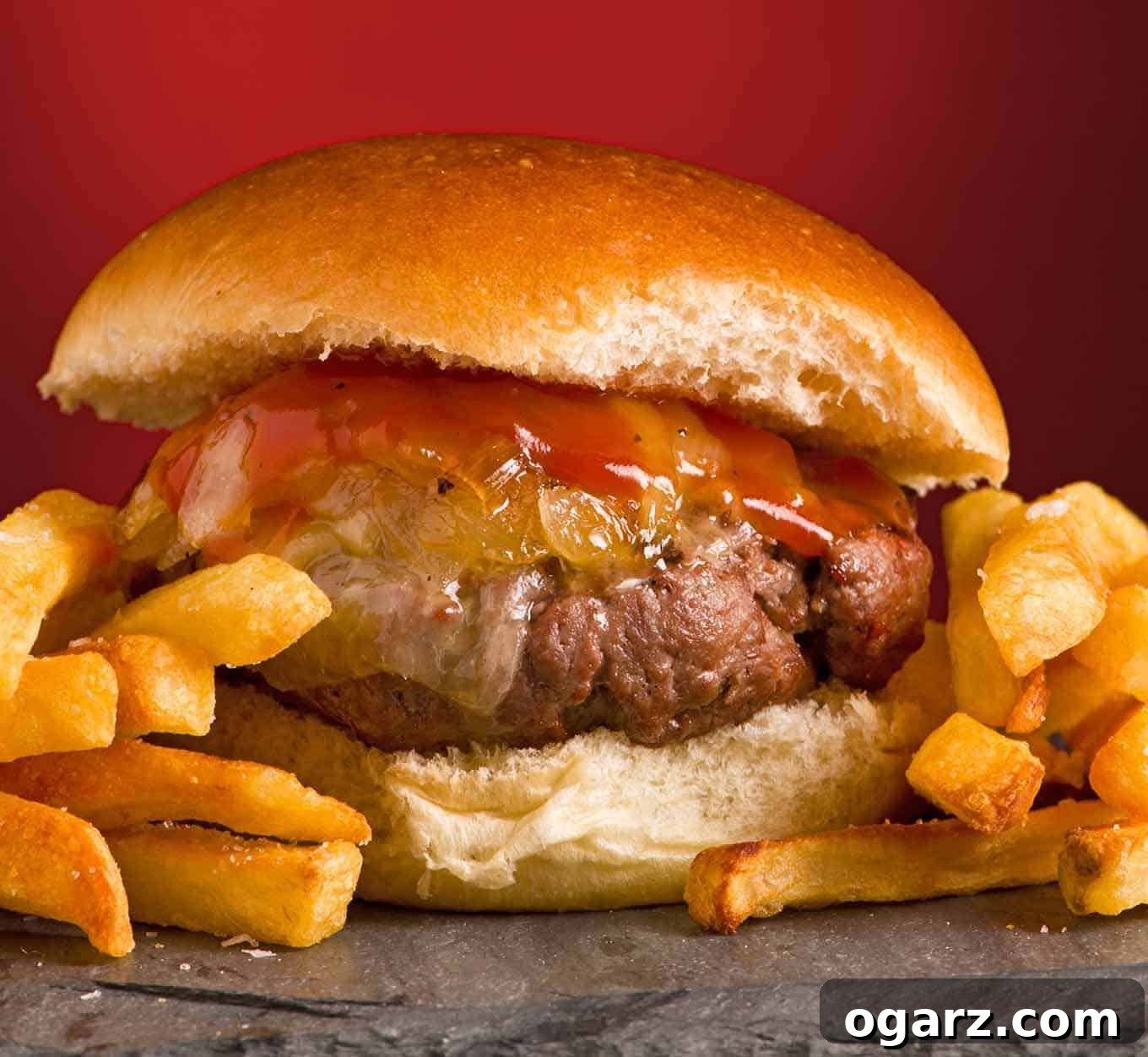

Pictured: Our delectable Vermont Cheddar Burger, elegantly crowned with sharp white cheddar cheese and sweet, maple-glazed onions.
Craving a succulent, flavor-packed burger that truly hits the spot? Skip the drive-thru and embark on a culinary journey to create the ultimate homemade burger. This comprehensive guide reveals our time-tested methods for crafting juicy, tender, and consistently delicious hamburgers, whether you prefer them grilled to smoky perfection, broiled for a quick sear, or pan-fried on your stovetop for an irresistible crust. Get ready to master the art of the perfect burger, tailored to your taste and cooking style.
Choosing the Best Ground Beef for Unforgettable Burgers
The foundation of any extraordinary burger lies in the quality and type of ground beef you select. Achieving that coveted juicy texture and rich flavor starts with understanding the nuances of ground meat.
- Optimal Fat-to-Lean Ratio: Your Key to Juiciness: When it comes to burgers, leaner isn’t always better. Fat is the secret ingredient that renders during cooking, infusing your patty with moisture and intense flavor. Our top recommendation for consistently juicy and flavorful burgers is ground chuck with an 80% lean / 20% fat ratio. This balance ensures enough fat to keep the burger moist without making it excessively greasy. Avoid ground beef that is too lean (e.g., 90/10 or higher), as it tends to result in dry, crumbly patties.
- Freshness Makes a Difference: The freshness of your ground beef significantly impacts the final taste and texture. Ground meat can lose moisture and develop off-flavors quickly. If purchasing from a grocery store, always check the grind date and opt for beef that was ground that very day. For the absolute pinnacle of freshness and flavor control, consider grinding your beef at home. This simple step elevates your burger game considerably, allowing you to select specific cuts and control the grind’s coarseness.
Grinding Your Own Beef at Home for Ultimate Freshness
Achieving unparalleled burger quality is made easy when you grind your own beef. It’s a straightforward process that offers superior flavor and texture control. Here are detailed guidelines for grinding your own beef, suitable for various budgets and equipment:
- Selecting the Right Cut: To maintain our recommended 80:20 fat-to-lean ratio, a small chuck roast (typically 2 to 2-1/2 pounds) is an excellent choice. Chuck is inherently flavorful and boasts a good fat content, making it ideal for grinding. Other cuts like brisket or short rib can also be incorporated for added complexity, but chuck is a great starting point.
- Preparing the Meat for Grinding: Proper preparation is crucial for a successful grind. Begin by cutting the beef into approximately 1/2-inch cubes. It’s important not to trim away the fat, as this is vital for a juicy burger. Once cubed, place the beef in a single layer in a plastic bag or on a baking sheet and freeze for about 30 minutes. This “deep chilling” step is key: it firms up the fat, preventing it from smearing during grinding and ensuring distinct meat particles. The result is a less dense, more tender, and ultimately juicier patty.
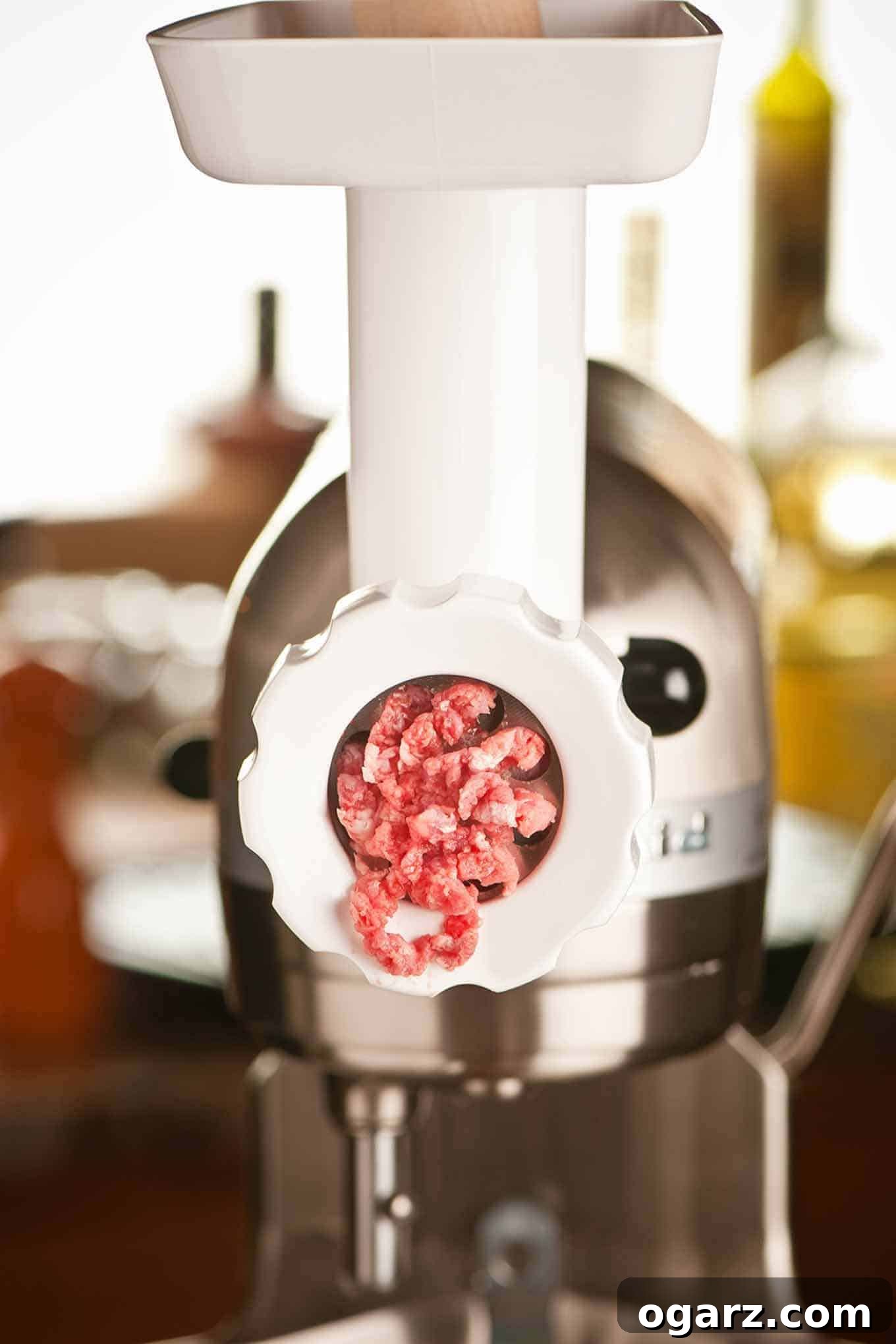
- Using a Meat Grinder: If you own a dedicated meat grinder or a stand mixer attachment, select a grinding blade with 1/4-inch holes for a perfect medium grind. For optimal results, place the grinding blade and any other metal parts of your grinder in the freezer alongside the meat. Keeping all components as cold as possible prevents the meat from warming up too much, which can lead to a less desirable texture. Feed the chilled meat cubes through the grinder according to your specific model’s instructions.
- Using a Food Processor: Don’t have a meat grinder? A food processor can also do the job! Freeze the blade of your food processor along with the meat cubes. Work in small batches, processing only about 1/4 to 1/3 of a pound at a time. Pulse the cubes just long enough to mince the meat into pieces slightly larger than grains of rice. The goal is a coarse, textured grind, not a paste. Overprocessing will warm the meat and create an undesirable, tough burger texture.
Pro Tip: For our recipes, we frequently utilize a 2-1/4 lb chuck roast, cubed and ground with a stand mixer attachment, consistently yielding superb results.
Expert Techniques for Preparing Burger Patties
The way you form and prepare your burger patties is just as critical as the beef itself. These simple steps ensure your burgers cook evenly, retain their shape, and stay incredibly juicy.
- Gentle Forming and Seasoning: Divide your ground beef into equal portions, typically about 6 ounces each for a substantial burger. Gently form each portion into a loosely packed ball, then flatten it into a patty about 3/4-inch thick. Avoid overworking or compressing the meat, as this can lead to a tough burger. Over-handling develops the meat’s proteins, resulting in a dense rather than tender patty. Season liberally with salt and freshly ground black pepper just before cooking for the best flavor.
- The Essential Center Indentation: Have you ever noticed how grilled burgers often puff up in the middle, become dry around the edges, and shrink to fit too small for the bun? This common issue occurs because the outer edges cook faster and contract, pushing the raw meat towards the center. The simple, yet highly effective, solution is to create a substantial indentation in the center of each patty. While many recipes suggest a “thumbprint,” this is often too small. Instead, use two or three fingertips to gently press a larger, shallow saucer-like depression in the center, leaving the edges slightly thicker. This strategic shaping helps the burger cook flatter and maintain its size and juiciness.
- Chilling for Optimal Results: Once formed, chill your burger patties in the refrigerator for at least 30 minutes. This step is often overlooked but plays a significant role in achieving a truly juicy burger. A cold patty hits the hot cooking surface with a greater temperature difference, allowing for a better sear and reducing moisture loss. Chilling also helps the patties maintain their shape during cooking, especially with the indentation.
Mastering the Grill: How to Cook Perfect Grilled Burgers
Grilling imbues burgers with an irresistible smoky char and robust flavor. Follow these tips to achieve perfectly grilled burgers every time. If grilling isn’t an option, fear not – detailed instructions for broiling and skillet-cooking follow below.
- Preheat and Oil the Grates: Begin by thoroughly preheating your grill to a consistent medium-high heat, aiming for a temperature between 400 to 425°F (200-220°C). A properly hot grill creates a beautiful crust and prevents sticking. Once hot, use tongs and a paper towel dipped in high-smoke-point oil (like vegetable or canola) to liberally oil the grates. This further prevents sticking and promotes even browning.
- Season and Place Patties: Just before placing them on the hot grill, lightly season both sides of your chilled burger patties with salt and freshly ground black pepper. Place the burgers on the oiled grates with the indentation side facing up.
- The Art of Flipping: Patience is key when grilling. Resist the urge to flip your burgers too soon. Allow them to cook undisturbed until you see juices begin to bead on the top surface, indicating a good sear on the bottom. This typically takes 2 to 4 minutes. Once those juices appear, it’s time for a single, confident flip. Avoid excessive flipping, as this disrupts the cooking process and can lead to uneven results and dryness.
- Testing for Doneness with Precision: Continue grilling on the second side. After about 1 minute on the second side, begin checking the internal temperature using an instant-read thermometer. Insert the thermometer horizontally into the side of the thickest part of the patty.
- Medium-Rare: 125°F (52°C)
- Medium: 135°F (57°C)
- Medium-Well: 145°F (63°C)
- Note: The CDC recommends cooking ground beef to an internal temperature of 160°F (71°C) for food safety.
- Adding the Cheese: For that perfectly melted cheesy goodness, add a slice of your favorite cheese (cheddar, provolone, Swiss, or American) as soon as the burgers reach your desired internal temperature. Close the grill lid or cover with a dome to help the cheese melt quickly and evenly, usually within 20 to 30 seconds.
- Crucial Resting Period: Just like steaks, burgers benefit immensely from a resting period. Transfer the cooked burgers to a clean plate or cutting board and let them rest for at least 5 minutes before serving. This allows the muscle fibers to relax and reabsorb their flavorful juices, ensuring every bite is moist and delicious.
- Prepare Buns and Toppings: While the burgers are resting, take this opportunity to toast your hamburger buns lightly on the grill or in a pan. Have all your favorite condiments and toppings (lettuce, tomato, onion, pickles, sauces) ready and within reach so you can assemble and serve your magnificent burgers immediately after resting.
How to Broil Burgers for Indoor Perfection
You don’t need an outdoor grill to achieve a perfectly cooked burger with a fantastic crust. Broiling offers a direct, high-heat cooking method that mimics grilling, making it an excellent indoor alternative.
- Preheat the Broiler: Adjust an oven rack to position it about 3 inches below the broiler element (or flame). Turn your broiler to high and preheat for at least 10 minutes. Line a broiler pan with heavy-duty aluminum foil for easier cleanup.
- Broil the Burgers: Arrange your seasoned burger patties on the foil-lined broiler pan, with the indentation side facing up. Season lightly with salt and pepper. Broil for 3 minutes on the first side to achieve a good sear.
- Flip and Test for Doneness: Carefully flip the burgers to the second side. Continue broiling, beginning to check the internal temperature with an instant-read thermometer after 1 1/2 minutes. Remove the burgers from the broiler once they reach your preferred internal temperature:
- Medium-Rare: 125°F (52°C)
- Medium: 135°F (57°C)
- Medium-Well: 145°F (63°C)
- Adding Cheese (Optional): If you’re adding cheese, place a slice on each burger as soon as it reaches the desired internal temperature. Return the pan briefly under the broiler, just long enough for the cheese to melt and become bubbly, typically 20 to 30 seconds. Watch carefully to prevent burning.
- Rest Before Serving: Transfer the broiled burgers to a plate and allow them to rest for 5 minutes. This vital step ensures the juices redistribute throughout the patty, resulting in a tender and moist burger.
- Buns and Toppings Ready: While the burgers rest, lightly toast your buns under the broiler or in a separate pan. Prepare all your desired condiments and toppings for quick assembly and immediate enjoyment.
How to Cook Burgers in a Skillet for a Perfect Sear
Skillet-cooked burgers, especially when prepared in a cast-iron pan, develop a magnificent, deeply browned crust that rivals any grilled burger. This method is perfect for achieving a consistently juicy and flavorful patty.
- Preheat the Skillet: Add about 2 teaspoons of a high-smoke-point vegetable oil (like canola or grapeseed) to a 12-inch heavy-bottomed skillet, preferably cast iron. Swirl the oil to coat the bottom evenly. Preheat the skillet over medium-high heat until the oil just begins to smoke lightly. This indicates the pan is hot enough for a proper sear.
- Cook the Burgers: Carefully transfer your chilled burger patties to the hot skillet, placing them indentation side up. Season generously with salt and freshly ground black pepper. Cook undisturbed until a rich brown crust forms on the bottom, which usually takes about 3 minutes.
- Flip, Add Cheese, and Test Doneness: Flip the patties to the second side. If adding cheese, place a slice on top of each burger immediately after flipping. Continue cooking, using an instant-read thermometer to monitor the internal temperature for your preferred level of doneness:
- Medium-Rare: 125°F (52°C)
- Medium: 135°F (57°C)
- Medium-Well: 145°F (63°C)
- Rest Your Burgers: Once the burgers reach the desired temperature, transfer them to a platter or cutting board and let them rest for 5 minutes. This resting period is critical for the juices to redistribute, ensuring a tender and moist finished product.
- Prepare Buns and Toppings: While the burgers rest, quickly toast your hamburger buns in the same skillet (if space allows) or in a separate toaster. Organize all your favorite condiments and toppings for a seamless and delicious serving experience.
Pro Tips for Cooking the Best Burgers Every Time
Elevate your burger-making skills with these essential professional tips that guarantee a superior result, regardless of your chosen cooking method.
- Never Flatten the Patties: This is perhaps the most crucial rule for a juicy burger. While it might seem tempting to press down on burgers with a spatula while they cook, resist this urge at all costs! Pressing the patties squeezes out all the precious internal juices, leading to a dry, dense, and less flavorful burger. It also increases the risk of flare-ups on the grill. Let the heat do its work without intervention.
- Always Use an Instant-Read Thermometer: Relying solely on visual cues or cooking times can be misleading, as burger size, thickness, and heat intensity vary greatly. An instant-read thermometer is your best friend for precision cooking, ensuring your burgers are cooked exactly to your liking and, more importantly, to a safe temperature. Insert the thermometer horizontally into the side of the thickest part of the patty.
- Rare: 120-125°F (49-52°C)
- Medium-Rare: 125-130°F (52-54°C)
- Medium: 135-140°F (57-60°C)
- Medium-Well: 145-150°F (63-66°C)
- Well-Done: 155-160°F (68-71°C)
Important Note: For maximum food safety, especially when cooking ground beef, the CDC recommends cooking to an internal temperature of 160°F (71°C). While some prefer lower temperatures for taste, exercise caution and personal discretion.
- Don’t Overcrowd the Cooking Surface: Whether grilling, broiling, or skillet-frying, ensure there’s enough space between your burger patties. Overcrowding lowers the cooking temperature and leads to steaming instead of searing, preventing the formation of that delicious crust. Cook in batches if necessary.
- Simple Seasoning is Best: High-quality ground beef needs very little to shine. A generous sprinkle of salt and freshly ground black pepper is often all that’s required to enhance the natural flavors of the meat. Add other spices or mix-ins sparingly if you want the beef to remain the star.
Discover More Delicious Burger Recipes
Ready to explore beyond the classic? Here are some of our favorite burger recipes to inspire your next meal:
- Vermont Cheddar Burgers
- Grilled Hawaiian Burger
- Chimichurri Burger
How to Cook the Perfect Burger
Lynne Webb
20
10
30
20
4
burgers
Pin Recipe
Rate Recipe
Print Recipe
Ingredients
-
1-1/2
lbs
ground beef,
preferably ground chuck (80% lean / 20% fat) - Salt and freshly ground black pepper
-
4
slices
cheese,
optional -
4
hamburger buns,
lightly toasted - Your favorite condiments and toppings
Instructions
-
Divide the ground beef into four equal portions and form each into a loosely packed ball.
-
Gently flatten each ball into a 3/4″ thick patty. Using your fingertips, create a large indentation in the center so your patties resemble a shallow saucer.
-
Chill the patties for 30 minutes before cooking. This step is optional, but it does help to ensure juiciness and you can use the time to get your condiments and toppings together.
Grilling instructions:
-
Preheat a gas or charcoal grill to medium-high heat (400 to 425°F).
-
Oil the grill grates, season the burgers with salt and pepper, and place them on the grill, indentation side up.
-
Grill until you start seeing some juices bead on the top of the burgers, 2 to 4 minutes, then flip them over.
-
Cook for 1 minute then top each patty with cheese (if using).
-
Use an instant-read thermometer to test the temperature and continue grilling to desired doneness (130°F for medium-rare, 140°F for medium, and 150°F for medium-well).
-
Transfer the burgers to a plate and allow them to rest for 5 minutes before placing on the buns and adding toppings.
Broiling instructions:
-
Position a rack 3 inches below the element (or flame) and preheat the broiler on high for at least 10 minutes. Line a broiler pan with heavy-duty aluminum foil.
-
Arrange the burgers on the foil-lined pan, indentation side up, and season with salt and pepper. Broil for 3 minutes, then flip.
-
Continue broiling, checking the internal temperature with an instant-read thermometer after 1-1/2 minutes. Remove the burgers once they reach an internal temperature of 125°F for medium-rare, 135°F for medium, and 145°F for medium-well (see notes).
-
If you’re adding cheese, add a slice to each burger and place them back under the broiler just long enough for the cheese to melt, 20 to 30 seconds.
-
Give the burgers a few minutes to reabsorb their juices by letting them rest for 5 minutes before serving.
Skillet instructions:
-
Add about 2 teaspoons of vegetable oil to a 12-inch skillet, swirl to coat, and preheat on medium-high just until smoking.
-
Transfer the burger patties to the skillet, indentation side up, and season with salt and pepper. Cook until browned on the bottom, about 3 minutes.
-
Flip the patties, top with cheese (if using), and use an instant-read thermometer to monitor doneness, 125°F for medium-rare, 135°F for medium, and 145°F for medium-well.
-
Once the burgers reach the desired temperature, transfer them to a platter to rest for 5 minutes before serving.
Notes
Nutrition
Serving:
1
burger
,
Calories:
552
,
Total Fat:
36
g
,
Cholesterol:
121
mg
,
Sodium:
326
mg
,
Carbohydrates:
22
g
,
Fiber:
1
g
,
Sugar:
3
g
,
Protein:
33
g
Nutrition information is automatically calculated, so should only be used as an approximation.
Like this recipe? Rate and comment below!