
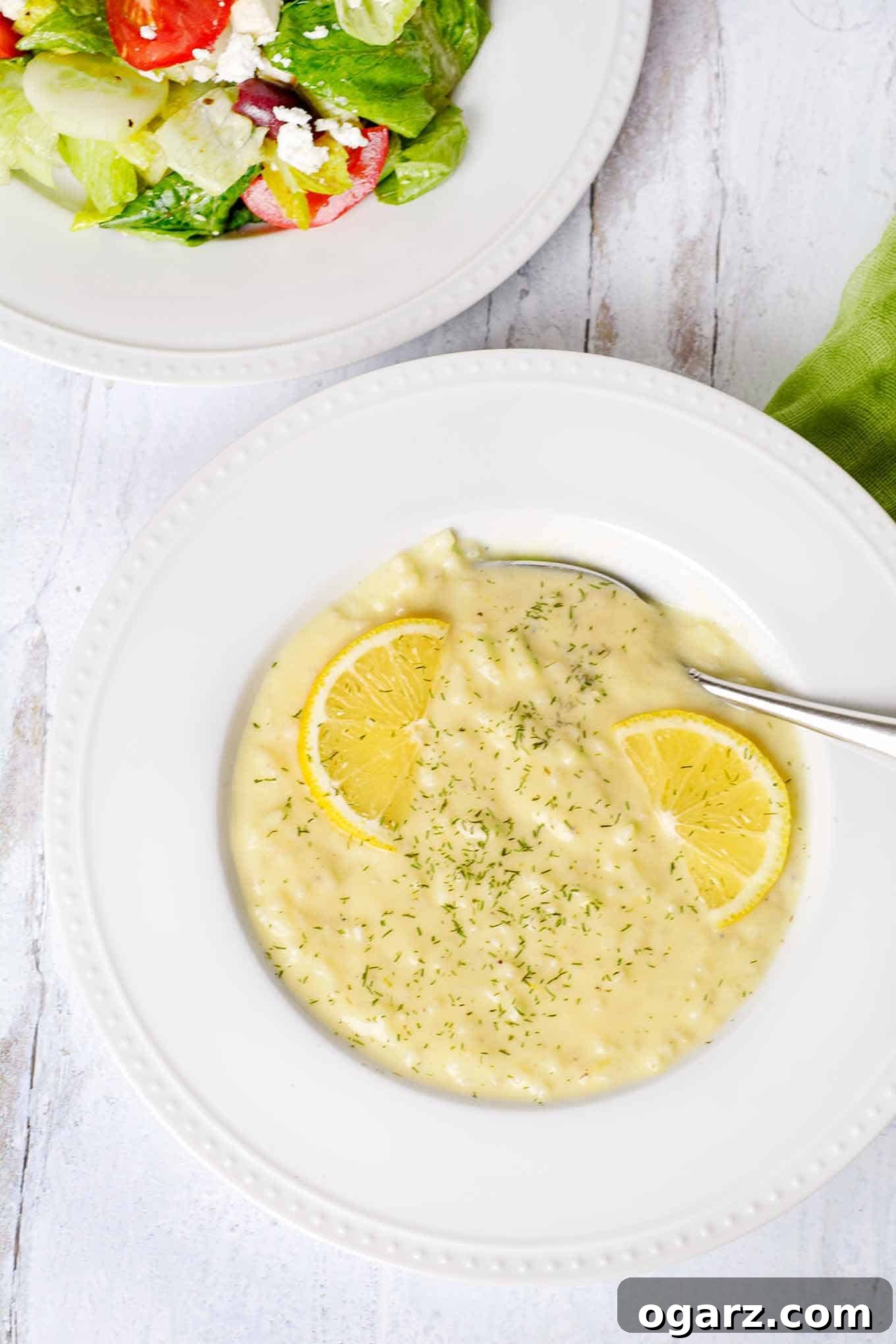
The Ultimate Guide to Greek Egg and Lemon (Avgolemono) Soup: A Timeless Culinary Classic
Embark on a delightful culinary journey to the sun-drenched shores of Greece with Avgolemono, a soup celebrated for its distinctive creamy texture and bright, zesty flavor. This traditional Greek egg and lemon soup is more than just a dish; it’s a staple in Greek homes, a symbol of comfort, and a testament to the simplicity and richness of Mediterranean cuisine. Crafted with wholesome ingredients like savory chicken broth, tender rice, and a velvety liaison of fresh eggs and aromatic lemon, Avgolemono (pronounced ahv-go-LEH-moh-no) offers a uniquely invigorating taste experience. Whether served as a comforting main course on a chilly evening or a refreshing starter during warmer months, this soup captivates with its delicate balance of savory and tangy notes.
Avgolemono stands as a cornerstone of Greek gastronomy, embodying the country’s culinary philosophy that champions fresh, high-quality ingredients transformed into something extraordinary with minimal fuss. Its historical roots run deep, evolving from ancient techniques used to enrich and thicken stews and soups, making it a truly authentic dish. Beyond its iconic soup form, the versatile Avgolemono sauce—a similar emulsion of egg and lemon—frequently graces a variety of other Greek delicacies, from delicate grilled fish and steamed vegetables to the beloved dolmades (grape leaves stuffed with rice). This adaptability highlights the sauce’s importance, lending its signature bright acidity and comforting richness to numerous dishes throughout Greek cuisine.
While often associated with its warming qualities, Avgolemono also boasts a surprisingly light character, making it a favorite year-round. It’s renowned for its potential health benefits, providing a good source of lean protein from eggs, a powerful boost of Vitamin C from fresh lemons, and comforting hydration from the nutritious broth. Frequently prescribed as a soothing remedy for colds or flu, this soup is a delicious and wholesome choice for any occasion, promising both satiety and a refreshing zing.
What is Avgolemono Soup: A Staple of Greek Cuisine
Avgolemono is a quintessential Greek soup that masterfully combines a few humble ingredients into a dish of profound flavor and comforting elegance. At its core, it’s a chicken broth-based soup, intentionally enriched and thickened by a delicate, silky emulsion of eggs and lemon juice. The judicious addition of rice provides a satisfying textural element and further body, making it a hearty yet remarkably light meal. The true magic of Avgolemono lies in the perfect balance of its key components: the savory depth of a well-made chicken broth, the bright, invigorating acidity of fresh lemon, and the silky richness imparted by properly tempered eggs.
Culturally, Avgolemono holds a special place in the hearts of Greeks. It is a dish often prepared during celebratory times, such as the Greek Orthodox Easter, where it might be made with lamb broth and feature bits of tender lamb meat. It also serves as a traditional restorative meal for those feeling unwell, believed to have healing properties due to its nutritional content and comforting warmth. Its status as a beloved comfort food is undeniable, evoking warmth, care, and the familiar flavors of home for many Greeks across the globe.
The name “Avgolemono” itself is a straightforward fusion of the Greek words “avgo” (egg) and “lemono” (lemon), precisely describing its star ingredients. The technique of preparing the egg-lemon mixture is crucial and requires a gentle hand to prevent the eggs from scrambling. This meticulous process ensures the soup achieves its characteristic smooth, creamy consistency without the use of heavy cream or flour, relying instead on the natural emulsifying power of the eggs. This intricate yet simple method is what gives Avgolemono its unique character, its delightful texture, and its universally beloved status in Greek households.
Essential Ingredients for an Authentic Avgolemono
Creating an exceptional Avgolemono soup begins with selecting the right ingredients. Each component plays a vital and distinct role in achieving the soup’s iconic flavor and texture. Here’s a detailed look at what you’ll need, along with insights into their importance and potential substitutions to guide your preparation:
- High-Quality Chicken Broth: This is the liquid foundation and flavor cornerstone of your Avgolemono. A rich, deeply flavored broth is absolutely paramount. We highly recommend using a good-quality, low-sodium chicken broth from the supermarket, as it allows for greater control over the final seasoning of your soup. However, if you are fortunate enough to have access to homemade chicken broth, by all means, use it! Homemade broth will undoubtedly elevate your soup to an unparalleled level of depth, complexity, and savory goodness. For those seeking a vegetarian option, a robust, savory vegetable broth can be used, though it will subtly alter the traditional flavor profile.
- Medium-Grain White Rice: The choice of rice is crucial for the soup’s thickening and overall texture. Medium-grain varieties, such as Arborio or Valencia rice, are ideal for Avgolemono. Their unique composition allows them to release more starch during cooking compared to long-grain rice. This released starch naturally helps to thicken the soup, contributing significantly to its desirable creamy and satisfying consistency. If medium-grain rice is not readily available, conventional long-grain white rice or even Basmati can serve as acceptable substitutes, although you might find the soup to be slightly thinner in texture. For a different mouthfeel or a quicker cooking time, small pasta shapes like orzo or stelline are also popular alternatives in some regional Avgolemono variations.
- Fresh Large Eggs: The eggs are the magical emulsifier behind Avgolemono’s signature creamy, velvety texture. Our recipe typically calls for 3 large eggs. However, it’s worth noting that egg sizes can vary, so it’s always wise to use your best judgment. If your eggs appear smaller than average, or you prefer a slightly thicker soup, feel free to add a fourth egg to ensure adequate thickening and richness. The tempering process—gently warming the whisked egg mixture with hot broth—is the most critical step. It prevents the eggs from scrambling and ensures you achieve that desirable smooth, luscious finish that defines Avgolemono.
- Fresh Lemons: As the “lemono” in Avgolemono, the vibrant, tangy flavor derived from both the freshly squeezed juice and the finely grated zest is absolutely indispensable. We cannot emphasize enough the importance of using fresh lemons; do not substitute bottled lemon juice. Fresh lemons provide a bright, clean acidity and an aromatic complexity that simply cannot be replicated by pre-packaged alternatives. When selecting lemons, choose ones that are firm, feel heavy for their size, and have smooth, thin skins—these typically yield the most juice and zest.
- Fresh Herbs (Optional, but Highly Recommended): While optional, a delicate sprinkling of fresh herbs serves as a beautiful and flavorful garnish for Avgolemono. Finely chopped fresh dill is our top choice, lending a refreshing, slightly anisy note that perfectly complements the bright lemon flavors. Alternatively, finely chopped fresh parsley or chives can also add a delightful burst of color and a subtle, fresh enhancement to the soup’s aroma and taste, making it not only more delicious but also visually appealing.
- Salt and Freshly Ground Black Pepper: These are essential for seasoning your soup to perfection. Always begin with a low-sodium broth, as recommended, to give you complete control over the final salt levels. Adjust these seasonings judiciously at the very end of the cooking process to achieve a balanced flavor that suits your palate.
Step-by-Step: How to Make Classic Greek Avgolemono Soup
Creating this delicious Greek egg and lemon soup is a truly rewarding experience. While the technique requires attention, especially when it comes to tempering the eggs, the overall process is straightforward and yields impressive results. Here’s a detailed, step-by-step guide to walk you through each stage, ensuring a smooth and flavorful Avgolemono:

Phase 1: Preparing the Base – Broth and Rice
- Bring Broth to a Boil: Begin by pouring 6 cups of your chosen chicken broth into a large, heavy-bottomed pot or Dutch oven. Place it over medium-high heat and bring the broth to a rolling boil. It’s important to ensure the broth is simmering vigorously before you proceed to the next step.
- Add Rice and Simmer: Once the broth is boiling, add 1/2 cup of medium-grain white rice. Stir continuously for approximately 2 minutes to prevent the rice grains from sticking to the bottom of the pot. Immediately reduce the heat to low, cover the pot tightly, and allow the rice to simmer gently for 15 to 20 minutes, or until the rice is tender and has absorbed a good portion of the broth. The rice should be cooked through, offering a slight bite, but not mushy.
Phase 2: Crafting the Avgolemono Liaison (Egg and Lemon Mixture)
- Whisk Egg Whites: While the rice is simmering, carefully separate the 3 large eggs, placing the whites in a medium-sized mixing bowl and the yolks in a separate small bowl. Begin by vigorously whisking the egg whites until they become frothy and just start to thicken slightly. This aeration helps to create a lighter, more ethereal texture for the final soup.
- Incorporate Yolks: Now, add the egg yolks to the frothy whites. Continue whisking the entire mixture until it achieves a light yellow color and a uniformly creamy consistency. Ensure there are no streaks of unmixed yolk or white.
- Temper the Eggs with Broth: This is arguably the most crucial step for a silky-smooth Avgolemono and requires your full attention. While continuously whisking the egg mixture in the bowl, slowly and gradually drizzle in about 1/2 cup of the hot simmering chicken broth from the pot. Pour in a very thin, steady stream. This process, known as tempering, slowly raises the temperature of the eggs, preventing them from scrambling when they are eventually added to the main pot. Continue whisking diligently for about 30 seconds after all the broth has been incorporated into the eggs.
- Add Lemon Juice: Into your perfectly tempered egg mixture, whisk in 3 tablespoons of freshly squeezed lemon juice. The acidity of the lemon not only adds that essential tangy flavor but also further stabilizes the egg mixture, reducing the risk of curdling.
Phase 3: Combining and Finishing the Soup
- Combine Egg Mixture with Soup: Carefully remove the pot of soup (containing the rice and broth) from direct heat. This step is critical to prevent the eggs from overcooking and scrambling. While stirring the soup in the pot constantly and vigorously in one direction, gradually add the tempered egg and lemon mixture. Pour it in a slow, continuous stream over the course of about a full minute, ensuring it integrates evenly throughout the hot broth and rice. Continuous, gentle stirring is the key to achieving a smooth, creamy, and beautifully emulsified texture.
- Season and Garnish: Once the egg mixture is fully incorporated, stir in the zest of 1 lemon into the soup. This adds an aromatic layer of concentrated lemon flavor. Taste the soup and season generously with salt and freshly ground black pepper according to your preference. The amount of salt will depend on your broth’s sodium content. If desired, garnish individual servings with a sprinkling of fresh dill, finely chopped parsley, or chives for an extra burst of fresh flavor and enhanced visual appeal. Serve immediately and savor the warmth and bright, comforting flavors of this classic Greek delight!
Pro Tips for Avgolemono Perfection
Achieving a perfectly creamy and flavorful Avgolemono requires a few key techniques and considerations. These expert tips will help you avoid common pitfalls and ensure your soup is a resounding success, capturing the authentic essence of this Greek classic:
- Master the Art of Tempering Your Eggs: This step is paramount and cannot be overstated. After you’ve combined your egg whites and yolks, it is absolutely essential to *temper* the mixture before introducing it to the hot broth and rice. Tempering is the delicate process of gradually warming the egg mixture by slowly whisking in a small amount of hot liquid (in this case, about ½ cup of the simmering chicken broth). This gentle, progressive introduction of heat slowly raises the temperature of the eggs, preventing them from scrambling or curdling when they meet the full heat of the main soup pot. Pour the hot broth into the egg mixture very slowly, in a thin, steady stream, while whisking constantly and diligently. Aim for a smooth, homogenous blend.
- Integrate the Egg Mixture Slowly and Constantly: Once your eggs are expertly tempered, the next critical step is to incorporate this egg-lemon liaison into the main soup pot. First and foremost, remove the soup from direct heat. Then, while stirring the soup vigorously and continuously in one direction (this helps to create a gentle current in the pot), gradually pour in the tempered egg-lemon mixture. This slow and steady stream, coupled with persistent stirring, ensures that the eggs emulsify beautifully with the broth, creating that signature silky-smooth texture rather than cooking into undesirable bits. Be patient and take your time – this delicate integration step should ideally last about a full minute.
- Optimal Reheating for Leftovers: Traditional Greek Egg and Lemon Soup is notoriously difficult to reheat without the risk of the eggs curdling or separating, which can compromise its delightful texture. Ideally, it’s best to prepare only the amount you anticipate consuming in one sitting. However, if you do find yourself with leftovers, reheating needs to be done with extreme gentleness. The best method is to reheat small portions in the microwave at 50% power, stirring the soup every 45 seconds or so, until it’s just warmed through. Absolutely avoid boiling the soup or reheating it over high heat, as this will almost certainly cause the eggs to curdle. Alternatively, a very gentle reheat on the stovetop over the lowest possible heat, with constant, careful stirring, can also yield acceptable results.
- Enhance with Extra Protein for a Heartier Meal: While Avgolemono is wonderfully delicious on its own, it can easily be transformed into a more substantial and fulfilling meal. This recipe typically serves two for dinner or four as a light first course. For a heartier main dish, consider adding some shredded cooked chicken to the soup after the egg mixture has been successfully incorporated. Leftover rotisserie chicken works exceptionally well for this purpose, or you can poach chicken breasts specifically for the soup. You can also explore adding small, tender meatballs or even finely diced vegetables for added texture and a boost of nutrition, making it a more robust offering. Most often, however, we simply serve it as is, perhaps accompanied by a crisp, refreshing Greek salad on the side.
- Always Taste and Adjust Seasoning: Never underestimate the importance of tasting your soup before serving. The precise amount of salt required can vary significantly depending on the inherent saltiness of your chicken broth. You might also find that you prefer a more pronounced tangy flavor, in which case a little extra freshly squeezed lemon juice can be stirred in. A final generous grind of fresh black pepper always enhances the overall flavor profile, bringing all the elements together.
Delicious Avgolemono Variations and Serving Suggestions
While the classic Avgolemono recipe is perfect in its traditional form, there are numerous delightful ways to adapt and enjoy this versatile Greek soup. Don’t hesitate to experiment with these ideas to personalize it and make it your very own culinary masterpiece:
Avgolemono Soup Variations to Explore
- Hearty Chicken Avgolemono: As previously mentioned, incorporating shredded cooked chicken into the soup transforms it into a complete and immensely satisfying meal. You can utilize leftover roasted or rotisserie chicken, or simply poach some chicken breasts specifically for this purpose and shred them before adding them to the finished soup. This not only boosts the protein content but also adds another layer of comforting flavor.
- Lamb or Meatball Avgolemono: For a richer, more substantial rendition, particularly popular during festive occasions like Easter, you can opt to make the broth from lamb bones and add small, tender lamb meatballs. Alternatively, small beef or pork meatballs can be incorporated for a different, yet equally delicious, twist on the classic.
- Vibrant Vegetarian Avgolemono: To create a vegetarian version, simply replace the chicken broth with a high-quality, flavorful vegetable broth. For an even more complex and aromatic base, consider roasting some root vegetables like carrots, celery, and onions before preparing your vegetable broth. This technique deepens the umami notes.
- Gluten-Free Adaptations: The traditional rice used in Avgolemono is naturally gluten-free. However, if you prefer a noodle-like texture, ensure you choose certified gluten-free orzo or other small pasta shapes. Always verify that your chosen broth is also certified gluten-free to accommodate dietary needs.
- Vegan (Egg-Free) Avgolemono: Achieving the classic creamy texture of Avgolemono without eggs presents a unique culinary challenge, but it is certainly possible. Some vegan recipes employ a light roux (made with a plant-based fat and flour) for thickening, combined with a creamy non-dairy milk and an abundance of fresh lemon. Another innovative approach involves using a chickpea flour or cornstarch slurry for body, focusing on achieving the right consistency and adding a generous amount of lemon for that characteristic tang. While the flavor profile will naturally differ from the traditional version, it can still be a wonderfully delicious and satisfying lemon-infused soup.
Perfect Pairings and Serving Ideas
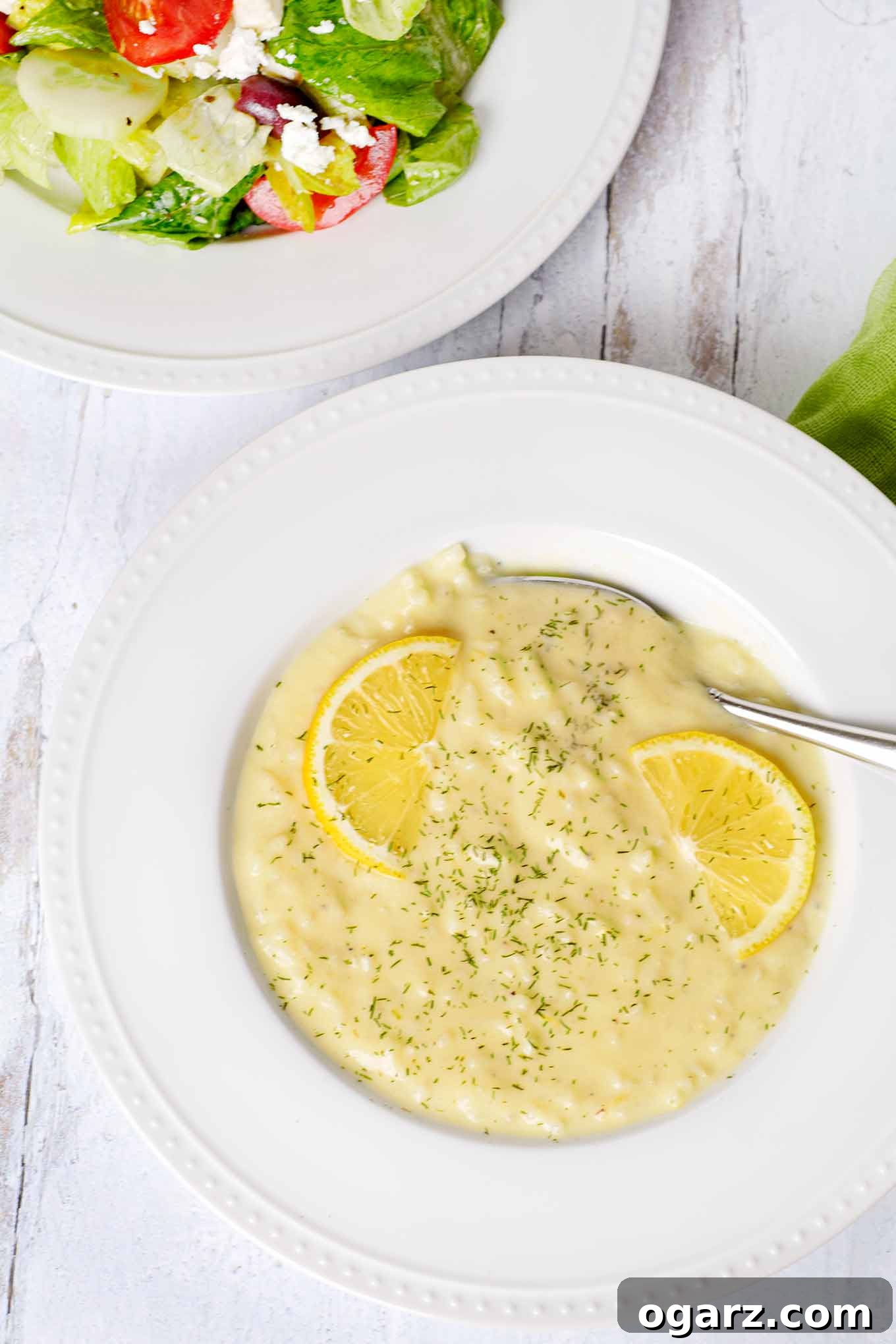
- Classic Greek Salad: A timeless and refreshing accompaniment. The crisp, fresh vegetables, briny olives, and salty feta in a traditional Greek salad provide a delightful textural and flavor contrast to the warm, creamy soup.
- Crusty Bread or Pita: A must-have for soaking up every last drop of the rich, flavorful broth. Serve alongside some good quality extra virgin olive oil for dipping, enhancing the Mediterranean experience.
- Olives and Feta Cheese: A simple side dish of marinated Kalamata olives and crumbled feta cheese adds authentic Greek flavors and textures that perfectly complement the soup.
- Dolmades or Spanakopita: For a more elaborate Greek meal, consider pairing your Avgolemono with homemade or high-quality store-bought dolmades (stuffed grape leaves) or a slice of savory spanakopita (spinach pie).
- As a Light First Course: Serve smaller, elegant portions of Avgolemono as a sophisticated and light appetizer for a larger Mediterranean-themed dinner party, setting the stage for more culinary delights.
Explore More Classic Greek Recipes
If you’ve fallen in love with the vibrant, wholesome, and deeply satisfying flavors of Greek cuisine, just as we have, there’s a world of other delicious and authentic recipes waiting for you to discover. Expand your culinary repertoire and bring the taste of Greece into your kitchen with these timeless dishes:
- Skordalia is a wonderfully creamy and intensely garlicky Greek dip or sauce. Traditionally made with mashed potatoes or breadcrumbs, it’s expertly combined with a generous amount of fresh garlic, rich extra virgin olive oil, and bright lemon juice, offering a pungent, tangy, and irresistibly savory flavor profile. It’s utterly delicious served as an appetizer spread thickly on toasted pita triangles or as a robust accompaniment to fried fish.
- Pastitsio is often affectionately referred to as Greek lasagna, a truly comforting and hearty baked pasta dish. It is meticulously layered with tubular pasta (we prefer penne for its robust texture), a richly savory, aromatic tomato-based meat sauce typically made with seasoned ground beef or lamb, and crowned with a thick, impossibly luscious layer of creamy béchamel sauce. The entire creation is then baked until golden, bubbly, and fragrant.
- Moussaka is another iconic Greek layered casserole, a true showstopper that embodies the essence of Mediterranean comfort food. This deeply satisfying dish features tender, succulent slices of baked or lightly fried eggplant, which cleverly replace any form of noodles. These are generously layered with a wonderfully spiced ground lamb and tomato meat sauce. The entire creation is then enveloped under a lavish blanket of creamy béchamel sauce and baked to golden perfection, offering a harmonious and deeply satisfying blend of textures and flavors.
Greek Egg and Lemon Soup (Avgolemono Soupa) Recipe
For your convenience, here’s a concise recipe card summarizing the ingredients and step-by-step instructions for making a truly delightful and authentic Avgolemono soup.
Greek Egg and Lemon Soup (Avgolemono Soupa)
By Lynne Webb
Made with just a handful of simple ingredients, Greek egg and lemon (avgolemono) soup is a delicious soup with a one-of-a-kind flavor and creamy texture that’s satisfying enough to make a meal all on its own.
Prep Time: 5 mins
Cook Time: 20 mins
Total Time: 25 mins
Servings: 2 dinner servings
Ingredients
- 6 cups low-sodium chicken broth
- 1/2 cup medium-grain white rice (Valencia or Arborio recommended)
- 3 large eggs, separated
- 3 tablespoons fresh-squeezed lemon juice (or more to taste)
- Zest of 1 lemon
- Salt and freshly ground black pepper (to taste)
- Fresh dill or parsley for garnish (optional)
Instructions
- Bring the chicken broth to a boil in a large pot. Add the rice.
- Stir for about 2 minutes, then reduce the heat to low, cover, and simmer for 15 to 20 minutes, or until the rice is tender.
- While the rice cooks, whisk the egg whites in a medium bowl until frothy and slightly thickened.
- Add the egg yolks to the whisked whites and continue whisking until the mixture is light and creamy.
- While continuing to whisk the egg mixture, slowly drizzle in about 1/2 cup of the hot simmering broth from the pot. Then, whisk in the fresh lemon juice.
- Remove the pot of soup from the heat. While stirring the soup constantly and vigorously, gradually add the tempered egg and lemon mixture. Pour it in slowly over the course of about a full minute.
- Stir in the lemon zest and season the soup to taste with salt and freshly ground black pepper.
- Garnish with fresh herbs if desired, and serve immediately.
Notes
- Temper your eggs: To prevent curdling, slowly whisk a little of the hot chicken broth into the egg mixture to gradually warm it before adding to the main pot.
- Stir the eggs in slowly: After tempering, it’s crucial to stir the egg mixture into the hot broth slowly and evenly while stirring the soup constantly.
- Leftover soup: Avgolemono does not reheat well. If you have leftovers, reheat gently in the microwave at 50% power, stirring every 45 seconds, to minimize curdling.
- Add some chicken: For a heartier meal, consider adding shredded cooked chicken. Serve with a Greek salad for a complete dinner.
Nutrition Information (Approximate, per serving)
Nutrition information is automatically calculated and should be used as an approximation only.
- Calories: 392
- Total Fat: 11g
- Cholesterol: 246mg
- Sodium: 307mg
- Carbohydrates: 50g
- Fiber: 1g
- Sugar: 2g
- Protein: 26g