
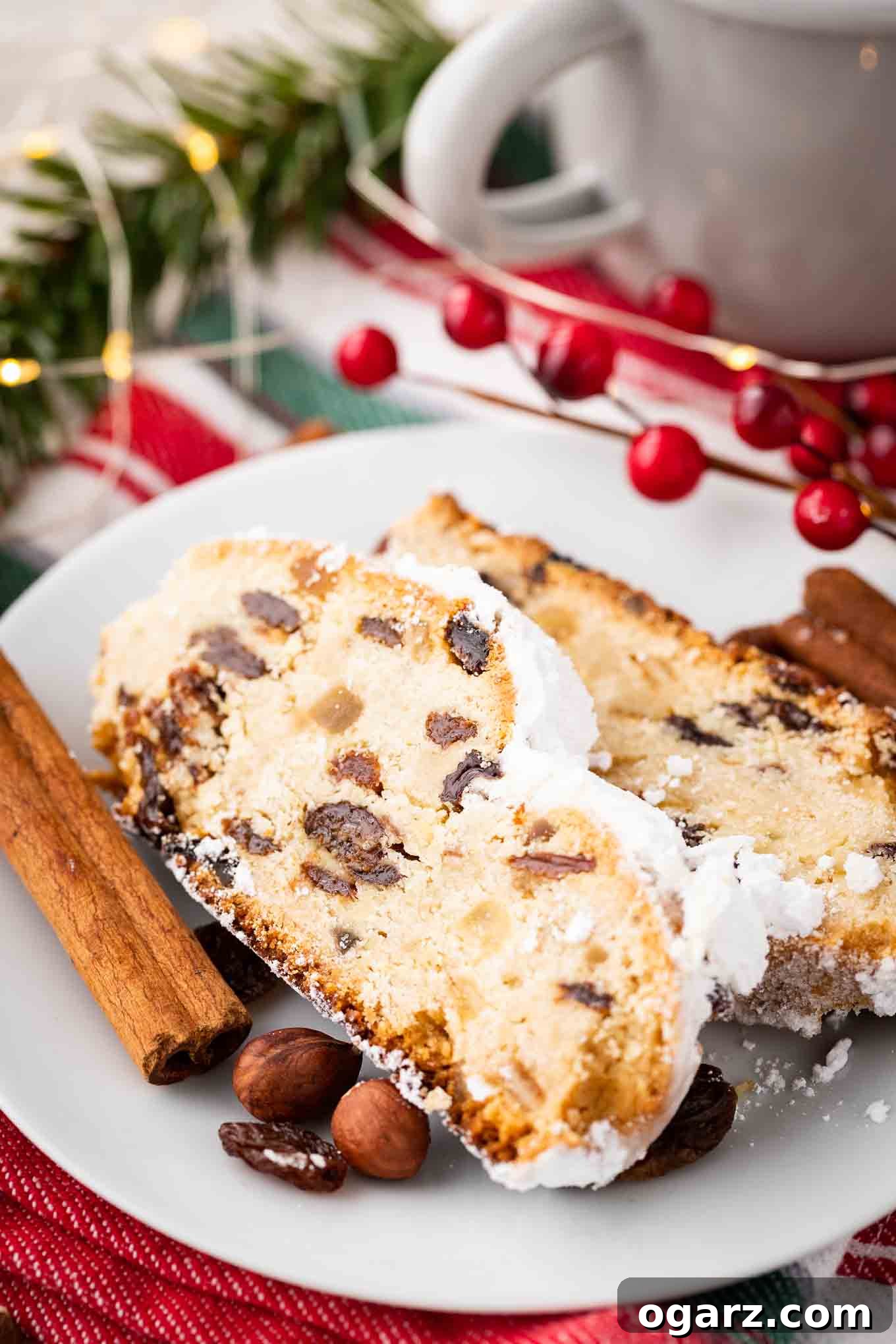
Indulge in the festive flavors of German Stollen, a beloved Christmas bread rich with rum-soaked raisins, candied fruits, and crunchy nuts. This traditional German recipe offers a truly special holiday experience, steeped in history and cherished across generations. While it requires a little patience for its deep flavors to fully develop, the reward is an exquisite treat that pairs perfectly with a warm cup of coffee, making every bite a moment to savor.
The holiday season is a magical time for family traditions, and in our home, that often revolves around baking cherished German Christmas treats. Beyond our beloved Vanillekipferl (German Vanilla Crescent Cookies), German Lebkuchen, and Nut Corners (German Nussecken), one particular bake stands out as the crown jewel of our festive table: the magnificent German Stollen.
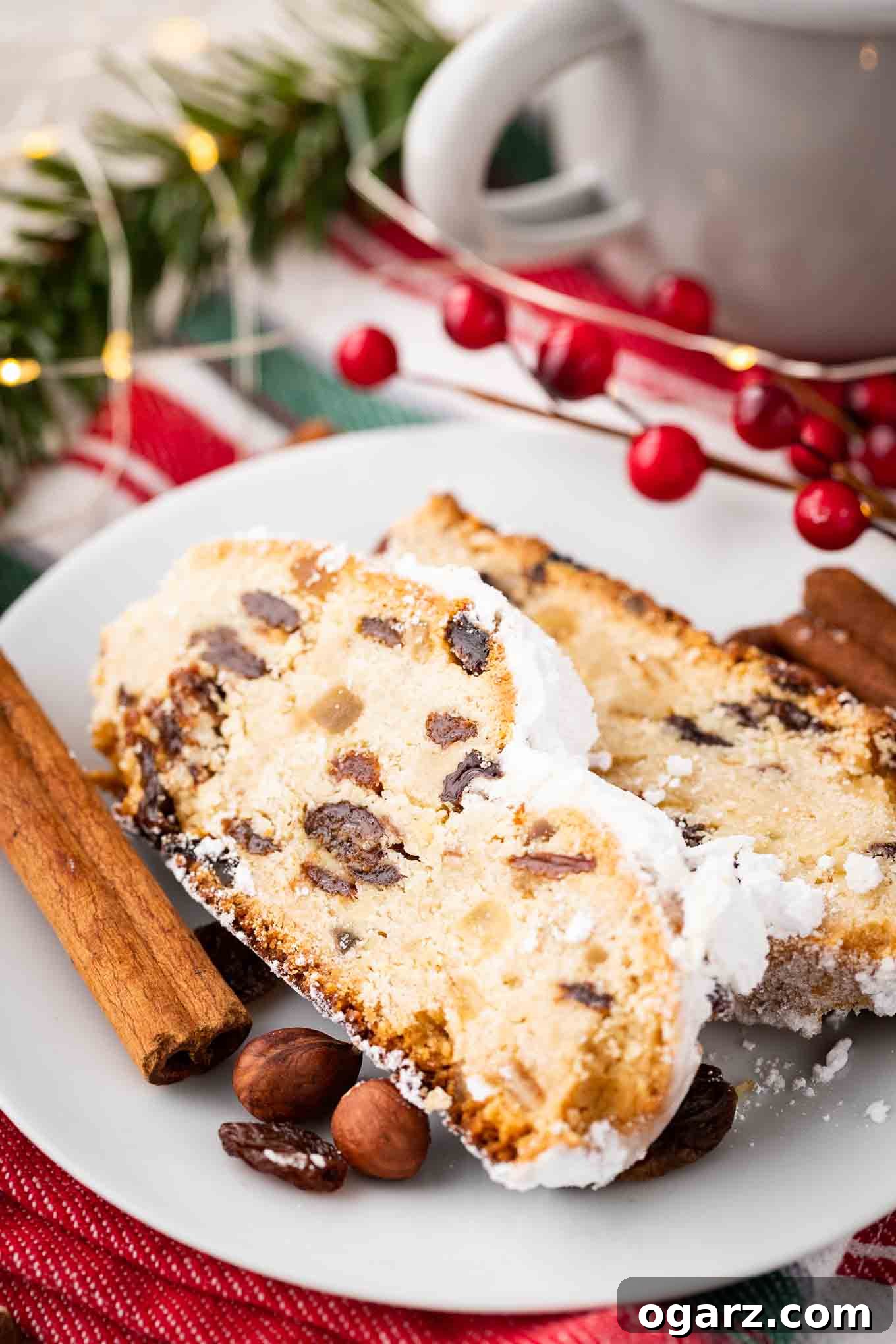
The Enduring Legacy of German Stollen: A Christmas Tradition
Stollen is more than just a cake; it’s an edible symbol of Christmas, a gift that truly keeps on giving. Its dense, buttery texture, combined with the intoxicating aroma of rum, spices, and dried fruits, transforms and deepens with time. This makes it an ideal treat to bake days, or even weeks, in advance of the festivities. Traditionally, German Stollen is prepared 3-4 weeks before Christmas, allowing its flavors to mature beautifully. Once baked and generously coated in powdered sugar, it’s stored in a metal tin, where it remains fresh and flavorful for months.
I fondly remember my grandmother, whose kitchen became a hub of festive activity each December. She would bake numerous Stollen loaves, meticulously wrapping each one to share with friends and family as heartfelt Christmas presents. The process of baking this yeast-based dough is undeniably time-consuming, involving careful kneading, precise shaping, and the crucial post-baking steps of buttering and sugaring. Yet, every moment spent is an investment in a rich, rewarding outcome that makes it absolutely worth the effort.
My own journey with Stollen began with a slight mishap. The first time I attempted to bake it myself, I neglected to use the aluminum foil trick to support its shape. The result, while delicious, resembled something akin to a “cowpat” rather than the elegant, traditional loaf! Lesson learned. Since then, the aluminum foil method has become an indispensable part of my Stollen-baking routine, ensuring a beautifully formed loaf every time. Allow me to guide you through my perfected method for crafting this delightful Christmas classic.
Crafting Your Christmas Stollen: Tips for Perfection
Achieving the perfect German Stollen requires attention to detail and a few key insights. Here are some essential tips and tricks to ensure your homemade Stollen is nothing short of magnificent:
- Plan Ahead for Optimal Flavor: For the most exquisite taste, aim to bake your Stollen 2-3 weeks before you intend to serve it. This crucial resting period allows all the flavors to meld and deepen.
- Embrace Traditional Ingredients: The rum-soaked raisins and candied citrus peels are non-negotiable for authentic Stollen. Do not omit or substitute them, as they contribute significantly to its signature taste and texture.
- Soaking is Key: If rum is not an option, you can soak the raisins in water or apple juice. The soaking step is vital as it rehydrates the fruit, ensuring your Stollen remains moist and tender.
- Don’t Worry About Minimal Rise: Due to the high fat content and abundance of fruits and nuts, Stollen dough will not rise as dramatically as a typical bread dough. This is completely normal, so don’t be concerned if it doesn’t double in size.
- Test for Doneness: Your Stollen is fully baked when it sounds hollow upon tapping its bottom. This indicates a thoroughly cooked interior.
- Butter While Hot: As soon as the Stollen emerges from the oven, generously brush it with melted butter. The hot bread will readily absorb the butter, ensuring maximum moisture and flavor. Waiting for it to cool will prevent proper absorption.
- Powdered Sugar Abundance: A thick layer of powdered sugar is essential not just for beauty, but also for preservation. Before wrapping, sprinkle some powdered sugar directly onto the parchment paper where the Stollen will rest, ensuring the bottom is also well-coated. Aim for a layer at least 1/4-inch thick.
- Patience is a Virtue: While you can technically enjoy Stollen once it’s cooled, the magic truly happens during its resting period. The longer you wait (up to a few weeks), the more complex and delightful its flavor becomes.
A Step-by-Step Guide to Baking Stollen
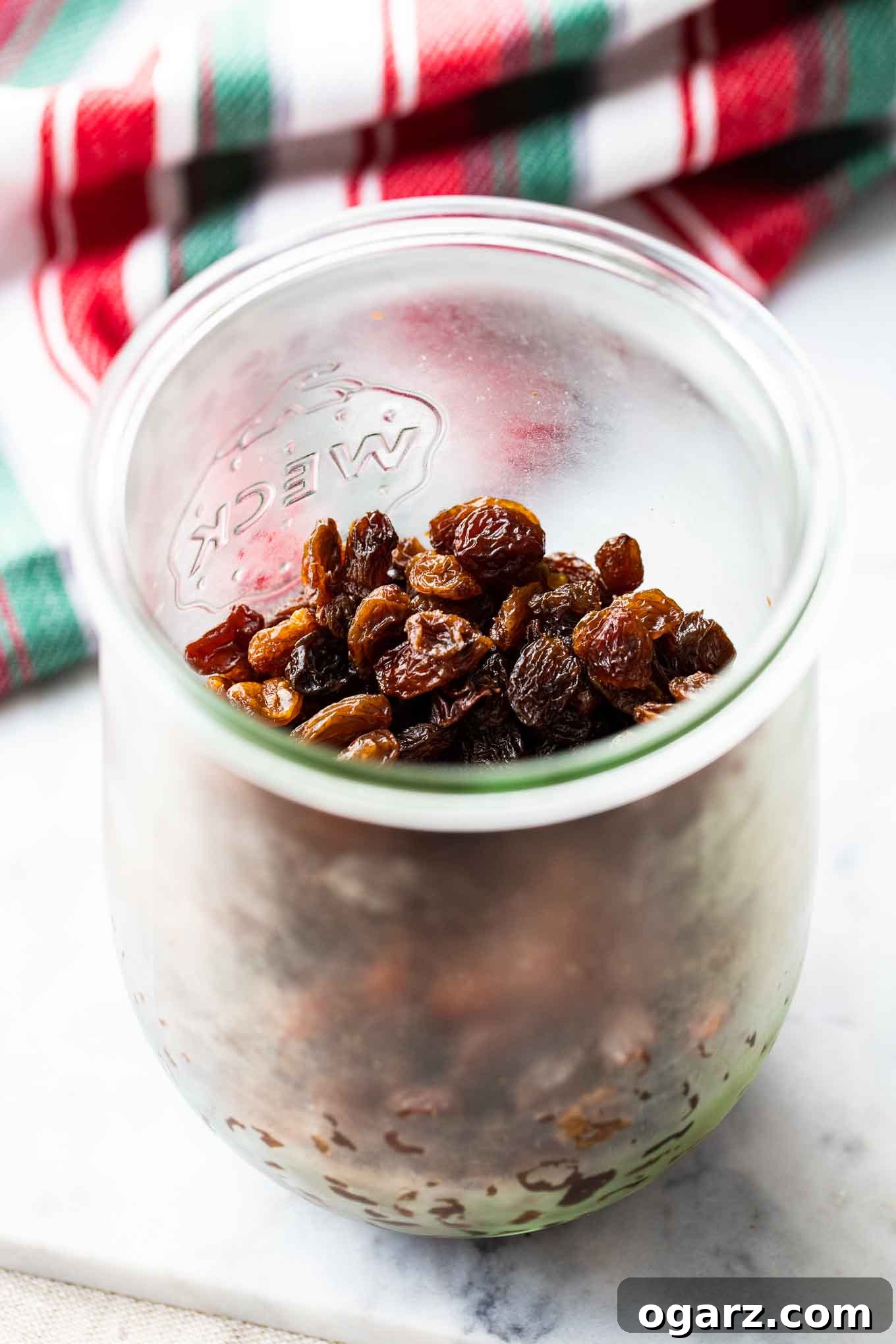
The journey to a perfect Stollen begins with its distinctive ingredients. Rum-soaked raisins, for instance, are fundamental for imparting that signature festive flavor and delightful sweetness. Preparing them is simple, but it requires foresight: combine the raisins and rum the night before you plan to bake, allowing them to soak overnight in the refrigerator. By morning, the raisins will have plumped up, having absorbed the rum and becoming ready to be incorporated into your dough.
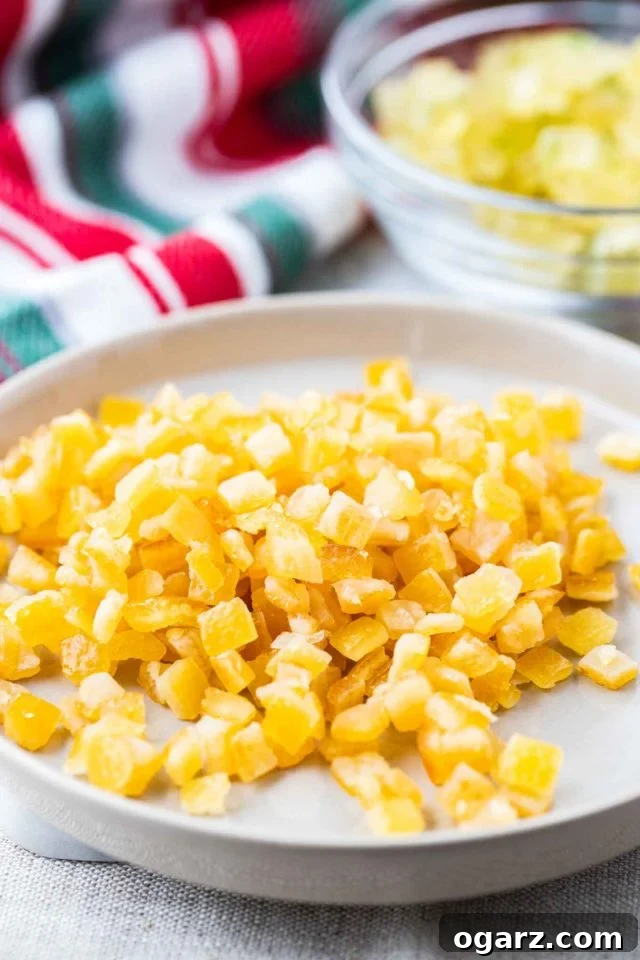
Another crucial, yet sometimes less common, ingredient is candied lemon and orange peel. In Germany, these are readily available in almost every grocery store during the holiday season. For those outside Germany, they can be easily ordered online (look for Candied Orange Peel and Candied Lemon Peel) or, for the more ambitious bakers, homemade. While I haven’t personally tried making my own, many home bakers report great success with recipes like this one. These vibrant peels contribute essential aroma, texture, and a touch of tangy sweetness that define Stollen.
Mastering the Stollen Shape
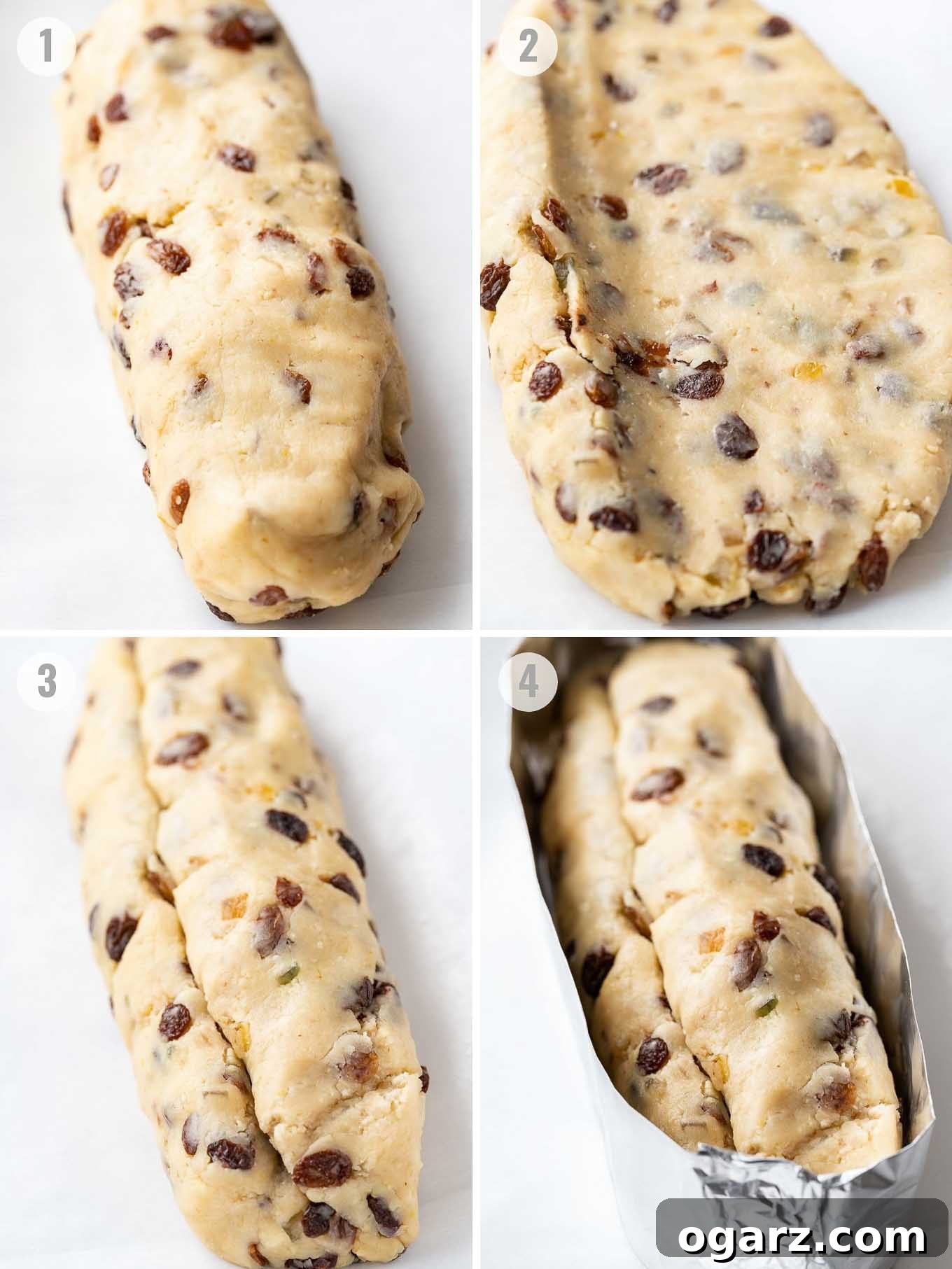
Once your dough is ready, shaping the Stollen is an art form that helps create its iconic appearance. Place the dough onto a baking sheet lined with parchment paper. You can choose to form one large, impressive Stollen or, as I prefer, two medium-sized loaves. Making two allows for one to be generously gifted to friends or neighbors, while the other remains for personal enjoyment. Given how rich and sweet Stollen is, even a single loaf yields a surprising number of slices.
To achieve the traditional Stollen shape, use a rolling pin to gently flatten the middle section of your oval-shaped loaf, creating two distinct bulges along its length. Next, take one of these bulges and flatten it further, then carefully fold it over the other bulge. This creates the classic fold that resembles a swaddled Christ child, a significant part of Stollen’s historical symbolism. Don’t be alarmed if minor cracks appear in the dough after folding; simply use your fingers to gently press the dough back together and smooth out any imperfections.
A common challenge with Stollen is its tendency to spread during baking due to its rich composition. To counteract this and maintain its beautiful shape, I always recommend creating a DIY aluminum foil ring. This method is far more versatile than specialized Stollen baking rings, as you can adjust its width to perfectly fit your loaf, eliminating the need for a single-use baking pan. To construct this supportive ring, fold a long piece of heavy-duty aluminum foil three times lengthwise to create a sturdy, 4-inch high strip. Form this strip into a circle around your unbaked Stollen and secure the ends tightly with oven-safe metal clips, or by pressing and folding the foil ends firmly together. This simple trick makes all the difference in achieving a perfectly shaped Stollen.
The Art of Finishing and Storing Stollen
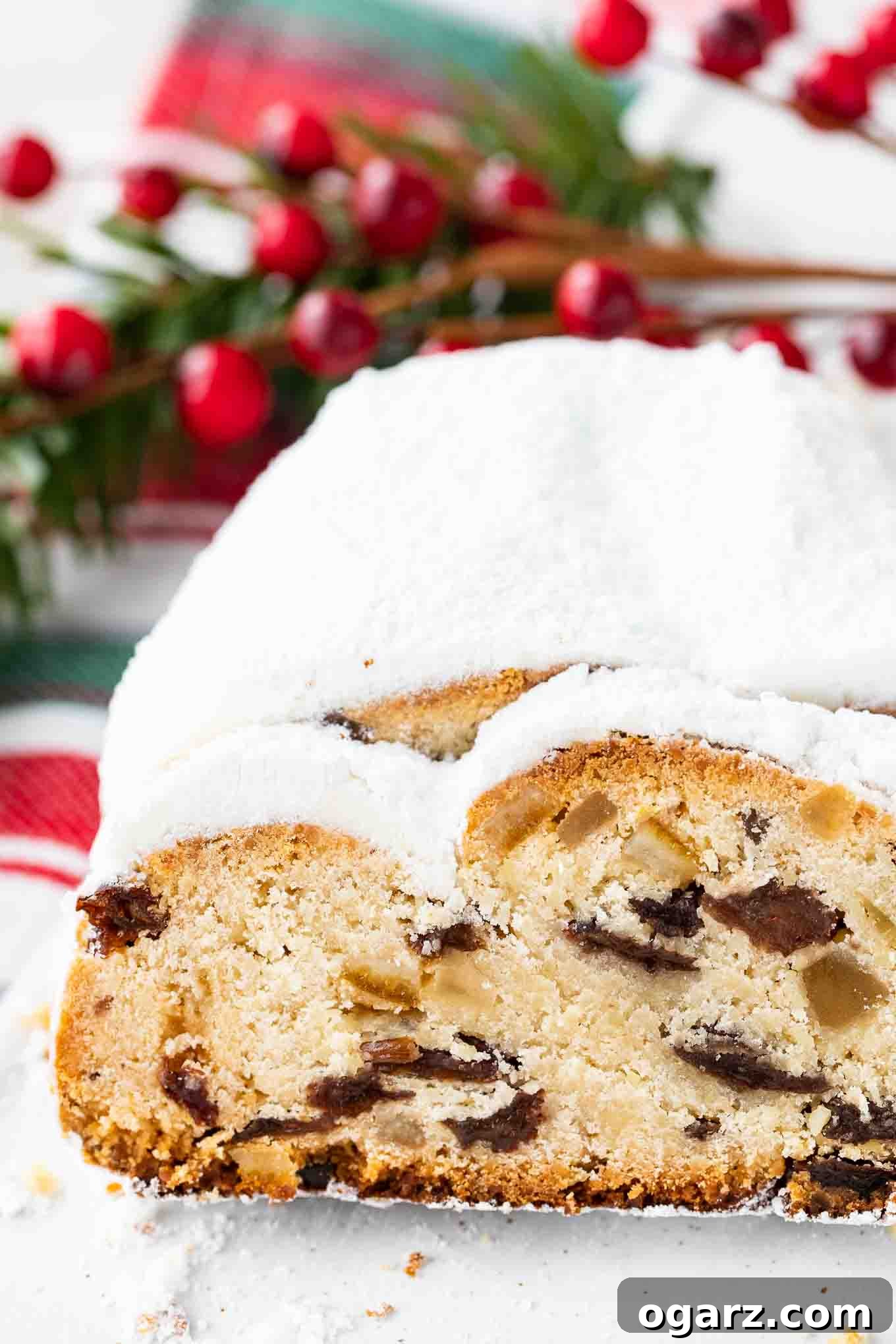
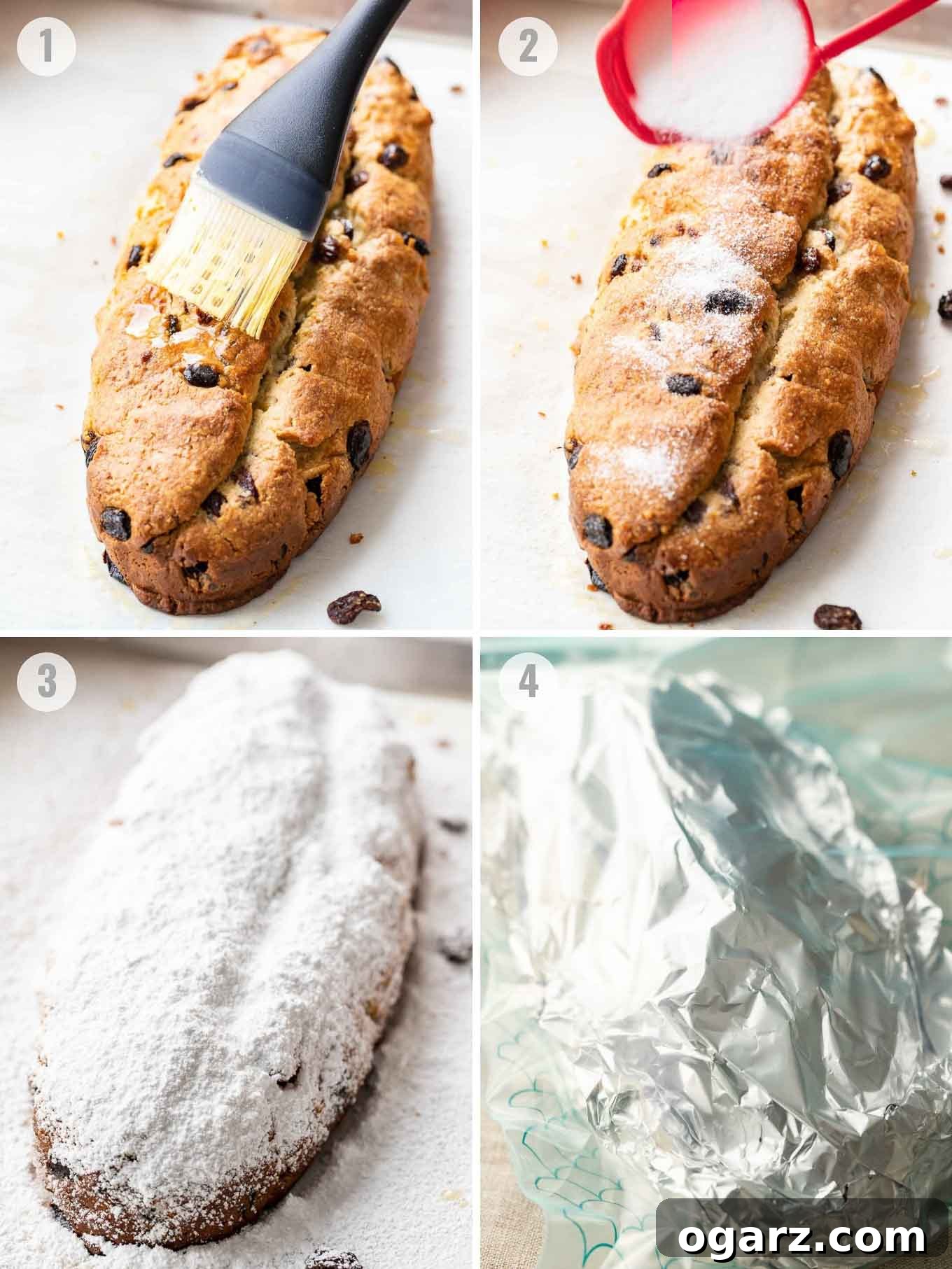
Once your Stollen is baked to a golden perfection, the finishing touches are paramount for both flavor and preservation. Immediately after removing it from the oven, while it’s still piping hot, brush the entire surface generously with melted butter. The warm Stollen will readily absorb this butter, enhancing its richness and ensuring a wonderfully moist crumb. Next, sprinkle the warm, buttered loaf with granulated sugar, followed by a thick, even layer of powdered sugar. You’re aiming for a substantial coating, approximately 1/4-inch thick, covering the Stollen completely. This might seem like a lot, but this powdered sugar crust is vital for preserving the Stollen, locking in its moisture and protecting its delicate flavors over time. Don’t worry, you can always brush off excess sugar before serving, but never skip this critical step.
After this initial sugaring, allow the Stollen to cool completely on a wire rack. This is a crucial step for the longevity and texture of the Stollen. Once fully cooled, sprinkle it with yet another generous layer of powdered sugar. Then, carefully wrap the Stollen first in parchment paper, followed by a layer of aluminum foil. This double wrapping technique creates an airtight seal, preventing it from drying out and allowing the flavors to truly mature. Finally, place the wrapped Stollen in an airtight zipper bag or a metal tin and store it in a cool, dark place for 1 to 4 weeks. This patient waiting period is where the magic happens; the flavors will meld and deepen, transforming your Stollen into an even more exquisite Christmas treat. Just before serving, a final dusting of fresh powdered sugar adds that perfect traditional touch.
Discover More German Christmas Baking Delights
German Recipes
Heidesand
German Recipes
Marzipankartoffeln
Cookies, Brownies & Bars
Vanillekipferl (German Vanilla Crescent Cookies)
Cookies, Brownies & Bars
Nut Corners (German Nussecken)
Traditional German Stollen Recipe
Ingredients
For the Rum Raisins (Prepare one day in advance):
- 2 cups raisins
- 3 tbsp dark rum
For the Stollen Dough:
- 4 1/3 cups all-purpose flour
- 1/2 cup granulated sugar
- 1 1/2 cup unsalted butter, softened (3 sticks)
- 1/2 cup candied lemon peel, finely diced
- 1/2 cup candied orange peel, finely diced
- 1 1/3 cup almond meal
- 1 oz marzipan, grated or crumbled
- 1/2 tsp salt
- 1 lemon, zest only
- 1/2 tsp ground mace
- 1/2 cup milk, lukewarm
- 3 oz fresh yeast, or 3 Tbsp active dry yeast
For Finishing (After baking):
- 1/2 cup unsalted butter, melted
- 1/3 cup granulated sugar
- 1 cup powdered sugar, plus more for dusting
Instructions
-
Prepare Rum Raisins (One Day Prior): In a small bowl, combine the raisins and dark rum. Stir well, cover, and let them infuse overnight in the refrigerator. This allows the raisins to plump up and absorb the rich rum flavor.
-
Activate the Yeast: The next day, gently warm the milk until it is lukewarm (not hot!). In a large mixing bowl, dissolve the yeast in the lukewarm milk with a fork. Add a small amount of granulated sugar and 3 tablespoons of the all-purpose flour. Cover the mixture and let it sit in a warm place for about 20 minutes, or until foamy, indicating the yeast is active.
-
Prepare the Dough: To the activated yeast mixture, add the remaining all-purpose flour, mace, fresh lemon zest, the remaining granulated sugar, salt, softened unsalted butter, almond meal, and grated marzipan. Knead the ingredients vigorously, either by hand or with a stand mixer fitted with a dough hook, until a smooth, elastic dough forms. Now, gently fold in the candied lemon peel, candied orange peel, and the rum-soaked raisins (drained of any excess rum).
-
First Rise & Shaping: Cover the dough with a clean kitchen towel and let it rise in a warm place for 1 hour. Meanwhile, preheat your oven to 347°F (175°C). After the first rise, gently knead the dough again to release any air. Line a large baking sheet with parchment paper. Place the dough onto the prepared sheet and shape it into one large oval-shaped loaf, or divide it to form two smaller ones. To achieve the classic Stollen shape, use a rolling pin to flatten the middle section of the loaf, creating two distinct bulges. Then, flatten one of these bulges and fold it over the other, as shown in the provided images. Smooth out any small cracks with your fingers.
-
Support During Baking: Take a long piece of aluminum foil and fold it three times lengthwise to create a sturdy 4-inch high strip. Form this strip into a ring around your Stollen loaf, securing the ends with oven-safe metal clips or by firmly folding them together. This will help the Stollen maintain its shape during baking. Bake the Stollen for 45-60 minutes, or until golden brown and it sounds hollow when tapped.
-
Butter & Sugar Coating: Immediately upon removing the Stollen from the oven, brush it generously with the melted butter. While still warm, sprinkle the granulated sugar evenly over the surface, followed by approximately 2/3 of the powdered sugar. This butter and sugar coating is essential for both flavor and preservation. Allow the Stollen to cool completely on a wire rack.
-
Final Dusting & Storage: Once the Stollen is completely cooled (it may still be somewhat fragile, handle with care), dust it generously with the remaining powdered sugar, ensuring a thick, even layer. Wrap the Stollen first in parchment paper, then tightly in aluminum foil. Place the wrapped Stollen in an airtight zipper bag or a metal tin. Store it in a cool, dark place for 1-4 weeks to allow its flavors to fully develop and mature. The longer it rests, the better it tastes! Before serving, add another light dusting of powdered sugar if desired.
Notes
Nutrition Information (per serving, estimated)
Enjoyed this festive recipe? Share your thoughts below!