
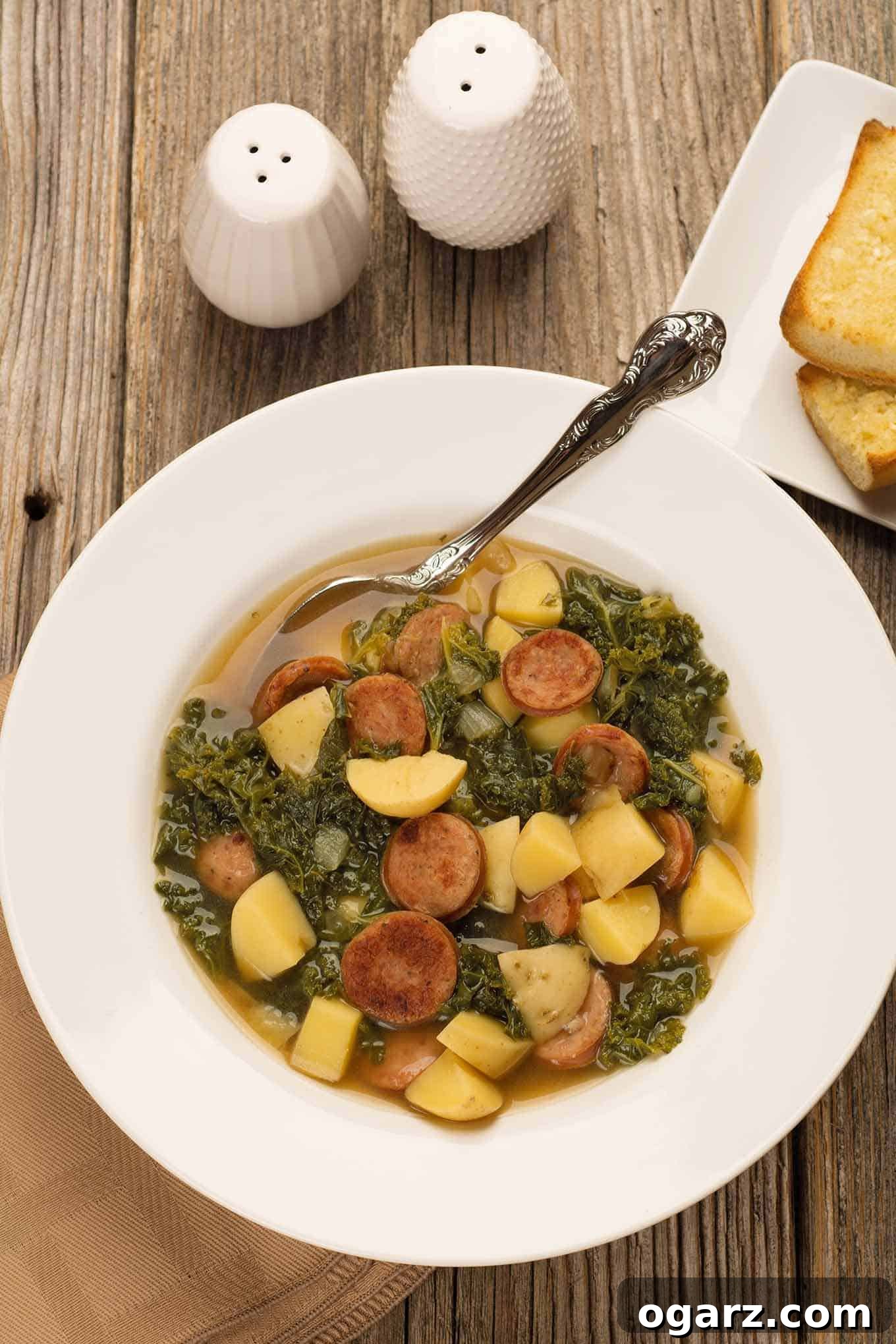

Journey into the heart of Portuguese comfort food with Caldo Verde, often translated as “green soup.” This iconic dish is more than just a soup; it’s a culinary cornerstone, deeply woven into the fabric of Portuguese culture and celebrated for its simplicity, robust flavors, and incredible warmth. Despite its humble origins and straightforward list of ingredients, Caldo Verde delivers an intensely satisfying experience that has charmed palates for generations. Crafted with distinct Portuguese linguiça sausage, aromatic onions and garlic, nutrient-rich kale, and tender potatoes, it transforms into a deeply nourishing and incredibly flavorful meal. Perfect for a cozy dinner, it needs little more than a side of crusty garlic bread or a fresh, crisp salad to complete a truly memorable dining experience.
Authentic Caldo Verde: The Ultimate Portuguese Kale and Linguica Soup Recipe
Caldo Verde isn’t just a recipe; it’s a testament to the beauty of Portuguese cuisine – simple, honest, and brimming with flavor. This isn’t merely a hearty soup; it’s a culinary embrace, offering warmth and comfort in every spoonful. Whether you’re a seasoned chef or a beginner in the kitchen, this guide will walk you through creating an authentic Caldo Verde that tastes like it came straight from a traditional Portuguese home.
Portuguese Kale Soup – Caldo Verde
Lynne Webb
10 mins
30 mins
40 mins
4 servings
Rate Recipe
Print Recipe
Ingredients
- 3/4 lb linguiça, Portuguese smoked sausage, sliced into rounds
- 1 tablespoon olive oil
- 1 cup onion, finely chopped
- 2 cloves garlic, minced
- 1 lb kale, washed, tough stems removed, and roughly chopped or thinly shredded
- 2 to 3 medium, approximately 3/4 lb yellow potatoes (like Yukon Gold), peeled and cut into uniform bite-sized pieces
- 5 cups low-sodium chicken broth
- Salt and freshly ground black pepper, to taste
Instructions
-
Prepare the Sausage: In a large, heavy-bottomed soup pot or Dutch oven, heat the olive oil over medium-high heat. Add the sliced linguiça sausage and sauté for about 3 minutes, stirring occasionally, until it is lightly browned and has released some of its flavorful oils. Browning the sausage at this stage is crucial as it caramelizes the exterior and deepens its savory notes, contributing significantly to the overall taste of the soup.
-
Build the Aromatic Base: Carefully pour off any excess fat from the pot, leaving just enough to coat the bottom. This step helps to keep the soup from becoming overly greasy. Immediately add the chopped onions and minced garlic to the pot. Continue cooking, stirring frequently, for another 5-7 minutes, until the onions have softened and become translucent, and the garlic is fragrant. Be careful not to burn the garlic, as this can impart a bitter taste to the soup.
-
Simmer and Tenderize: Introduce the prepared kale, cubed potatoes, and low-sodium chicken broth to the pot. Stir everything gently to combine. Bring the mixture to a gentle simmer. Once simmering, season the soup generously with salt and freshly ground black pepper to taste. Remember that linguiça is already quite flavorful, so adjust salt accordingly. Cover the pot and allow the soup to cook for 20 to 30 minutes, or until the potatoes are fork-tender. The kale will also soften during this time, infusing the broth with its vibrant green essence and mild bitterness.
-
Final Touch (Optional): For a truly traditional Caldo Verde, some prefer to remove a portion of the cooked potatoes and mash them, then return them to the soup. This creates a slightly thicker, creamier texture without needing any actual cream. Alternatively, you can use an immersion blender to lightly blend a small section of the soup for a similar effect, being careful not to over-blend and lose the rustic chunks.
-
Serve: Ladle the steaming Caldo Verde into bowls. Serve hot with a drizzle of good quality olive oil over the top for an extra layer of richness, and accompany with slices of crusty bread, ideally traditional Portuguese cornbread (broa).
Notes
Recipe Notes:
If you have difficulty finding traditional Portuguese linguiça in your local market, a smoked kielbasa or another flavorful smoked sausage can make a perfectly acceptable and delicious substitute. Ensure the substitute sausage has a good, smoky flavor profile to replicate the authentic taste. For a vegetarian option, consider using a plant-based smoked sausage and vegetable broth, adding a pinch of smoked paprika for depth.
The Story of Caldo Verde: A Portuguese Staple
Caldo Verde holds a special place in Portuguese hearts and homes. Originating from the Minho province in northern Portugal, this soup has transcended its regional roots to become a national dish, enjoyed across the country and in Portuguese communities worldwide. It’s often served at celebrations, holidays, and simple family meals, embodying comfort and tradition. The beauty of Caldo Verde lies in its simplicity – using readily available, wholesome ingredients to create a dish rich in flavor and character. It’s a testament to the Portuguese culinary philosophy that less is often more, letting the quality of fresh ingredients shine through.
Diving Deeper into the Key Ingredients
Each component of Caldo Verde plays a vital role in its distinctive taste and texture. Understanding these ingredients will not only help you choose the best quality but also appreciate the symphony of flavors they create.
Linguiça: The Soul of the Soup
Linguiça is a Portuguese smoked sausage, typically made from pork, seasoned with garlic, paprika, and sometimes red wine. Its distinct smoky, slightly spicy, and robust flavor is indispensable to authentic Caldo Verde. When cooked, it releases savory fats that infuse the entire soup with a depth that is hard to replicate. When purchasing linguiça, look for good quality, ideally from a Portuguese or specialty butcher. If linguiça is unavailable, a well-smoked kielbasa is the next best choice, though it may lack some of the subtle spice notes.
Kale: The Green Heart
The “verde” in Caldo Verde refers to the vibrant green color of the finely shredded kale. Traditionally, Portuguese collard greens or specific varieties of kale like “couve galega” are used. However, common curly kale or Lacinato (Dinosaur) kale works beautifully. It’s crucial to wash the kale thoroughly, remove the tough central stems, and then thinly slice or shred the leaves. This fine cut is characteristic of Caldo Verde, allowing the kale to soften quickly and blend seamlessly into the broth. Kale not only provides its signature color but also a slightly earthy flavor and a wealth of nutrients.
Potatoes: The Thickening Agent and Comfort Base
Potatoes are more than just a filler in Caldo Verde; they are essential for achieving the soup’s characteristic creamy texture. As they cook and soften, a portion of them dissolves into the broth, naturally thickening it without the need for flour or cream. Yellow potatoes like Yukon Golds are ideal due to their waxy texture and creamy consistency when cooked. They hold their shape well enough while also contributing to the desired body of the soup. Cutting them into uniform, bite-sized pieces ensures even cooking.
Aromatics and Broth: Building the Foundation
Onions and garlic form the aromatic foundation of almost any great soup, and Caldo Verde is no exception. Sautéing them until translucent draws out their sweetness and fragrance, layering complex flavors into the broth. Using low-sodium chicken broth allows you to control the saltiness of the finished dish, an important consideration given the salt content of linguiça. For a vegetarian version, a high-quality vegetable broth is an excellent alternative.
Tips for a Perfect Caldo Verde
- Sausage Slicing: Slice the linguiça thinly, ideally into rounds, to maximize its surface area for browning and flavor release.
- Kale Preparation: After washing and stemming the kale, stack several leaves and roll them tightly into a cigar shape. Then, thinly slice them across the roll (this is called a chiffonade cut) for the traditional fine strands.
- Potato Consistency: While some recipes call for mashing all the potatoes, leaving some chunks intact provides a lovely textural contrast. If you prefer a smoother soup, an immersion blender can quickly achieve this.
- Seasoning: Taste the soup before adding salt, especially after the linguiça has cooked, as the sausage can be quite salty. Adjust pepper as needed.
- Don’t Skimp on Olive Oil: A drizzle of good quality extra virgin olive oil over each bowl just before serving is a common and recommended practice in Portugal. It adds a fresh, peppery note and enhances the soup’s richness.
Variations and Customizations
While the traditional recipe is beloved, Caldo Verde is also versatile and can be adapted to suit different tastes and dietary needs:
- Vegetarian/Vegan Caldo Verde: Replace linguiça with a smoked plant-based sausage. Use vegetable broth instead of chicken broth. A pinch of liquid smoke or smoked paprika can further enhance the smoky flavor.
- Spicier Kick: Add a pinch of red pepper flakes along with the garlic and onions, or choose a spicier variety of linguiça.
- Adding Other Vegetables: While not traditional, some enjoy adding finely diced carrots or celery during the aromatic cooking stage for extra nutrients and flavor.
- Herb Infusion: A bay leaf or a sprig of fresh thyme can be added to the broth during simmering for an extra layer of herbaceousness, then removed before serving.
Serving Suggestions and Accompaniments
Caldo Verde is traditionally served as a starter or as a light main course, especially during colder months. The most classic accompaniment is “broa,” a rustic Portuguese corn and rye bread, which is perfect for soaking up the flavorful broth. Crusty artisanal bread or simple garlic bread also make excellent choices. A simple green salad dressed with olive oil and vinegar can offer a refreshing contrast to the hearty soup. For a true Portuguese experience, pair it with a crisp, slightly effervescent Vinho Verde wine.
Storage and Reheating
Caldo Verde stores wonderfully, often tasting even better the next day as the flavors meld further. Allow the soup to cool completely before transferring it to an airtight container. It can be refrigerated for up to 3-4 days. To reheat, gently warm on the stovetop over medium-low heat until heated through, stirring occasionally. You may need to add a splash of broth or water if it has thickened too much in the refrigerator. Caldo Verde also freezes well for up to 2-3 months; thaw overnight in the refrigerator before reheating.
Embrace the Warmth of Portugal
Caldo Verde is more than just a soup; it’s an invitation to experience the warmth, history, and simple culinary brilliance of Portugal. With its harmonious blend of savory sausage, fresh kale, and tender potatoes, it’s a dish that nourishes both body and soul. This recipe provides a straightforward path to recreating this beloved classic in your own kitchen. So gather your ingredients, follow these steps, and prepare to savor a taste of Portugal that will undoubtedly become a favorite in your home.