
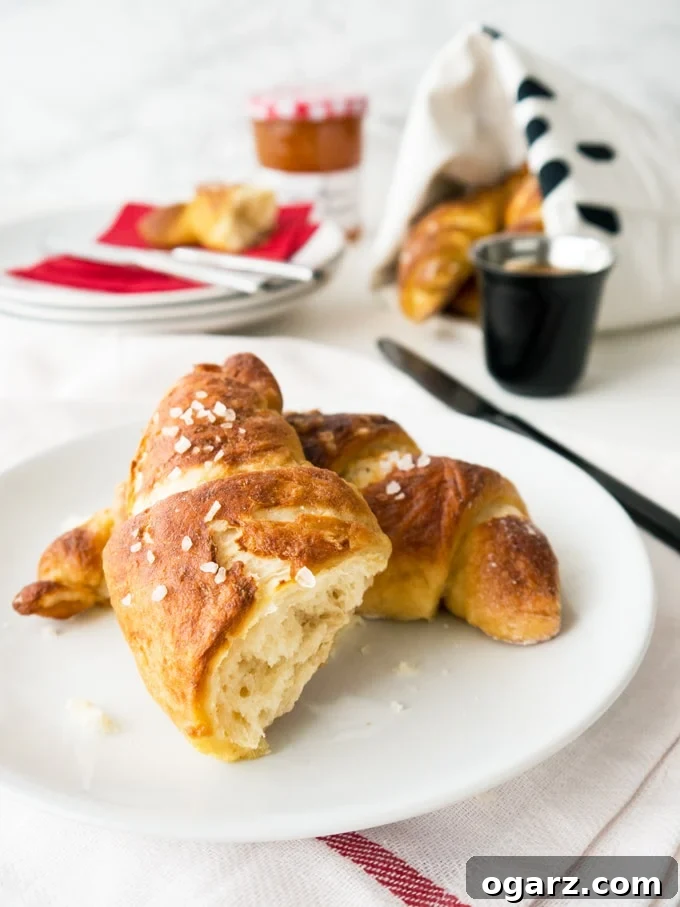
Discover the magic of homemade Pretzel Croissants, a delightful fusion that brings together the buttery flakiness of a classic croissant with the distinctive, chewy crust and savory notes of a traditional German pretzel. This recipe, featuring both yeast dough and store-bought puff pastry, promises an irresistible baking adventure right in your own kitchen.
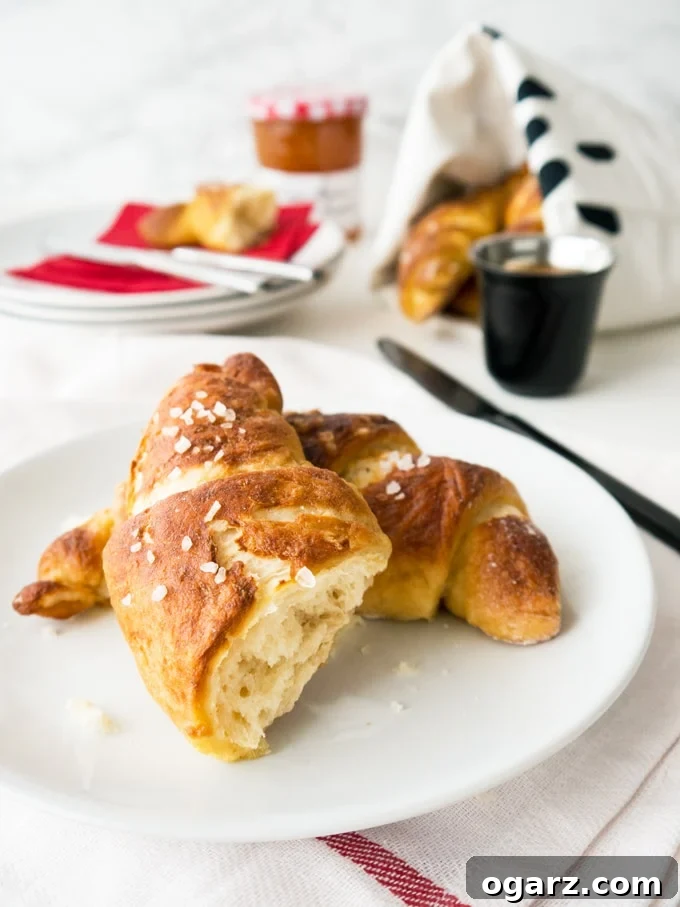
The Ultimate Guide to Easy Homemade Pretzel Croissants (Laugencroissants)
Imagine the best qualities of two beloved pastries perfectly combined into one extraordinary treat. That’s exactly what you get with these incredible pretzel croissants! Everyone adores the savory crunch of pretzels and the delicate layers of butter croissants. This recipe elevates both, offering a unique snacking experience that’s less sweet than conventional croissants, making it ideal for a versatile range of occasions—from a satisfying afternoon snack to an impressive breakfast or brunch centerpiece.
Unveiling the Pretzel Croissant: A Culinary Marvel
Pretzel croissants are far from ordinary. They represent a clever hybrid, expertly blending the distinct characteristics of two culinary titans. This isn’t merely a croissant dusted with salt, nor a pretzel playfully shaped into a crescent. It’s a meticulously crafted pastry that offers the best of both worlds: the robust, chewy texture and characteristic deep brown crust of a pretzel, achieved through a special alkaline bath, harmoniously paired with the airy, multi-layered interior of a buttery croissant.
The allure lies in its captivating contrast. Bite into a pretzel croissant, and you’re met with an initial crispy, golden-brown exterior, a result of the unique baking soda bath, which then gives way to a soft, tender, and incredibly flaky crumb. This dual texture is incredibly satisfying, making each bite an exploration of contrasting sensations. The flavor profile leans more savory than traditional croissants, making them wonderfully adaptable to various spreads and dips.

The German Heritage: Laugencroissants
In Germany, these delectable pastries are widely known as “Laugencroissants” or generally fall under the category of “Laugengebäck” (lye pastry). They are a ubiquitous sight in German bakeries, cherished for their distinctive taste and appearance. The term “Laugen” refers to the traditional alkaline solution, typically lye, used to dip the dough before baking. This crucial step is what imparts pretzels and pretzel croissants with their signature deep mahogany color, shiny crust, and unique flavor profile. While authentic German bakeries might use food-grade lye, our homemade version safely and effectively employs baking soda to achieve remarkably similar, delicious results, making this German bakery staple accessible to every home baker.
Why Homemade Pretzel Croissants Are a Must-Try
There’s an undeniable charm and satisfaction in baking from scratch, and these pretzel croissants are no exception. Opting for homemade means you get to experience:
- Unrivaled Freshness: The taste and aroma of warm, freshly baked pastries straight from your oven are simply unmatched.
- Customization at Your Fingertips: This recipe provides a fantastic base, but you can personalize it to your heart’s content. Adjust the amount of salt, try different seed toppings like poppy seeds or everything bagel seasoning, or even experiment with savory fillings.
- The Joy of Creation: There’s immense pride and reward in crafting something so unique and delicious with your own hands.
- Easier Than You Imagine: While the idea of making croissants might sound daunting, this recipe cleverly simplifies the process by incorporating store-bought puff pastry. This ingenious shortcut drastically cuts down on the most time-consuming part of traditional croissant making—the lamination—making flaky, buttery layers achievable for home bakers of all skill levels.
Mastering the Pretzel Croissant: Essential Ingredients and Techniques
The secret to these exceptional pretzel croissants lies in a brilliant combination of doughs and a crucial dipping step. Let’s delve into the core elements:
The Dynamic Duo: Yeast Dough and Puff Pastry
- The Yeast Dough Foundation: This forms the inner core of our croissant. It provides the necessary structure, a pleasant chewiness, and that comforting bread-like quality. Key to its success is using active instant yeast, lukewarm water (not too hot, not too cold, ideally around 105-115°F or 40-46°C), and proper kneading. An elastic, smooth dough is your goal, indicating well-developed gluten, which is essential for texture and rise.
- The Puff Pastry Shortcut: This is where we save significant time without compromising on flakiness. Store-bought puff pastry is a fantastic ingredient that comes pre-laminated with many delicate layers of butter. The trick is to handle it gently once thawed to preserve those layers, which will expand beautifully in the oven to create that signature croissant airiness.
The Pretzel’s Signature: The Alkaline Bath
- Baking Soda for Safety and Flavor: While traditional German pretzels often use food-grade lye (sodium hydroxide), a highly caustic chemical not recommended for home use, baking soda offers a safe and incredibly effective alternative. When baking soda is added to boiling water, it creates an alkaline solution that mimics the effects of lye.
- The Maillard Reaction Magic: Dipping the croissants in this warm baking soda bath before baking is what gives them their distinctive deep brown, shiny crust and that inimitable savory “pretzel” flavor. The alkaline environment speeds up the Maillard reaction, a chemical process responsible for browning and flavor development in many foods, resulting in a caramelized surface that’s both visually appealing and incredibly flavorful.
- Precision Dipping: The timing of the dip is crucial. Too short, and you won’t get the desired color and flavor; too long, and the dough can become too soft and difficult to handle. Aim for exactly one minute per side for optimal results.
Simplified Lamination: The Folding Process
While traditional croissants involve extensive lamination, this recipe simplifies it beautifully. By layering the yeast dough and puff pastry and then performing a series of folds and rolls, you’re effectively creating those delightful flaky layers without the intensive butter block incorporation. Each fold creates new layers, which, combined with the yeast dough’s rise, contribute to the pretzel croissant’s complex texture.
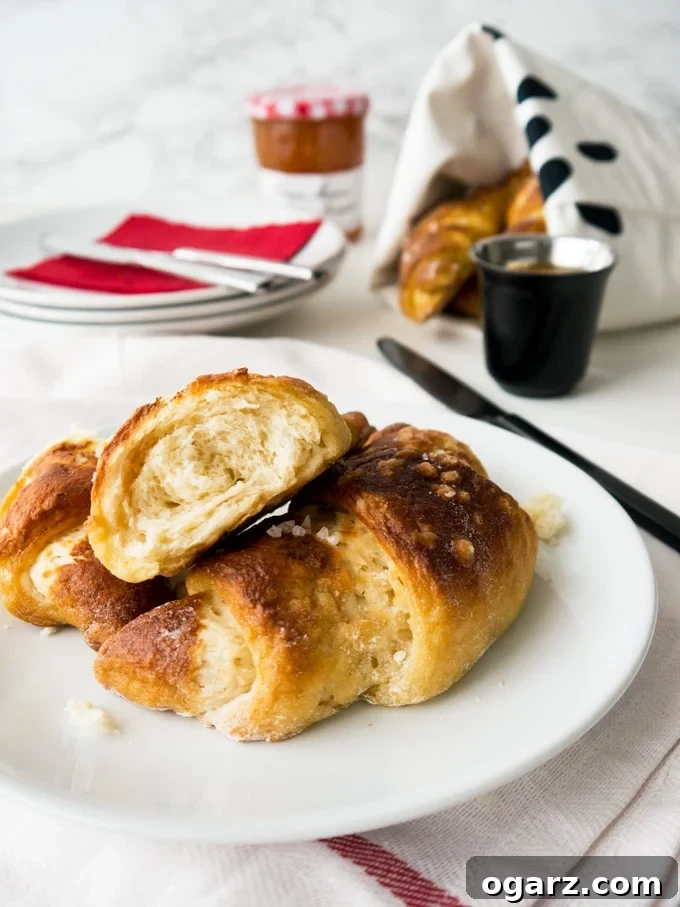
Easy Homemade Pretzel Croissants (Laugencroissants)
By: Julia Foerster
Easy homemade pretzel croissants combine the flakiness of a butter croissant with the texture of a pretzel! Made with puff pastry AND yeast dough.
Prep Time: 1 hour 30 minutes
Cook Time: 25 minutes
Total Time: 1 hour 55 minutes
Servings: 8
Ingredients
For the Yeast Dough:
- 3/4 cup lukewarm water
- 2 tsp instant yeast
- 2 cups all-purpose flour
- 1 tbsp olive oil
- 1 tsp sea salt
- 2 tsp brown sugar
For the Croissants:
- 1 sheet puff pastry, thawed according to package instructions
For the Pretzel Bath & Topping:
- 4 tsp baking soda
- 6 cups water
- Coarse sea salt or sesame seeds, for sprinkling
Instructions
- Activate the Yeast Dough: In the bowl of your stand mixer fitted with a hook attachment, combine the warm water and instant yeast. Give it a gentle stir and let it sit for 5 minutes until the mixture is foamy. This confirms your yeast is active and ready to work. Add the flour, olive oil, brown sugar, and sea salt to the bowl. Mix on low speed for 1 minute until all the ingredients are just combined and no dry flour remains. Then, increase the speed to low-medium and knead for 4 minutes until the dough is smooth and elastic. Place the dough in a large, lightly greased mixing bowl and cover tightly with plastic wrap. Allow the dough to rise in a warm environment for 15 minutes.
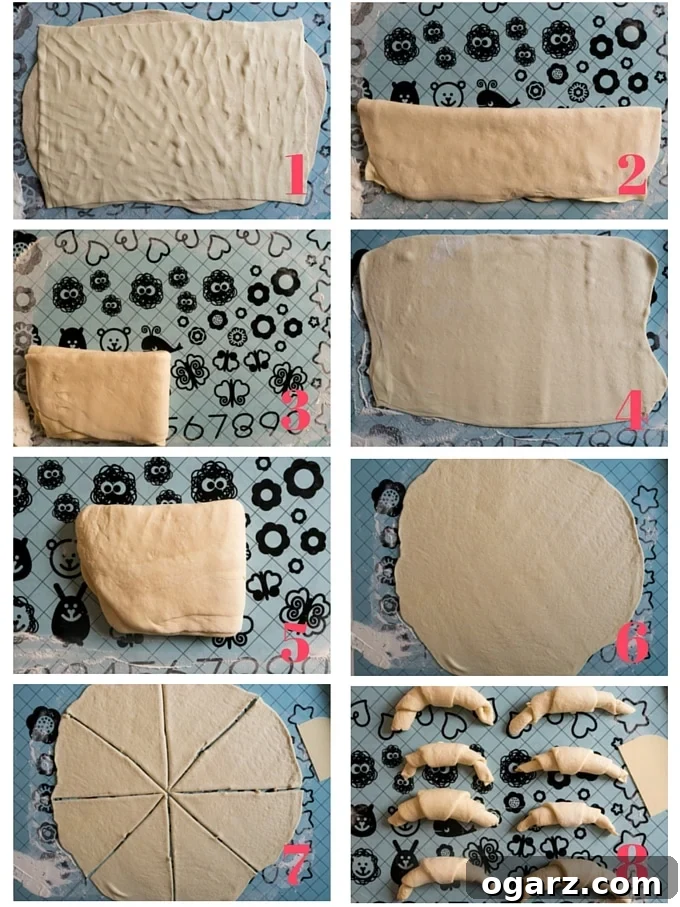
- Layering the Doughs: Lightly flour your work surface. Carefully unfold the thawed puff pastry sheet and roll it out into a rectangle, approximately 15 x 10 inches. Next, roll out your risen yeast dough to the same dimensions (15 x 10 inches). Carefully place the puff pastry sheet directly on top of the yeast dough, aligning the edges. Gently press them together to ensure they adhere.
- The Folding Process (Simple Lamination): Now, it’s time for the first fold. Fold the top half of the layered dough down to meet the bottom edge. Then, fold the right half of this folded dough over the left half, creating a compact dough packet. Gently roll the folded dough out again until it has the same dimensions as before (15 x 10 inches). Repeat this folding process (top half down, then right over left) and roll out the dough a second time. Perform this fold a third time. After the third fold, cover the dough packet with a kitchen towel and let it rest for 10 minutes. This resting period allows the gluten to relax, making the dough easier to roll.
- Shaping the Croissants: Roll out the rested dough into a large circle, approximately 20 inches in diameter. Using a sharp knife or a pizza cutter, cut the circle into 8 equal triangular pieces. Starting from the wider base of each triangle, gently roll it up towards the pointed end to form a croissant shape. Slightly curve the ends inwards to create the classic crescent shape. Place the shaped croissants on a baking sheet, cover them with a kitchen towel, and let them rise for an additional 30 minutes in a warm place. This final rise will make them light and airy.
- Preheat and Prepare: In the meantime, while the croissants are completing their final rise, preheat your oven to 410°F (210°C). Line a large baking sheet with parchment paper and lightly flour the parchment paper to prevent the croissants from sticking.
- The Pretzel Bath: To give the pretzel croissants their characteristic taste and deep brown color, bring 6 cups of water to a rolling boil in a large pot. Carefully add 4 teaspoons of baking soda to the boiling water. Be cautious as the mixture will foam up vigorously. Turn off the heat immediately after adding the baking soda. Using a slotted spoon, carefully transfer each risen croissant into the warm baking soda mixture. Let each croissant sit in the bath for exactly 1 minute, gently turning it over halfway through to ensure even coating. Lift each croissant, allowing all excess water to drip off, then transfer it directly to the prepared baking sheet. Immediately sprinkle the bathed croissants with coarse sea salt or sesame seeds, as desired.
- Bake to Perfection: Bake the pretzel croissants in the preheated oven for 25 minutes. Keep an eye on them as they bake; you’ll notice them developing their distinctive deep golden-brown pretzel color, especially during the second half of the baking time. Once baked to a beautiful hue, transfer them to a wire rack to cool slightly before serving.
Nutrition
- Calories: 312kcal
- Carbohydrates: 40g
- Protein: 7g
- Fat: 14g
- Saturated Fat: 3g
- Polyunsaturated Fat: 2g
- Monounsaturated Fat: 8g
- Sodium: 927mg
- Potassium: 82mg
- Fiber: 2g
- Sugar: 1g
- Vitamin A: 0.3IU
- Vitamin C: 0.01mg
- Calcium: 16mg
- Iron: 2mg
Serving Suggestions and Enjoyment Tips
The beauty of pretzel croissants lies in their versatility. Their unique savory-sweet balance means they pair wonderfully with a variety of accompaniments:
- Savory Delights: For a truly gourmet experience, try them with a creamy dip like our Smoked Salmon Lime Dip, a tangy cream cheese spread, or even a robust mustard. They are also fantastic alongside deli meats or slices of hard cheese for a light lunch.
- Sweet Temptations: Don’t underestimate their appeal with classic sweet pairings. A simple smear of good quality butter and your favorite fruit jam or preserves creates a delightful breakfast treat, where the subtle sweetness of the dough and the savory salt crystals dance on your palate.
- Weekend Breakfast & Brunch Star: These impressive pastries are guaranteed to be the star of any weekend breakfast or brunch spread, earning you rave reviews from family and friends.
- Anytime Snack: Perfect for a satisfying afternoon snack that’s a step above your average pastry, providing sustained energy and incredible flavor.
Frequently Asked Questions About Pretzel Croissants
Q: Can I use traditional lye instead of baking soda for the bath?
A: While traditional German pretzels indeed use food-grade lye (sodium hydroxide) for their distinctive crust, it is a highly caustic and dangerous chemical that we do not recommend for home use. For safety reasons, this recipe exclusively uses baking soda, which achieves a very similar, delicious result without any of the associated hazards. You’ll still get that beautiful dark crust and unique flavor!
Q: How can I tell if my yeast is active?
A: The initial step of combining yeast with lukewarm water and a little sugar (like the brown sugar in this recipe) is your test. Within 5-10 minutes, active yeast will create a noticeable foamy or bubbly layer on the surface of the water. If your mixture doesn’t foam, it’s likely your yeast is old or dead, and you should use a fresh packet of yeast to ensure your dough rises properly.
Q: Can I prepare the dough ahead of time?
A: Absolutely! You can prepare the yeast dough and even perform the initial layering and all three folding steps. After the third fold, wrap the dough tightly in plastic wrap and refrigerate it overnight (up to 24 hours). When you’re ready to bake, remove the dough from the refrigerator and let it sit at room temperature for about 30-60 minutes before proceeding with rolling it into a circle and shaping the croissants.
Q: How long do pretzel croissants stay fresh?
A: Like most fresh pastries, pretzel croissants are best enjoyed on the day they are baked, when their crust is crisp and their interior is at its flakiest. You can store any leftovers in an airtight container at room temperature for up to 2 days, but they may lose some of their initial crispness. Briefly reheating them in a preheated oven (around 350°F or 175°C for 5-7 minutes) can help restore some of their texture.
Q: Can I freeze pretzel croissants?
A: Yes, both unbaked and baked pretzel croissants can be frozen.
- To freeze unbaked: After shaping the croissants and allowing them to complete their second rise (before the baking soda bath), place them on a baking sheet and freeze until solid. Once frozen, transfer them to an airtight freezer bag or container. They can be stored for up to 2-3 weeks. When ready to bake, thaw them overnight in the refrigerator, then let them come to room temperature for about 30-60 minutes before proceeding with the baking soda bath and baking instructions.
- To freeze baked: Allow the baked croissants to cool completely. Wrap each croissant individually in plastic wrap, then place them in an airtight freezer bag or container. They can be frozen for up to 1 month. To reheat, simply place the frozen croissants in a preheated oven at 350°F (175°C) for 10-15 minutes, or until warmed through and slightly crisp.
Concluding Thoughts
These homemade pretzel croissants offer a delightful culinary journey, merging the familiar comfort of two beloved pastries into one unique and irresistible creation. Whether you’re a seasoned baker or just starting out, this recipe provides a rewarding experience, yielding results that are sure to impress. So, gather your ingredients, follow these steps, and prepare to savor the incredible flaky, chewy, and perfectly savory goodness of your very own pretzel croissants. We encourage you to try this recipe this weekend – your taste buds will thank you!