
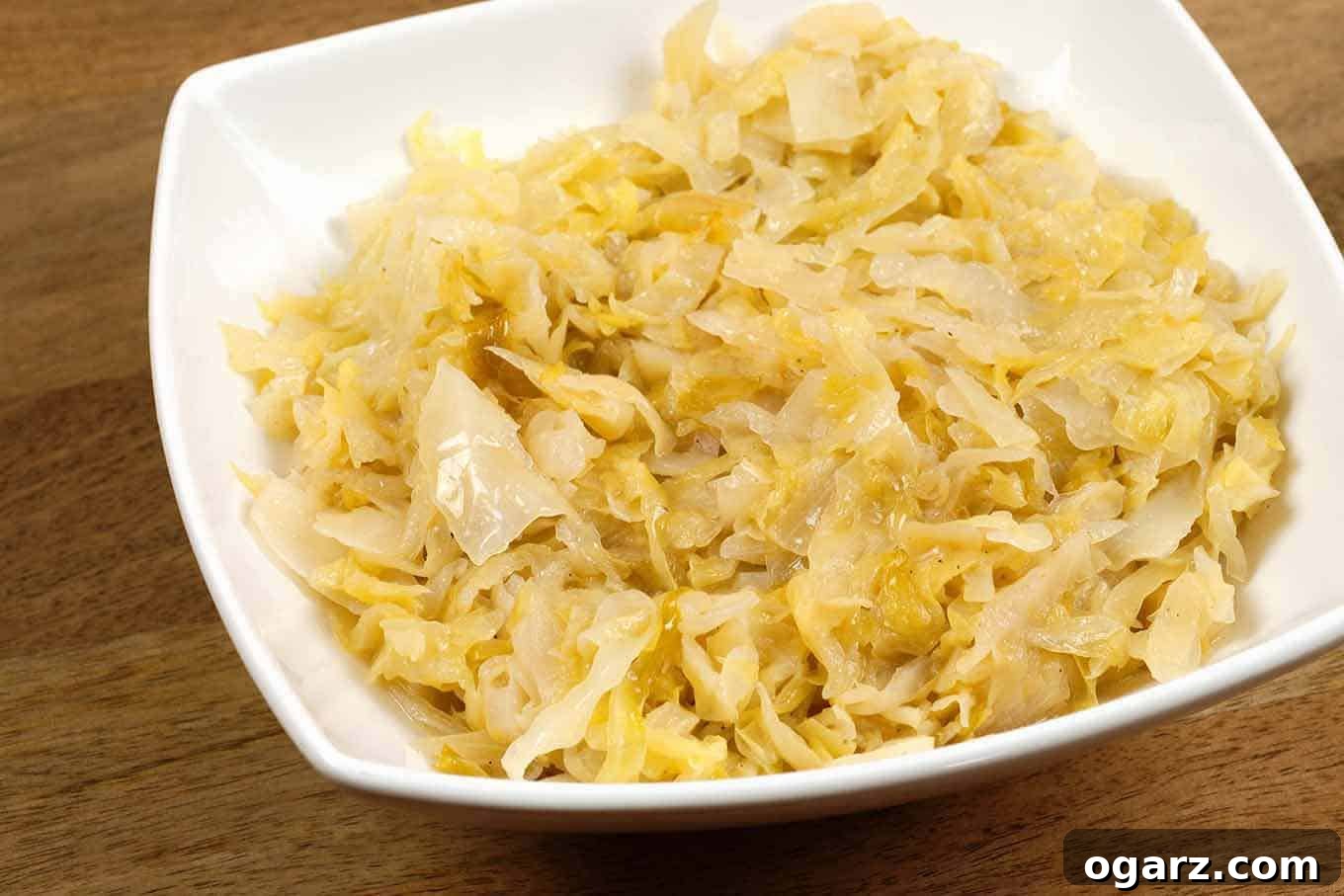
Butter-Braised Cabbage: A Timeless Comfort Food Side Dish
Sometimes, the simplest recipes yield the most extraordinary results. Such is the case with Butter-Braised Cabbage, a side dish so unassuming yet so profoundly satisfying, it hardly needs a detailed introduction. This isn’t just any cabbage dish; it’s a testament to the magic of slow cooking, transforming humble cabbage into a sweet, buttery, and incredibly tender accompaniment that elevates any meal. Perfect for complementing robust main courses like roast pork, succulent ham, or a classic roast chicken, its delicate flavor profile and creamy texture make it an instant classic on any dinner table.
The beauty of butter-braised cabbage lies in its straightforward preparation. With just a few staple ingredients and the patience of a low, slow simmer, you unlock a depth of flavor that might surprise you. Gone are the days of tough, watery cabbage. Instead, prepare for a side dish that melts in your mouth, infused with rich butter and savory chicken broth, seasoned simply to highlight the natural sweetness of the vegetable. This recipe proves that you don’t need an elaborate list of steps or exotic ingredients to create something truly memorable and deeply comforting.
Why You’ll Fall in Love with This Braised Cabbage Recipe
There are countless reasons why butter-braised cabbage deserves a permanent spot in your culinary repertoire. First and foremost is its unparalleled taste. The slow cooking process allows the cabbage to sweeten and tenderize, absorbing the luscious flavors of butter and broth, resulting in a dish that is both subtle and incredibly rich. It strikes a perfect balance, offering a comforting warmth without overwhelming the palate, making it a versatile partner for a wide array of entrees.
Beyond its delicious flavor, this recipe is remarkably easy to prepare. It requires minimal hands-on time, making it an ideal choice for busy weeknights or when you’re entertaining and want a reliable, impressive side dish without the stress. The ingredients are readily available and affordable, proving that gourmet-level taste doesn’t have to come with a hefty price tag or complicated grocery run.
Furthermore, cabbage itself is a powerhouse of nutrition. Rich in vitamins C and K, fiber, and antioxidants, it’s a healthy addition to any diet. When prepared in this manner, it retains much of its beneficial properties while becoming incredibly palatable, even for those who might typically shy away from vegetables. It’s a fantastic way to incorporate more greens into your meals in a delicious and family-friendly format. The versatility of this dish is another huge plus, pairing beautifully with everything from holiday roasts to simple weeknight proteins.
The Simple & Hearty Butter-Braised Cabbage Recipe
Butter-Braised Cabbage
By Lynne Webb
This delightful side dish is incredibly simple, allowing the sweet, buttery flavor of slow-cooked cabbage to shine. It’s an ideal companion for roasted meats like pork, ham, or chicken, offering a melt-in-your-mouth tenderness that complements any hearty meal.
Prep Time: 5 mins
Cook Time: 45 mins
Total Time: 50 mins
Servings: 8 servings
This recipe is a highly-rated favorite, praised for its exquisite flavor and ease.
Rate & Comment
Print Recipe
Ingredients
- 4 tablespoons butter
- 1/3 cup chicken broth (or vegetable broth for a vegetarian option)
- 2 medium heads of cabbage
- Salt to taste
- Pinch of white pepper
Instructions
- In a large pot or Dutch oven, combine the butter and chicken broth. Place over medium-low heat and allow the butter to melt.
- While the butter melts, prepare the cabbage. Remove any tough or damaged outer leaves. Quarter each head of cabbage and carefully remove the hard core. Roughly chop the cabbage into bite-sized pieces.
- Add the chopped cabbage to the pot once the butter has fully melted. Depending on the size of your pot, you may need to add the cabbage in batches, allowing it to wilt down slightly before adding more.
- Cover the pot and cook for approximately 15 minutes. During this time, toss the cabbage occasionally to ensure it gets evenly coated with the buttery broth mixture.
- Once the cabbage has become tender and visibly wilted, season generously with salt to taste and add a pinch of white pepper. Stir well.
- Cover again and continue cooking for an additional 30 minutes, or until the cabbage reaches your desired level of tenderness. Stir every few minutes to promote even cooking and prevent sticking.
- Throughout the cooking process, monitor the liquid level. If the cabbage appears to be drying out or sticking to the bottom, it’s an indication that the heat might be too high. Reduce the temperature and add a small amount of extra broth or water to prevent burning. The goal is tender, buttery cabbage that is moist but not swimming in excess liquid.
Tips for Perfect Butter-Braised Cabbage Every Time
Achieving that perfect melt-in-your-mouth texture and rich flavor in your butter-braised cabbage is easier than you think, especially with a few key tips:
- Choose the Right Cabbage: Green cabbage is the most common choice for this recipe due to its mild flavor and crisp texture that softens beautifully. Look for heads that are firm, heavy for their size, and free from significant blemishes.
- The Art of Slow Cooking: Patience is truly a virtue here. Cooking the cabbage over medium-low heat for an extended period is what breaks down its fibrous structure, allowing it to become incredibly tender and sweet. Rushing the process with high heat will result in tough, possibly bitter cabbage.
- Don’t Overcrowd the Pot: If you’re cooking a large batch, it’s better to add the cabbage in stages. It will significantly reduce in volume as it cooks down, making space for the rest. Overcrowding can lead to steaming rather than braising, affecting both texture and flavor.
- Seasoning Strategy: Salt is crucial for bringing out the cabbage’s natural sweetness. However, add it after the initial wilting phase. This prevents the cabbage from releasing too much water too quickly, which can make it watery rather than tender and flavorful. Adjust salt and pepper at the end to suit your preference.
- Moisture Control: The goal is tender cabbage infused with butter and broth, not boiled or swimming in liquid. Keep an eye on the liquid level and heat. If it looks dry, add a splash more broth. If there’s too much liquid at the end, increase the heat slightly and cook uncovered for a few minutes to allow some evaporation, ensuring a buttery glaze rather than a soup.
Elevate Your Braised Cabbage: Delicious Variations & Additions
While the classic butter-braised cabbage is a star on its own, it also serves as an excellent canvas for culinary creativity. Here are some ideas to customize and enhance your dish:
- Savory Aromatics: Sauté finely diced onions or minced garlic in the butter before adding the cabbage. This builds a foundational layer of savory flavor that complements the cabbage beautifully.
- A Touch of Smoky Goodness: Cook some diced bacon or pancetta until crispy, remove, and then braise the cabbage in the rendered fat (along with a bit of butter if needed). Crumble the cooked bacon over the finished dish for an irresistible smoky crunch.
- Sweet & Tangy Notes: For a slightly different profile, add a thinly sliced apple (like Granny Smith for tartness or Honeycrisp for sweetness) along with the cabbage. A splash of apple cider vinegar or a tablespoon of whole grain mustard stirred in at the end can also add a delightful tang that cuts through the richness.
- Spice It Up: A pinch of caraway seeds, often found in traditional cabbage dishes, can add a warm, earthy aroma. For a hint of warmth, a dash of nutmeg or a very small pinch of red pepper flakes can also be lovely.
- Broth Alternatives: While chicken broth provides a rich, savory base, feel free to use vegetable broth for a vegetarian version. A splash of dry white wine instead of some broth can also add complexity and sophistication.
Serving Suggestions: What to Pair with Butter-Braised Cabbage
The versatility of butter-braised cabbage makes it an excellent accompaniment to a wide range of main courses. Its tender texture and sweet, savory flavor profile make it particularly well-suited for hearty, comforting meals.
- Classic Roasts: This dish is truly at home alongside traditional roast dinners. It’s an impeccable partner for roast pork loin, glazed ham, succulent roast chicken, or even a classic corned beef. The richness of the meat is perfectly balanced by the subtle sweetness of the cabbage.
- Hearty Stews & Braises: Serve it with slow-cooked beef stew, pot roast, or lamb shank. The cabbage soaks up the savory juices, adding another layer of flavor and texture to these comforting dishes.
- Sausages & Chops: Whether it’s pan-seared pork chops, grilled bratwurst, or savory German sausages, butter-braised cabbage provides a fresh, yet hearty, counterpoint.
- Holiday Feasts: Don’t overlook this simple dish for your holiday table. It’s less common than green bean casserole but just as beloved by those who know it, offering a unique and delicious vegetable option for Thanksgiving, Christmas, or Easter.
- Vegetarian Options: For a lighter meal, pair it with hearty grain bowls, lentil patties, or roasted root vegetables. It can even be a delightful addition to a vegetarian shepherd’s pie or served alongside a robust mushroom ragu.
The Humble Cabbage: More Than Just a Side
Cabbage, a member of the cruciferous vegetable family alongside broccoli and kale, often gets overlooked in favor of its trendier cousins. However, this humble vegetable boasts an impressive nutritional profile and a rich history, making it a culinary hero in its own right.
Nutritionally, cabbage is a powerhouse. It’s incredibly low in calories but packed with essential vitamins and minerals. A single serving provides a significant amount of Vitamin C, crucial for immune health, and Vitamin K, vital for blood clotting and bone health. It’s also a great source of dietary fiber, aiding in digestion and promoting gut health. Furthermore, cabbage contains potent antioxidants and anti-inflammatory compounds that are believed to contribute to overall well-being and disease prevention.
Beyond its health benefits, cabbage is remarkably versatile. From crisp salads and crunchy slaws to hearty soups and fermented dishes like sauerkraut, it adapts to countless culinary preparations. Its subtle flavor takes on the characteristics of whatever it’s cooked with, making it an excellent base for a wide variety of cuisines. This butter-braised preparation highlights its often-underestimated sweetness and ability to transform into a truly indulgent texture, proving that good food doesn’t have to be complicated or exotic.
Frequently Asked Questions About Butter-Braised Cabbage
Here are answers to some common questions about making and enjoying butter-braised cabbage:
- Can I use other types of cabbage for this recipe?
- Yes, while green cabbage is standard, you can experiment with savoy cabbage or even red cabbage. Red cabbage might leach some color into the dish, but the flavor will still be delicious. Avoid Napa cabbage as it’s too delicate for this slow braising method.
- Can I make butter-braised cabbage ahead of time?
- Absolutely! This dish reheats beautifully. You can prepare it a day or two in advance and gently warm it on the stovetop over low heat, adding a splash of broth or water if it seems dry. The flavors often deepen overnight.
- How should I store leftovers?
- Store any leftover butter-braised cabbage in an airtight container in the refrigerator for up to 3-4 days. It’s also freezer-friendly for up to 2-3 months, though the texture might be slightly softer upon thawing.
- Is this recipe healthy?
- Cabbage itself is very healthy. While butter adds richness, it’s used in moderation. This dish provides a significant amount of fiber and vitamins. For a lighter version, you can reduce the butter slightly or use a combination of butter and olive oil.
- What if my cabbage tastes bitter?
- Bitterness can sometimes occur if the cabbage is not fresh, or if it’s cooked too quickly or at too high a heat. Ensuring fresh cabbage and following the slow cooking instructions should mitigate this. Adding a small pinch of sugar or a splash of white vinegar at the end can also help balance any lingering bitterness.
Like this recipe? We’d love to hear from you!
Your feedback helps us grow. Please take a moment to rate this recipe and share your thoughts in the comments section below. Did you try a variation? What did you serve it with? Let us know!