
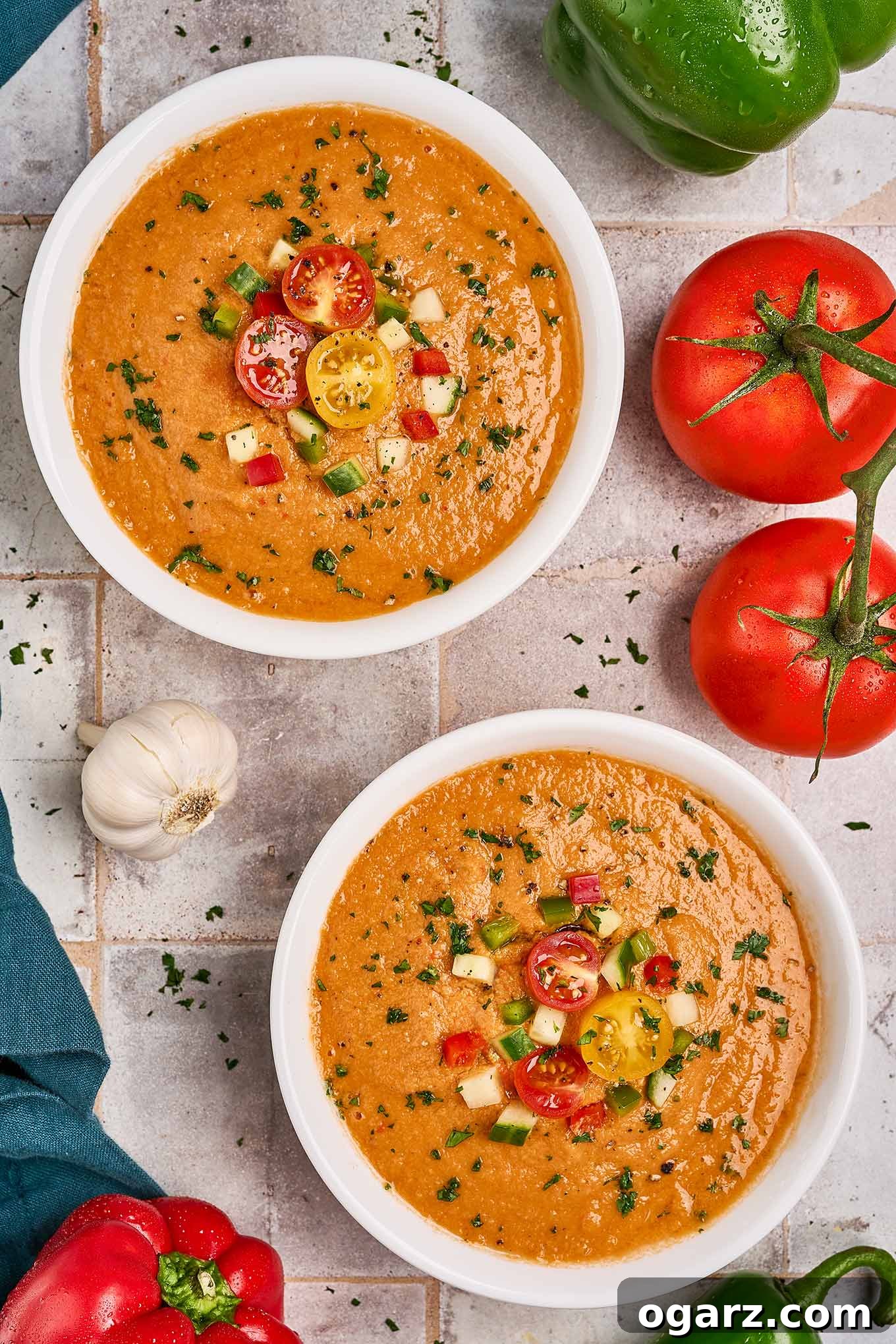

The Ultimate Refreshing Gazpacho Soup: Your Go-To Summer Recipe
Gazpacho soup is an iconic Spanish culinary delight, a delicious and invigorating summer favorite that perfectly captures the essence of fresh, garden-grown produce. Bursting with the flavors of ripe, juicy tomatoes, crisp cucumbers, vibrant bell peppers, and a subtle kick from jalapeño, this chilled soup is a true celebration of the season. Blended to perfection with rich olive oil, tangy sherry vinegar, aromatic garlic, and a touch of bread for ideal thickness, gazpacho stands out as the quintessential dish for those scorching days when you crave something light, intensely flavorful, and incredibly refreshing.
Our journey with gazpacho began decades ago in our Rhode Island garden, overflowing with more tomatoes than we could possibly manage. This abundance inspired us to create a simple yet profoundly satisfying recipe that has remained a cherished staple in our kitchen ever since. Over the years, while the core flavors have stayed true, we’ve refined our preparation techniques, discovering an exceptionally easier way to peel tomatoes – a game-changing tip we are thrilled to share with you below, ensuring your gazpacho preparation is as effortless as it is delicious.
Why Gazpacho is the Perfect Summer Meal
Beyond its incredible taste, gazpacho offers a myriad of benefits that make it an ideal choice for warm weather. It’s a no-cook soup, meaning no need to turn on the stove and heat up your kitchen. This makes it a fantastic option for quick lunches, elegant appetizers, or even a light dinner. Moreover, gazpacho is packed with essential vitamins, minerals, and antioxidants from its fresh vegetable base, providing a healthy boost and excellent hydration during the hottest months. Its vibrant colors and complex flavors can transform a simple meal into an exotic dining experience, making it a favorite for entertaining or a quiet evening at home.
Crafting the Perfect Gazpacho: Essential Ingredients & Smart Substitutions
To achieve the authentic taste and texture of gazpacho, selecting the right ingredients is crucial. Here’s a detailed guide on the key components of this recipe, along with helpful substitution notes. The full list, including precise quantities, is conveniently located in the printable recipe card further down this page.
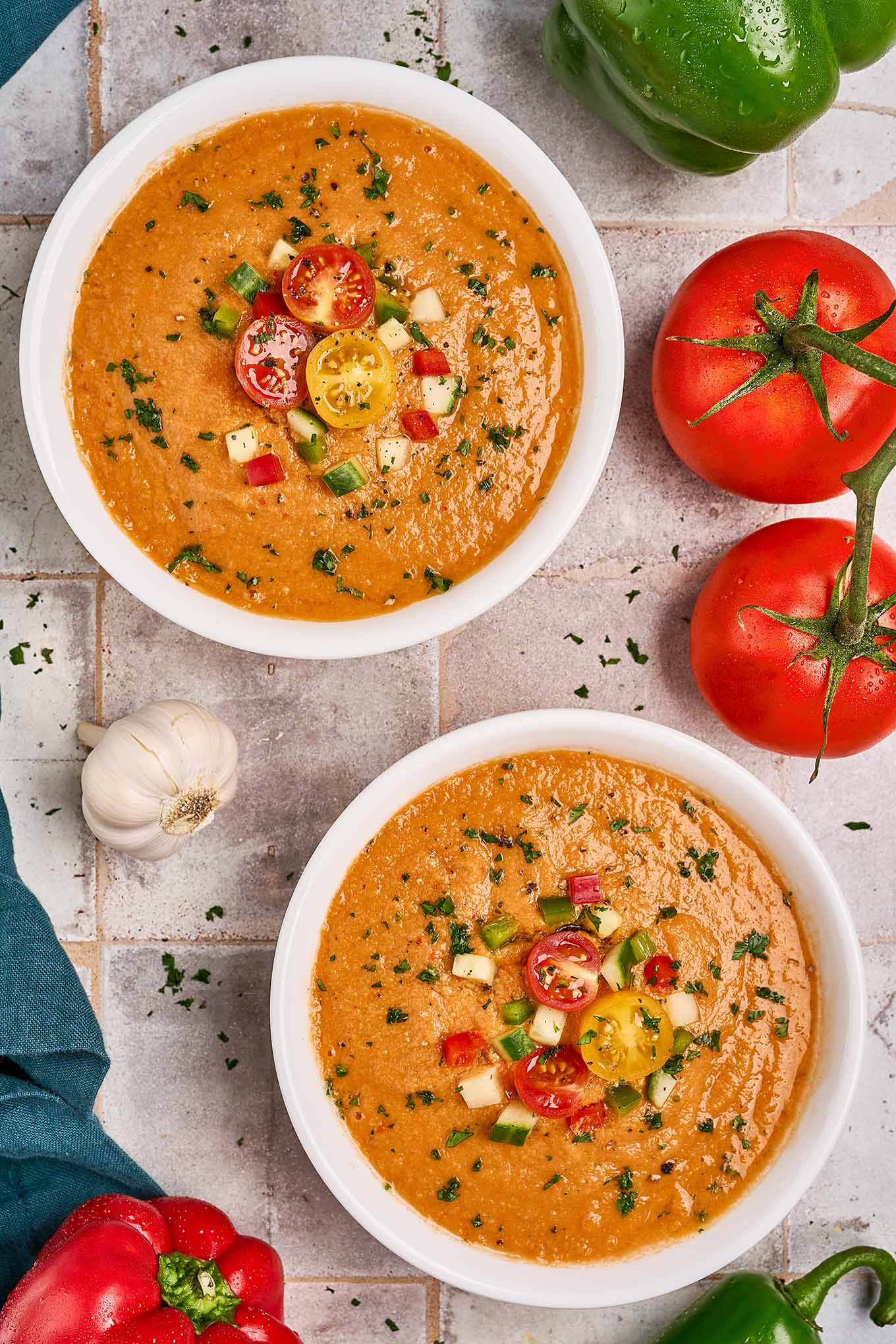
Tomatoes: The Soul of Gazpacho
The foundation of an exceptional gazpacho lies in the quality of your tomatoes. Opt for varieties that are intensely ripe, abundantly juicy, and bursting with flavor. Heirloom, beefsteak, or other vine-ripened tomatoes are excellent choices, known for their superior taste and rich red color that will define your soup. Avoid under-ripe or watery tomatoes, as they will compromise the overall flavor and vibrancy of your gazpacho.
Cucumbers: Adding Crisp Freshness
English cucumbers are highly recommended for gazpacho due to their slightly sweeter flavor profile and significantly smaller, fewer seeds compared to standard cucumbers. This characteristic contributes to a smoother, less watery soup texture. If English cucumbers are unavailable, ensure you peel and deseed regular cucumbers thoroughly to achieve a similar desired consistency.
Olive Oil: The Liquid Gold
For an authentic Spanish touch and a truly robust flavor, we highly suggest using a good quality Spanish extra-virgin olive oil. Spanish olive oils typically boast a bolder, fruitier taste that beautifully complements the fresh vegetables. However, any high-quality extra-virgin olive oil will work wonderfully, adding essential richness and a silky mouthfeel to your gazpacho.
Sherry Vinegar: The Tangy Secret
Sherry vinegar is a traditional Spanish ingredient that imparts a unique complexity to gazpacho. Its subtle sweetness and distinct oakiness, derived from its aging process in sherry casks, are unparalleled. If sherry vinegar isn’t readily available in your pantry, excellent substitutes include apple cider vinegar or red wine vinegar, both of which will provide the necessary acidic balance to brighten the soup’s flavors.
Bread: The Thickening Agent
Bread is vital for achieving the desired creamy, substantial texture in gazpacho. Italian bread, Cuban bread, and French baguettes are all fantastic options. Stale bread is ideal as it absorbs liquid more readily, integrating seamlessly into the blend. If you only have fresh bread, simply dry it out slightly in a low oven (around 200°F or 95°C for 15 minutes) before using. Crucially, leave the crust on the bread; it adds an extra layer of flavor and contributes to a rustic charm.
Jalapeño: A Hint of Heat
A small amount of jalapeño pepper provides a gentle warmth and a subtle spicy kick that elevates the gazpacho without overpowering the fresh vegetable flavors. You can adjust the quantity to your personal taste, adding more for extra heat or removing the seeds and membranes for a milder effect.
Garlic & Onion: Aromatic Foundations
Fresh garlic and sweet onion are indispensable for building the aromatic base of the gazpacho. They add depth and pungency that round out the flavors of the fresh vegetables, creating a more complex and satisfying soup.

Prep Overview
How to Master Homemade Gazpacho Soup
Embarking on this recipe? Here’s a streamlined overview of the process. For detailed, step-by-step instructions, including quantities and additional tips, please refer to the comprehensive printable recipe card below.
Step 1: Prepare Your Vegetables for Blending
The first crucial step involves preparing your tomatoes. This means carefully peeling and seeding them to ensure a silky-smooth gazpacho texture. Once prepared, quarter the tomatoes and combine them in a high-speed blender or the work bowl of a food processor along with the roughly chopped cucumber, red and green bell peppers, jalapeño, sweet onion, and garlic. Add the extra-virgin olive oil and sherry vinegar. Season generously with about half a teaspoon of salt and a few grinds of fresh black pepper. These initial ingredients will form the vibrant base of your soup.
Step 2: Blend to Perfection and Achieve Ideal Thickness
Purée the mixture until it reaches a perfectly smooth consistency. With the blender or food processor still running, gradually add the 1/2-inch bread cubes. Continue to blend until the soup thickens to your desired preference. The amount of bread you add will dictate the final density, so adjust according to whether you prefer a thinner or thicker gazpacho. Once the consistency is to your liking, taste the soup and fine-tune the seasonings. This is your chance to add more jalapeño for extra heat, additional garlic for pungency, or more salt and pepper to balance the flavors.
Step 3: Chill for Optimal Flavor and Refreshment
Transfer the blended gazpacho to individual serving bowls or a large, tightly sealed container. Cover it and refrigerate for a minimum of two hours. Chilling is not just about making the soup cold; it’s a vital step that allows the myriad of flavors to meld and deepen, resulting in a more harmonious and truly refreshing taste experience. Plan ahead to ensure adequate chilling time.
Step 4: Prepare and Add the Fresh Garnish
While the soup chills, prepare your garnish. Finely dice a portion of the remaining cucumber and bell peppers to make approximately 6 tablespoons of colorful topping. Combine these diced vegetables with fresh chopped parsley. Chill the garnish separately until you are ready to serve. Serving the gazpacho cold with this fresh, crisp garnish not only adds visual appeal but also introduces delightful textural contrast to each spoonful.
Perfect Pairings: What to Serve With Your Gazpacho Soup
Gazpacho, with its light and refreshing profile, makes an exquisite first course for a variety of simple yet elegant entrées. Its vibrant flavors beautifully complement dishes that are equally fresh and not overly heavy. Consider serving it alongside delicately broiled fish, such as cod or snapper, or lean and flavorful grilled chicken breasts. These pairings allow the gazpacho to shine without overwhelming the palate.
However, one of our absolute favorite summer dinner combinations is pairing our homemade gazpacho with a rendition of Columbia Restaurant’s renowned 1905 Salad. For those unfamiliar, this iconic salad features crisp iceberg lettuce, generous chunks of savory baked ham and Swiss cheese, briny green olives, and a wonderfully garlicky vinaigrette dressing. This combination creates a distinctly Spanish-Cuban culinary flair that is both hearty and harmonious, making a cup of gazpacho the perfect accompaniment to this flavorful salad.
Additional Serving Ideas:
- Crusty Bread: A thick slice of fresh, crusty bread is perfect for dipping and soaking up the last delicious drops of gazpacho.
- Tapas Spread: Serve gazpacho as part of a larger tapas spread, alongside olives, cured meats, and cheeses for an authentic Spanish experience.
- Avocado Toast: For a light and satisfying lunch, pair your gazpacho with a simple avocado toast.
- Grilled Shrimp or Scallops: The sweetness of grilled seafood provides a lovely contrast to the tangy gazpacho.
- Cheese Platter: A selection of mild cheeses, especially goat cheese or fresh mozzarella, can be a delightful addition.

★★★★★ from 5 votes
Authentic Gazpacho Soup Recipe
Lynne Webb
30
5
2
2
35
4 servings
Rate Recipe
Print Recipe
Ingredients
- 2 lbs (4 to 5 medium) ripe tomatoes, peeled, cored, and seeded
- 3/4 English cucumber, peeled and roughly chopped (plus more for garnish)
- 1/2 red bell pepper, cored, seeded and roughly chopped (plus more for garnish)
- 1/2 green bell pepper, seeded and roughly chopped (plus more for garnish)
- 1/2 jalapeño pepper, seeded and roughly chopped (or more to taste)
- 1/4 cup chopped sweet onion
- 1 clove garlic, quartered (or more to taste)
- 3 tablespoons extra-virgin olive oil
- 3 tablespoons sherry vinegar, (see notes for substitutions)
- 1 to 2 cups 1/2-inch bread cubes, (see notes)
- Salt and freshly ground black pepper
- 2 tablespoons fresh parsley, chopped
Instructions
-
After carefully peeling and seeding the tomatoes (refer to our detailed peeling method below), cut them into quarters and place them into a high-speed blender or the work bowl of a food processor. This initial preparation ensures a smooth soup texture.
-
Add the roughly chopped cucumber, red and green bell peppers, jalapeño (adjust to your preferred heat level), chopped sweet onion, quartered garlic clove, extra-virgin olive oil, and sherry vinegar. Season the mixture with approximately 1/2 teaspoon of salt and a few generous grinds of fresh black pepper.
-
Purée the entire mixture until it achieves a perfectly smooth consistency. Then, with the machine still running, gradually begin adding the 1/2-inch bread cubes. Continue to purée until the soup has thickened to your desired liking. The amount of bread can be adjusted based on your preference for soup thickness (see notes for additional tips).
-
Once you are satisfied with the consistency, taste the gazpacho. This is a crucial step for adjustment. Feel free to add more jalapeño for extra spice, more garlic for intensity, or additional salt and seasonings to perfectly balance the flavors, if desired.
-
Transfer the freshly blended soup into individual serving bowls or a large, airtight container. Cover the bowls or container and refrigerate the gazpacho until it is thoroughly chilled. A minimum of 2 hours is recommended to allow the flavors to fully meld and the soup to become refreshingly cold.
-
To prepare the garnish, finely dice some of the remaining cucumber and bell peppers. Aim for about 6 tablespoons of mixed diced vegetables. Combine these with the fresh chopped parsley and refrigerate them separately until you are ready to serve. Serve the chilled soup with a generous spoonful of the fresh garnish on top.
Notes & Expert Tips for the Best Gazpacho
The Secret to Smooth Gazpacho: How to Effortlessly Peel Tomatoes
Peeling tomatoes is a vital step for achieving the silkiest texture in your gazpacho. Our updated method makes this process incredibly easy:
- Preheat your oven to a high temperature, around 500°F (260°C). Line a broiler pan or a baking sheet with aluminum foil for easy cleanup.
- From the bottom of each tomato, cut a small, thin slice. Then, cut each tomato in half lengthwise. Carefully remove the core and use a spoon to scoop out the seeds.
- Arrange the tomato halves cut-side down on the prepared foil-lined pan.
- Using the tip of a sharp knife, make a small, shallow score lengthwise across the skin of each tomato half. This will help the skin release easily.
- Place the tomatoes in the preheated oven for 3 to 5 minutes. The exact time will depend on the size and ripeness of your tomatoes. You’ll know they’re ready when you observe the scored skin widening slightly, indicating it’s beginning to separate from the flesh.
- Promptly remove the tomatoes from the oven. Carefully slide the aluminum foil with the tomatoes off the hot broiler pan onto a cooler surface. This stops the cooking process and prevents the tomatoes from becoming too soft.
- As soon as the tomatoes are cool enough to handle comfortably, peel the skin off. Start from the center where you made the score and work your way outwards. The skin should come off with remarkable ease.
Tips for Success: Achieving Gazpacho Perfection
Thickening the soup: The ideal consistency of gazpacho is largely a matter of personal preference, but it generally should be thick enough to be pourable, yet have enough body that your chosen garnish will rest beautifully on top without sinking. Adjust the bread quantity incrementally until you reach this balance.
About the bread: The amount of bread cubes required can vary based on the specific density of the bread you select and how thick you prefer your soup. Excellent choices for thickening include Italian bread, Cuban bread, or French baguettes. Remember to leave the crust on, as it contributes significantly to the soup’s overall flavor profile.
Allow plenty of time to chill: Chilling is paramount for gazpacho, as it allows all the flavors to deepen and meld. If you opt to divide your gazpacho into individual serving bowls before refrigerating, it typically reaches a thoroughly chilled state in about 2 hours. If you keep the entire batch in a larger container, allow a more generous 4 to 6 hours for chilling to ensure it’s perfectly cold and refreshing throughout.
Make Ahead Tips: Prepare in Advance
Gazpacho soup is an excellent dish to prepare in advance, making it perfect for entertaining or busy days. It can be made a full day ahead of serving. Store the soup in a tightly covered container in the refrigerator, keeping the fresh garnish separate until just before serving. It’s normal for the soup to separate slightly during storage; simply give it a good stir or whisk before ladling it into serving dishes to restore its uniform consistency.
Nutrition Information
Calories: 361
,
Total Fat: 24g
,
Sodium: 294mg
,
Carbohydrates: 34g
,
Fiber: 6g
,
Sugar: 20g
,
Protein: 6g
Nutrition information is automatically calculated, so should only be used as an approximation.
Enjoyed this recipe? Share your thoughts below!
Your feedback helps others discover delicious meals.