
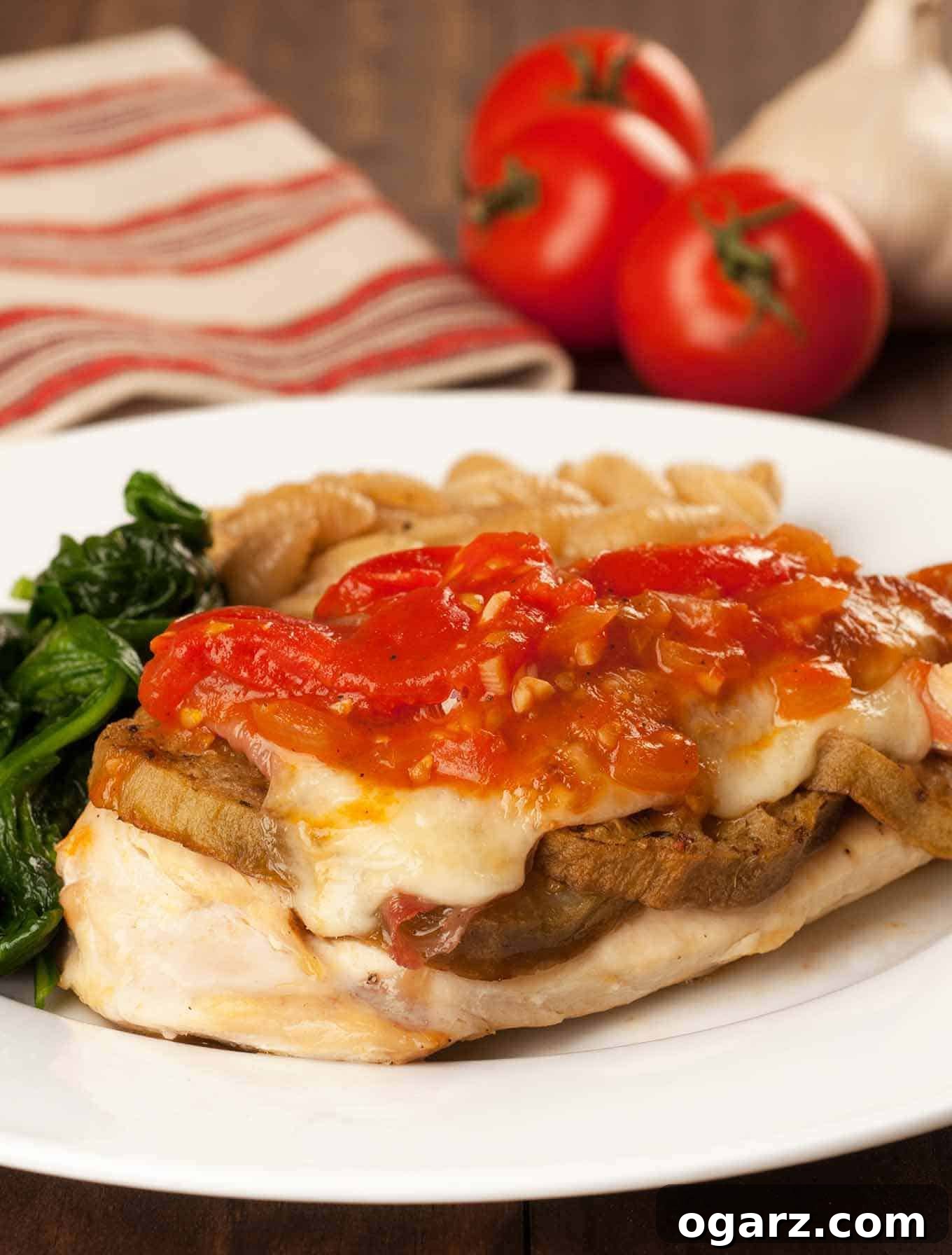
Step into the heart of Italian culinary tradition with our exquisite Chicken Sorrentino recipe. Also known as Pollo alla Sorrentina, this beloved dish transforms simple chicken breasts into a gourmet experience, rivaling your favorite Italian restaurant. Imagine tender, pan-seared chicken, artfully layered with smoky roasted eggplant, delicate slices of savory prosciutto, and a blanket of melted provolone cheese, all brought together by a rich, chunky tomato sauce infused with the subtle sweetness of Marsala wine and a hint of cream. This recipe isn’t just a meal; it’s an invitation to savor the robust flavors and comforting textures that define classic Italian cooking. Forget complicated steps; we’ve streamlined this recipe to bring you an accessible yet utterly delicious version of Chicken Sorrentino, perfect for any home cook looking to impress. Served alongside a vibrant side of sautéed spinach and your favorite pasta, this dish promises a memorable dining experience that transports you straight to the sun-drenched coasts of Southern Italy. Get ready to embark on a culinary adventure that will delight your palate and become a cherished family favorite!
Chicken Sorrentino: Our Signature Marsala Tomato Cream Sauce Recipe
Lynne Webb
15
35
50
4 servings
Pin Recipe
Rate Recipe
Print Recipe
Ingredients
- 4 boneless, skinless chicken breast halves (about 1-1/4 lbs), pounded to 1/2-inch thickness
- 1 small eggplant, peeled and cut into 1/4-inch thick slices
- Olive oil, for roasting and sautéing
- Salt and freshly ground black pepper, to taste
- 2 ounces prosciutto (about 4 thin slices)
- 4 slices provolone cheese
- 1/2 cup onion, finely chopped
- 4 cloves garlic, minced
- 3 tablespoons Marsala wine (dry)
- 4 to 5 plum tomatoes, chopped (about 2 cups)
- 1 tablespoon cream or half-and-half
Instructions
-
Prepare for Roasting: Preheat your oven to 400°F (200°C) and prepare a large baking sheet by lining it with parchment paper. This simple step is crucial for preventing the eggplant from sticking and ensures effortless cleanup, setting the stage for perfectly roasted vegetables.
-
Roast the Eggplant: Arrange the peeled and uniformly sliced eggplant (1/4-inch thick is ideal) on the prepared baking sheet in a single layer. Generously brush both sides of each slice with olive oil, then season lightly with salt and freshly ground black pepper. Roast in the preheated oven for approximately 15 to 18 minutes, or until the eggplant is wonderfully tender and has achieved a light golden-brown hue. Monitor closely to avoid overcooking. Once roasted, reduce your oven temperature to 350°F (175°C) in preparation for the chicken.
-
Prepare and Sauté the Chicken: Lay the boneless, skinless chicken breast halves between two sheets of plastic wrap or parchment paper. Using a meat mallet or the flat side of a heavy pan, gently pound them to an even thickness of about 1/2-inch. This ensures consistent cooking and helps tenderize the meat. Season both sides liberally with salt and pepper. Heat 2 tablespoons of olive oil in a large, heavy skillet over medium-high heat. Add the chicken breasts and sear them until they develop a beautiful golden-brown crust on both sides, which typically takes 2 to 3 minutes per side. The goal here is to achieve a flavorful sear, not to cook the chicken through completely.
-
Assemble and Bake: Lightly coat a 9-inch square baking pan (or a similar oven-safe dish that allows the chicken to fit in a single layer) with nonstick cooking spray. Carefully transfer the seared chicken pieces to the prepared pan. On top of each chicken breast, arrange the roasted eggplant slices, followed by a slice of savory prosciutto, and finally, crown each with a slice of provolone cheese. Transfer the pan to your preheated 350°F (175°C) oven and bake for 6 to 8 minutes, or until the provolone cheese is melted, bubbly, and has a delicate golden-brown finish. This step marries all the delicious layers together.
-
Prepare the Marsala Tomato Sauce: While the chicken is finishing in the oven, use the same skillet where you cooked the chicken to prepare your sauce. Add 1 tablespoon of fresh olive oil over medium heat. Sauté the finely chopped onion for 2 to 3 minutes until it becomes translucent and fragrant, softening beautifully. Add the minced garlic and continue to sauté for just 1 minute longer, being careful not to burn the garlic, which can turn bitter.
-
Deglaze and Simmer Sauce: Pour in the Marsala wine to deglaze the skillet. Use a wooden spoon to vigorously scrape up any browned bits (known as “fond”) from the bottom of the pan; these are packed with flavor and will significantly enrich your sauce. Add the chopped plum tomatoes, season with salt and pepper to taste, and continue cooking over medium heat. Stir occasionally, allowing the tomatoes to break down and the sauce to thicken to a luscious, chunky consistency, which typically takes an additional 4 to 5 minutes. Finally, stir in the cream or half-and-half to add a luxurious richness and velvety texture, then immediately remove the skillet from the heat to prevent over-reduction.
-
Serve Your Masterpiece: To serve, carefully plate individual pieces of the baked Chicken Sorrentino. Spoon a generous amount of the warm, chunky Marsala tomato cream sauce over each chicken breast. For an elegant touch and burst of freshness, garnish with fresh basil or parsley. This dish is perfectly complemented by a side of your favorite pasta, such as spaghetti or penne, and a vibrant sautéed green vegetable like spinach or broccoli rabe. Serve immediately and enjoy the authentic taste of Italy!
Nutrition Information
, Total Fat: 19g
, Cholesterol: 137mg
, Sodium: 622mg
, Carbohydrates: 18g
, Fiber: 4g
, Sugar: 7g
, Protein: 51g
Nutrition information is automatically calculated based on approximate ingredient values and should only be used as an approximation. Individual results may vary based on exact ingredients, brands, and preparation methods.
A Culinary Journey to Sorrento: The Story Behind Chicken Sorrentino
Chicken Sorrentino, or Pollo alla Sorrentina, is a beloved staple on Italian restaurant menus across the globe, particularly prevalent in Italian-American cuisine. While its exact origins are often debated and its history somewhat shrouded in culinary lore, many food historians and enthusiasts believe it hails from the picturesque coastal town of Sorrento in Southern Italy. This stunning region, nestled on the Bay of Naples, is renowned for its vibrant produce, bountiful seafood, fragrant lemons, and a culinary philosophy deeply rooted in simplicity and the exceptional quality of local ingredients. The essence of Sorrento’s cooking is to let fresh, seasonal components shine, creating dishes that are both comforting and elegantly flavorful.
This dish perfectly embodies that ethos by combining humble yet incredibly flavorful components: tender chicken, earthy eggplant, delicate cured ham (prosciutto), and creamy cheese. It’s a testament to the Italian way of transforming readily available ingredients into a symphony of tastes and textures. Over time, as Italian immigrants carried their rich culinary heritage to new shores, particularly to America, Chicken Sorrentino evolved. It adapted to local ingredients and preferences, but always maintained its core identity as a hearty, satisfying, and deeply flavorful meal. It’s a dish that tells a story of tradition, adaptation, and the enduring love for good food that characterizes Italian culture.
What Makes Our Chicken Sorrentino Recipe Stand Out?
While many classic Chicken Sorrentino recipes call for a straightforward marinara sauce, our version takes a delightful and distinct detour that we believe elevates the dish to an entirely new level of gourmet excellence. Our signature twist lies in the creation of a rich, chunky tomato sauce, meticulously flavored with the nuanced and complex notes of dry Marsala wine. Marsala, a fortified wine originating from Sicily, imparts a unique depth to the sauce—a harmonious blend of subtle sweetness, nutty undertones, and a captivating aroma that beautifully complements the savory chicken and prosciutto.
To further enhance this exquisite base, a modest splash of cream is carefully folded into the sauce. This final touch is transformative, creating a luxurious, velvety texture that elegantly coats every ingredient and adds an irresistible richness. Crucially, the cream is added in just the right amount to enrich the sauce without overpowering the vibrant, fresh essence of the tomatoes and the distinct character of the Marsala. Additionally, our method of roasting the eggplant, rather than frying, contributes significantly to a lighter yet equally flavorful dish. Roasting caramelizes the eggplant subtly, giving it a delightful smoky sweetness without the greasy feel sometimes associated with fried versions. This meticulous attention to detail in each component ensures that every bite of our Chicken Sorrentino is a harmonious blend of classic Italian flavors, reimagined with a sophisticated and truly gourmet touch.
Mastering the Key Ingredients for Authentic Flavor
The secret to an unforgettable Chicken Sorrentino lies not just in the cooking method, but fundamentally in understanding and appreciating each of its core components. When these high-quality ingredients are selected and prepared correctly, they come together to form a dish that is far greater than the sum of its individual parts, delivering an authentic Italian experience.
The Chicken: Perfectly Tender Breasts
For Chicken Sorrentino, boneless, skinless chicken breasts are the quintessential choice. Pounding them to an even 1/2-inch thickness is a crucial step that contributes significantly to the dish’s success. Firstly, this ensures the chicken cooks evenly and quickly, preventing any dry spots and resulting in uniformly tender meat. Secondly, it creates a larger, flatter surface area, which is ideal for layering the delicious toppings of eggplant, prosciutto, and provolone. Lastly, tenderized chicken breasts are more receptive to absorbing the flavors from the seasoning and the rich sauce, contributing to a more succulent and flavorful final product. Always opt for fresh, high-quality chicken for the best possible taste and texture.
Eggplant: The Unsung Hero
Eggplant adds a wonderful earthy depth, a slightly sweet note, and a satisfying meaty texture to Chicken Sorrentino. While traditional Italian recipes might sometimes call for frying eggplant, we advocate for roasting. Roasting eggplant brings out its natural sweetness, creates a beautiful, delicate char, and significantly reduces the amount of oil absorbed, leading to a lighter, less greasy, and more intensely flavored dish. Slicing the eggplant thinly (approximately 1/4-inch) is important as it ensures it becomes wonderfully tender and blends seamlessly with the other layers without being overwhelmingly thick. Do not skip the seasoning of salt and pepper before roasting; this simple step enhances its flavor dramatically.
Prosciutto and Provolone: Layers of Italian Goodness
These two ingredients are absolutely non-negotiable for achieving an authentic and truly delicious Chicken Sorrentino. Prosciutto, a dry-cured Italian ham, provides a distinctive salty, savory kick and a delicate, silky texture that contrasts beautifully with the tender chicken and roasted eggplant. Its unique flavor profile is essential. Provolone cheese, particularly a good quality sharp provolone, is paramount. It melts into a wonderfully gooey, flavorful blanket over the chicken, adding a creamy, slightly tangy, and robust note. Together, prosciutto and provolone create a complex depth of flavor and a comforting richness that defines this classic Italian dish. Investing in good quality, thinly sliced prosciutto and aged provolone will truly make all the difference in the final taste.
The Marsala Tomato Cream Sauce: A Flavorful Symphony
Our unique Marsala tomato cream sauce is undoubtedly the heart and soul of this Chicken Sorrentino recipe. It begins with a fragrant base of sautéed onions and garlic, which build the foundational aromatics. The Marsala wine is a pivotal ingredient here; it serves to deglaze the pan, dissolving all the flavorful browned bits (fond) left from searing the chicken and infusing the entire sauce with its distinctive sweet and nutty notes. Using fresh, chopped plum tomatoes ensures a vibrant, naturally sweet, and delightfully chunky sauce, bursting with genuine tomato flavor and a pleasant acidity. The final, crucial touch is a swirl of cream or half-and-half. This addition mellows any sharpness, adds a luxurious richness, and creates a silky, smooth finish, expertly tying all the robust flavors together into a harmonious and unforgettable whole. The result is a sauce that is both comforting and sophisticated.
Step-by-Step Perfection: Tips for Success
Achieving restaurant-quality Chicken Sorrentino in your own kitchen is more attainable than you might think, especially when armed with these insider tips and tricks to guide you through each critical stage of the recipe. Precision and attention to detail at each step will ensure a truly spectacular outcome.
Preparing the Eggplant: Roasting for Flavor and Texture
Opting to roast the eggplant, rather than frying, is a healthier and equally delicious approach that yields fantastic results. For optimal cooking, ensure your eggplant slices are uniform in thickness, ideally about 1/4-inch. When arranging them on the baking sheet, avoid overcrowding; if necessary, use two sheets. Giving the eggplant ample space allows it to brown beautifully instead of steaming, which prevents a soggy texture. A generous brush of olive oil on both sides, coupled with a liberal seasoning of salt and pepper, is key to developing a rich, savory flavor and a perfectly tender texture that will integrate flawlessly with the other layers.
Sautéing the Chicken to Golden Perfection
The primary objective when sautéing the chicken is to achieve a beautiful, appealing golden-brown crust, not to cook the chicken through entirely at this stage. Pounding the chicken breasts to an even 1/2-inch thickness is absolutely vital; this ensures rapid and uniform searing, and helps the chicken remain wonderfully tender and juicy. Utilize a heavy-bottomed skillet and ensure the olive oil is sufficiently hot before carefully adding the chicken. This creates the essential Maillard reaction, which develops deep, complex savory flavors on the surface of the chicken, significantly contributing to the overall richness and depth of the finished dish. Be careful not to overcook the chicken during this initial searing, as it will continue to cook in the oven later.
Crafting the Rich Marsala Sauce
The Marsala tomato cream sauce is where our recipe truly distinguishes itself, and its preparation is a highlight. After sautéing the aromatics (chopped onion and minced garlic) until fragrant, deglazing the pan with Marsala wine is a crucial step. This process dissolves any flavorful browned bits (fond) left clinging to the bottom of the pan from the chicken, incorporating these concentrated flavors directly into the sauce. Allow the Marsala to simmer for a minute or two to cook off the alcohol content and allow its distinct flavor to concentrate. When adding the chopped plum tomatoes, consider gently crushing them slightly with the back of your spoon; this helps them break down more quickly and release their juices, contributing to a truly chunky and flavorful sauce. The final swirl of cream or half-and-half should be added off the heat to prevent any curdling and to preserve its beautifully smooth, rich consistency.
Assembly and Baking: The Melding of Flavors
During the assembly stage, it’s important to ensure that each chicken breast is topped evenly with a layer of roasted eggplant, a slice of savory prosciutto, and a generous slice of provolone cheese. This meticulous layering guarantees a balanced and delicious flavor in every single bite. The baking time for this dish is relatively short, just long enough for the provolone cheese to melt into a bubbly, golden, and irresistible layer. It’s advisable to watch the cheese closely during this period to prevent it from browning too much. This brief baking period allows all the magnificent flavors to meld together beautifully, creating a cohesive and satisfying dish, all without drying out the perfectly tender chicken.
Serving Suggestions and Pairings
Chicken Sorrentino is a hearty, flavorful, and incredibly satisfying dish that pairs wonderfully with a diverse array of sides. Thoughtfully chosen accompaniments can elevate the entire dining experience, creating a well-rounded and memorable meal. Here are some classic and inspired suggestions:
Classic Sides
- Pasta: A simple side of pasta is almost mandatory. Spaghetti, penne, fettuccine, or even small pasta shells tossed with just a hint of olive oil, fresh garlic, and maybe a sprinkle of fresh parsley is an excellent choice. The pasta acts as a perfect vehicle for soaking up every last drop of the rich Marsala tomato cream sauce.
- Sautéed Spinach: As suggested in the original recipe, vibrant sautéed spinach, gently cooked with garlic and finished with a squeeze of fresh lemon, provides a refreshing, slightly bitter counterpoint. This bright side expertly cuts through the richness of the chicken, cheese, and sauce, balancing the palate.
- Garlic Bread or Crusty Italian Bread: Absolutely essential for mopping up every delectable bit of the exquisite Marsala tomato cream sauce. Choose a crusty artisan loaf or homemade garlic bread for the ultimate indulgence.
- Roasted Asparagus or Green Beans: Lightly roasted or steamed green vegetables, seasoned simply with salt, pepper, and a drizzle of olive oil, offer a delightful crunch, fresh flavor, and vibrant color that complements the main dish beautifully.
- Simple Garden Salad: A crisp, refreshing green salad with a light vinaigrette dressing can provide a wonderful palate cleanser and a refreshing balance to the rich, savory main course.
Wine Recommendations
To truly elevate your Chicken Sorrentino experience to a sophisticated level, pairing it with a thoughtfully chosen wine is highly recommended. The right wine can enhance the flavors and create a truly memorable meal:
- Red Wine: For red wine enthusiasts, a medium-bodied Italian red is an ideal choice. Consider a Chianti Classico, known for its Sangiovese grape, or a robust Barbera. Their inherent acidity and delightful savory notes will beautifully complement the tomato-based sauce and the rich flavors of the chicken and prosciutto, creating a harmonious pairing.
- White Wine: If you prefer white wine, opt for a dry and crisp Italian white. A Pinot Grigio, with its bright and refreshing profile, or a Verdicchio, known for its elegant minerality, would be excellent choices. Their refreshing brightness will deftly cut through the richness of the provolone cheese and cream, offering a pleasant palate cleanse between bites.
- Marsala: To echo the flavors present in the sauce, you could even consider serving a dry Marsala wine as an elegant aperitif before the meal or as a digestif afterwards.
Variations to Personalize Your Sorrentino
While our Chicken Sorrentino recipe offers an authentic and utterly delicious experience, one of the joys of Italian cooking is the freedom to get creative and tailor dishes to your personal preferences, dietary needs, or what ingredients you have on hand. Feel free to experiment and make this classic truly your own!
- Cheese Swaps: If provolone isn’t your favorite or isn’t available, there are several fantastic alternatives. Fresh mozzarella (low-moisture, if possible, to avoid excess water), creamy Fontina, or even a blend of shredded Parmesan and provolone can be used. Each cheese will contribute its own unique flavor profile and melting characteristics.
- Meat Alternatives: If prosciutto isn’t readily available or you prefer a different flavor, you can substitute thinly sliced cooked ham, or even crispy pancetta (sautéed until rendered and golden). For a vegetarian version, simply omit the prosciutto entirely. As for the main protein, veal Sorrentino is a classic and elegant variation, utilizing thinly pounded veal cutlets instead of chicken breasts for a richer flavor.
- Vegetable Additions: Enhance the nutritional value and flavor by adding other thinly sliced vegetables. Consider incorporating zucchini slices or roasted bell peppers (red, yellow, or orange) alongside or even in place of some of the eggplant. A layer of sautéed mushrooms can also introduce a wonderful earthy dimension to the dish.
- Herb Enhancements: While fresh basil is a traditional and highly recommended herb for this dish, fresh oregano or a sprinkle of a high-quality Italian seasoning blend added to the sauce can deepen its aromatic profile. Fresh parsley, chopped and sprinkled as a final garnish, always provides an inviting pop of color and fresh flavor.
- Spicier Kick: For those who appreciate a touch of heat, a pinch of red pepper flakes added to the sauce along with the garlic can provide a delightful and subtle zing that awakens the palate. Adjust the amount to your desired level of spice.
- Gluten-Free Adaptation: This recipe is naturally low in gluten if served without traditional wheat-based pasta. To make it entirely gluten-free, ensure all your ingredients are certified gluten-free (especially broths if using) and serve the Chicken Sorrentino with zucchini noodles, spaghetti squash, or your favorite brand of gluten-free pasta.
Storage and Reheating
Chicken Sorrentino is one of those fantastic dishes that often tastes even better the next day, as the robust flavors have more time to meld and deepen. Proper storage and reheating techniques are key to ensuring you can enjoy this delicious meal again with minimal effort.
- Storage in the Refrigerator: Once your Chicken Sorrentino has cooled completely to room temperature, transfer any leftovers to an airtight container. It can be safely stored in the refrigerator for up to 3-4 days. For best results, keep the chicken and sauce together.
- Freezing for Longer Storage: For extended enjoyment, Chicken Sorrentino freezes remarkably well. Allow the dish to cool entirely, then portion individual servings into freezer-safe containers or heavy-duty freezer bags. Ensure there’s some sauce with each chicken breast to keep it moist. It can be frozen for up to 2-3 months without significant loss of quality. Always thaw frozen portions overnight in the refrigerator before reheating for the best texture and even heating.
- Reheating in the Oven: The oven is generally the best method for reheating Chicken Sorrentino, as it helps to maintain the chicken’s tenderness and the cheese’s texture without drying it out. Preheat your oven to 325°F (160°C). Place the chicken Sorrentino in an oven-safe dish, cover it loosely with aluminum foil (this prevents the chicken from drying out), and bake for approximately 20-25 minutes, or until it is thoroughly heated through. For a slightly crispy cheese topping, you can remove the foil during the last 5 minutes of reheating.
- Reheating on the Stovetop: For individual portions, the stovetop can be a quick and effective option. Gently warm the chicken and sauce in a covered skillet over medium-low heat. Add a splash of chicken broth or water if the sauce appears too thick or has reduced too much, stirring occasionally until heated through.
- Reheating in the Microwave: While convenient, the microwave can sometimes dry out chicken. To minimize this, reheat individual servings on a microwave-safe plate, covered loosely with a microwave-safe lid or plastic wrap, in 1-minute intervals until warm. Adding a tablespoon of water or broth before microwaving can also help keep the chicken moist.
Frequently Asked Questions (FAQ) about Chicken Sorrentino
Here are answers to some of the most common questions about making, serving, and enjoying Chicken Sorrentino, providing helpful insights for both novice and experienced cooks.
What is the difference between Chicken Sorrentino and Chicken Parmigiana?
While both are beloved Italian-American chicken dishes, they have distinct characteristics. Chicken Parmigiana typically features breaded and fried chicken cutlets, topped with mozzarella cheese and a straightforward marinara sauce. Chicken Sorrentino, on the other hand, usually utilizes pan-seared or baked chicken breasts (without breading) and includes layers of savory prosciutto and tender roasted eggplant, often crowned with provolone cheese and served with a more complex sauce, like our signature Marsala tomato cream version. The addition of eggplant and prosciutto is a key differentiator.
Can I make Chicken Sorrentino ahead of time?
Absolutely! Chicken Sorrentino is an excellent make-ahead meal, often tasting even better as the flavors have more time to meld. You can fully assemble the dish (chicken with eggplant, prosciutto, and cheese) and store it, unbaked, in the refrigerator for up to a day before you plan to bake it. The Marsala tomato cream sauce can also be prepared a day in advance and gently reheated on the stovetop before serving, making your dinner preparation much smoother and less stressful.
What kind of Marsala wine should I use for cooking?
For savory cooking, it is crucial to always opt for dry Marsala wine, rather than sweet Marsala. Dry Marsala, often labeled “Marsala Secco,” is a fortified wine with complex savory, nutty, and slightly caramelized notes that will enhance your sauce beautifully without making it overly sweet. Sweet Marsala is primarily intended for desserts and would alter the intended flavor profile of this savory dish.
Is it necessary to pound the chicken breasts?
While not strictly necessary, pounding the chicken breasts to an even thickness of about 1/2-inch is highly recommended and contributes significantly to the dish’s quality. This technique ensures that the chicken cooks evenly and quickly, remaining tender and juicy throughout the process. It also creates a more uniform and stable base for layering the delectable toppings, resulting in a more elegant presentation and a consistent, balanced flavor in every bite.
Can I use canned tomatoes instead of fresh plum tomatoes?
Yes, if fresh plum tomatoes are not in season or are not readily available, good quality canned chopped tomatoes or crushed tomatoes can be used as an excellent substitute. For the best flavor, look for imported San Marzano tomatoes, which are highly regarded for their balanced sweetness and low acidity. If using canned, you may need to adjust the seasoning slightly, as canned tomatoes can sometimes be a bit more acidic or salty than fresh ones.
Conclusion: A Taste of Italy at Your Table
Chicken Sorrentino is truly more than just a meal; it’s an immersive experience that transports you to the warmth of a classic Italian kitchen. It embodies the richness of thoughtfully combined ingredients, the artistry of traditional cooking methods, and the profound satisfaction of preparing a dish that genuinely delights all the senses. Our meticulously crafted recipe, featuring its unique Marsala tomato cream sauce and tender, harmoniously layered components, offers a sophisticated yet entirely approachable way to bring the authentic, vibrant flavors of Sorrento directly to your home dining table.
Whether you consider yourself a seasoned culinary expert or a passionate home cook eager to explore new, impressive dinner options, this Chicken Sorrentino promises to be a cherished and frequently revisited addition to your culinary repertoire. Gather your finest ingredients, approach the preparation with passion and enthusiasm, and get ready to indulge in an authentic taste of Italy that will leave a lasting impression on everyone at your table. Buon appetito!
Like this recipe? Rate and comment below!
Your valuable feedback helps us continue to create and share more delicious content and exciting recipes.