
Effortless Elegance: Mastering Duck a l’Orange with Boneless Breasts
Elevate your special occasion dinners with an elegant, yet surprisingly easy, entrée: our simplified take on the classic French Duck a l’Orange. This guide empowers you to create a restaurant-quality meal at home, focusing on succulent pan-seared duck breasts and a vibrant, perfectly balanced orange sauce.
The Enduring Legacy of Duck a l’Orange
Duck a l’Orange, or Canard à l’Orange, is a culinary masterpiece with roots deeply embedded in French gastronomy. This iconic dish gained significant popularity in American restaurants during the 1960s, charming diners with its sophisticated blend of rich duck and tangy citrus. Traditionally, its preparation is an elaborate affair, involving the meticulous roasting of a whole duck. The process typically includes making a flavorful stock from the duck trimmings – such as the neck, gizzard, and heart – which then forms the complex base for the signature orange sauce, combined with fresh orange segments and other aromatic ingredients.
While the traditional method is undoubtedly rewarding, it can be time-consuming and daunting for the home cook. Recognizing this, we’ve developed a streamlined approach that retains all the luxurious flavor and elegance of the original, but without the extensive effort. By utilizing readily available boneless duck breasts instead of a whole duck, we transform this classic into a much more accessible and manageable dish, making it perfect for an impressive weeknight meal or a sophisticated dinner party without the stress.
Why Boneless Duck Breast is Your Culinary Secret Weapon
Opting for boneless duck breasts significantly simplifies the preparation of Duck a l’Orange without compromising on flavor or texture. Duck breasts offer a perfect individual portion, cook much faster than a whole duck, and allow for greater control over the doneness of the meat. This method eliminates the need for deboning, reducing both prep time and potential waste. When pan-seared correctly, boneless duck breasts develop an irresistibly crispy skin while remaining tender and juicy inside, providing an ideal canvas for the bright and zesty orange sauce. This choice makes a traditionally complex dish achievable and enjoyable for cooks of all skill levels, ensuring a memorable dining experience with minimal fuss.
Mastering the Art of Pan-Seared Duck Breasts
Achieving a perfectly cooked duck breast is the cornerstone of an exceptional Duck a l’Orange. The goal is a breast that is tender and juicy with a gloriously crispy, golden-brown skin. This seemingly gourmet feat is entirely attainable at home by following a few critical steps. The process relies on patient rendering of the fat to achieve that coveted crispness, followed by a quick finish to reach the ideal internal temperature.
- Bring to Room Temperature: Before you even think about placing the duck in a pan, it’s crucial to let the duck breasts come to room temperature. Remove them from the refrigerator at least 30 minutes prior to cooking. This step ensures more even cooking and helps prevent the meat from seizing up when it hits the heat, leading to a more tender final product.
- Score the Skin: Using a very sharp knife, carefully score the skin in a crosshatch pattern, making incisions about 1/4-inch apart. The key here is precision: cut through the skin and fat layer, but be very careful not to cut into the underlying flesh. This scoring allows the fat to render more efficiently during cooking, resulting in extra crispy skin and less greasy meat.
- Season Generously: Liberally season the scored skin side of the duck breasts with coarse salt and a few generous grinds of fresh black pepper. You can also lightly season the flesh side. The salt helps to draw out moisture from the skin, further enhancing its crisping potential, and contributes significantly to the overall flavor.
- Start Cold, Low, and Slow: Place the seasoned duck breasts skin-side down in a heavy, cold pan – a cast iron skillet is ideal for its even heat distribution. Place the pan over medium-low heat, aiming for a temperature between 250 to 275°F. This “cold start” method is crucial for gradually rendering the duck fat without burning the skin, ensuring maximum crispness.
- Patient Fat Rendering: This is the most important step for crispy skin. Leave the duck breasts undisturbed, skin-side down, until the fat has rendered out and the skin is beautifully crisp and golden brown. This step typically takes between 10 to 15 minutes, sometimes longer, depending on the thickness of the fat layer. You’ll hear a gentle sizzle and see the fat slowly rendering into the pan. If the skin is browning too quickly, reduce the heat further.
- Flip and Finish: Once the skin is perfectly crisp, carefully raise the heat slightly to medium and flip the duck breasts over to the flesh side. Continue cooking until an instant-read thermometer inserted into the thickest part of the breast registers your desired doneness: 130°F for medium-rare or 140°F for medium. This usually takes only 3 to 6 minutes.
- The Crucial Rest: Immediately remove the duck breasts from the pan and allow them to rest on a cutting board for at least 8 to 10 minutes before carving. This resting period is vital. The residual heat will continue to cook the duck to perfection (a process known as carryover cooking), and the juices, which have concentrated in the center during cooking, will redistribute evenly throughout the breast, ensuring every slice is incredibly tender and moist.
Once you’ve mastered this pan-searing technique, a world of culinary possibilities opens up. You might be inspired to try other flavorful duck recipes, such as our vibrant Thai Mango Curry Duck, where succulent duck breast pairs exquisitely with aromatic Thai spices. And for those occasions that call for a more traditional preparation, our recipe for Roast Duck with Orange-Rosemary Sauce offers a guide to roasting a whole duck to perfection.
Crafting the Exquisite Orange Sauce
The orange sauce is the heart and soul of Duck a l’Orange, providing a vibrant contrast to the rich duck. A successful sauce strikes a delicate balance between sweetness and a subtle bitterness from the orange, enhanced by acidic notes and depth of flavor. Our simplified recipe achieves this complexity with ease, thanks to key ingredients like sherry vinegar and a touch of cocktail bitters, which elevate the citrus profile and add an intriguing layer of sophistication.
While the duck breasts are slowly rendering their fat, you can efficiently prepare this delightful sauce. Begin by zesting your orange, ensuring you only get the bright orange peel and avoid the bitter white pith. Then, carefully segment the orange to create beautiful ‘supremes’, which are membrane-free slices of citrus, perfect for garnishing. The sauce itself starts with sautéed shallots in butter, creating an aromatic base. Sugar is added to caramelize slightly, providing depth. Fresh orange juice, the remaining chicken broth, and sherry vinegar are then introduced, brought to a boil, and thickened with a cornstarch slurry. The final flourish comes from the orange bitters, which provide a nuanced complexity that sets this sauce apart. Taste and adjust seasoning with salt and pepper to ensure that perfect sweet-tart-savory balance.
Exploring Different Duck Breast Varieties
When preparing duck, understanding the different varieties of boneless duck breasts available can significantly impact your cooking experience and the final dish. Depending on the duck breed, individual boneless breast halves can vary in weight from 8 ounces up to a full pound, each offering unique characteristics in terms of flavor, fat content, and texture. Knowing these distinctions will help you select the best duck for your culinary aspirations.
- Pekin (or Long Island) Duck Breasts: The Pekin duck is the most ubiquitous variety found in American markets. Known for its mild flavor and tender meat, Pekin duck breasts are a fantastic choice for those new to cooking duck. Each breast half typically weighs around 8 to 9 ounces, making them an excellent individual serving size. They are relatively fatty, which contributes to their rich flavor and ensures a wonderfully crispy skin when properly rendered. Their versatility makes them suitable for a wide range of recipes, including classic preparations like Duck a l’Orange.
- Muscovy Duck Breasts: Muscovy ducks are distinct from Pekin ducks; they are often leaner with thinner skin and have a flavor profile that some describe as more gamey, akin to lean beef or venison. Individual breast halves usually weigh about 8 ounces, similar to Pekin. While Muscovy duck breasts might carry a slightly higher price per pound, they render less fat during cooking, meaning you retain a higher percentage of edible meat. Their robust flavor makes them a favorite among chefs looking for a more intense duck experience, pairing well with bold sauces.
- Magret Duck Breasts: Magret duck breasts come from the Moulard duck, a hybrid breed resulting from a cross between Pekin and Muscovy ducks. These are often considered the connoisseur’s choice. Magret breasts are significantly larger than their Pekin or Muscovy counterparts, with each breast half weighing an impressive 14 to 16 ounces. Despite their size, they are remarkably tender, intensely flavorful, and retain the ease of preparation found in smaller duck breasts. They are known for their thick layer of fat, which renders beautifully to produce an exceptionally crisp skin and rich, succulent meat. Magret breasts are perfect for a substantial main course and truly elevate any duck dish to gourmet status.
Where to Source Premium Duck Breasts
Finding high-quality boneless duck breasts in conventional local supermarkets can sometimes be a challenge, as they are often considered a specialty item. For the best selection and quality, you might need to explore alternative sourcing options. Specialty meat markets are an excellent place to start, as they often stock a wider variety of premium meats and can provide expert advice on selection and preparation. Many gourmet food stores also carry duck products, especially around holidays or for special order.
Another increasingly popular and convenient option is to shop online. Several reputable mail-order purveyors specialize in quality meats, delivering directly to your door. A highly regarded source for duck products is D’Artagnan, a New Jersey-based company known for its commitment to ethical farming and superior quality. D’Artagnan prides itself on sourcing duck products from birds that are humanely raised on family farms, ensuring they are free from hormones and antibiotics. They consistently offer all three of the popular duck breast varieties mentioned above – Pekin, Muscovy, and Magret – allowing you to choose the perfect duck for your culinary creation with confidence.

Perfect Pairings for Your Duck a l’Orange
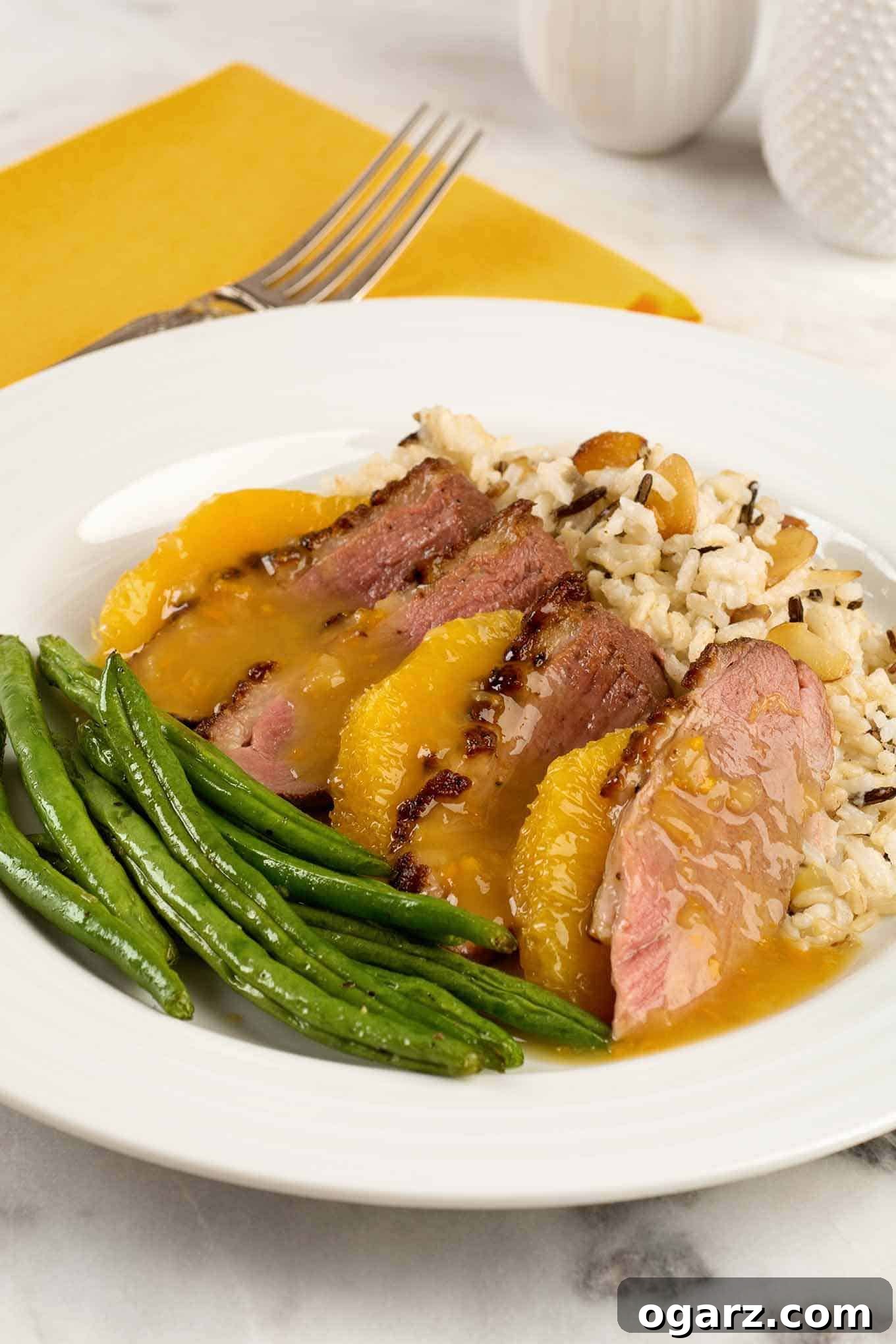
To complete your elegant Duck a l’Orange meal, thoughtful side dishes and wine pairings can truly enhance the experience. We highly recommend accompanying this rich duck recipe with simple, yet complementary, side dishes that highlight its flavors without overpowering them. A medley of white and wild rice, perhaps tossed with toasted slivered almonds for added texture and nuttiness, provides a perfect neutral base to absorb the delicious orange sauce. Oven-roasted green beans, lightly seasoned, offer a fresh, crisp, and vibrant green contrast. Other excellent vegetable choices include sautéed asparagus, glazed carrots, or a delicate potato gratin.
When it comes to wine, the sweet and tangy notes of the orange sauce, combined with the richness of the duck, call for a pairing that offers both acidity and a hint of sweetness. Gewürztraminer is our top recommendation, known for its aromatic profile and ability to complement complex flavors. A semi-sweet German Riesling, particularly an Auslese, also makes an excellent choice, offering refreshing acidity and subtle fruitiness. If you prefer red wine, a light to medium-bodied Pinot Noir would provide a beautiful counterpoint with its earthy undertones and red berry notes, creating an outstanding pairing.

Duck Breast a l’Orange
Rate Recipe
Print Recipe
Ingredients
- ▢ 4 boneless duck breasts
- ▢ Salt and freshly ground black pepper
- ▢ 1 large navel orange, preferably organic
- ▢ 1 tablespoon cornstarch
- ▢ 1/2 cup low-sodium chicken broth, divided
- ▢ 2 tablespoons unsalted butter
- ▢ 1 tablespoon minced shallot
- ▢ 2 tablespoons sugar
- ▢ 1-1/2 tablespoons sherry vinegar
- ▢ 1 cup orange juice, fresh squeezed is best
- ▢ 6 or 7 dashes orange bitters
Instructions
-
Remove the duck breasts from the refrigerator 30 minutes ahead to allow them to come to room temperature.
-
Being careful not to cut into the meat, score the skin on each duck breasts in a crosshatch pattern at 1/4-inch intervals. Season both sides with salt and pepper.
-
Zest the orange into a small bowl, then trim away both ends. Following the curve of the orange, carefully cut away the remaining peel down to the flesh, then trim any stray bits of the white pith.
-
Using a sharp knife, carefully slice along both sides of each membrane toward the center of the orange to remove the segments (these are called orange supremes). Set aside.
-
Place the duck breasts, skin side down in a heavy frying pan over medium heat (about 275°F) to render the fat. You should see the fat begin to melt and hear a slight sizzle. If your duck breast is cooking harder than that, lower the heat.
-
Without turning, continue cooking the duck until the majority of the fat has rendered from the breast and the skin is golden brown and crisp. This usually takes 10 to 15 minutes.
-
While the duck fat renders, make the sauce.
-
Whisk the cornstarch together with 1/4 cup of the chicken broth in a small bowl and set it aside.
-
In a small saucepan, melt the butter over medium heat. Add the shallot and sauté until soft and fragrant, 2 minutes. Stir in the sugar and cook until dissolved.
-
Add the sherry vinegar, orange zest, orange juice and remaining chicken broth. Raise the heat and bring the mixture to a boil.
-
Give the cornstarch mixture a quick stir, then add it to the saucepan and cook for 30 seconds.
-
Reduce the heat and simmer, whisking constantly, until the sauce has thickened to a syrupy consistency, 2 to 3 minutes.
-
Season the sauce to taste with salt and pepper, remove from the heat and add the bitters. Cover to keep warm.
-
Once the duck skin is crisp, turn the breasts over, raise the heat slightly and continue cooking until an instant read thermometer inserted into the thickest part of the breast registers 130°F for medium-rare (or 140°F for medium), 3 to 6 minutes.
-
Allow the duck breasts to rest for 8 to 10 minutes before slicing.
-
To serve, arrange slices of duck and several orange supremes on each plate, then drizzle the sauce over the top.
Nutrition
Total Fat: 13g,
Cholesterol: 143mg,
Sodium: 457mg,
Carbohydrates: 20g,
Fiber: 1g,
Sugar: 15g,
Protein: 34g
Nutrition information is automatically calculated, so should only be used as an approximation.