
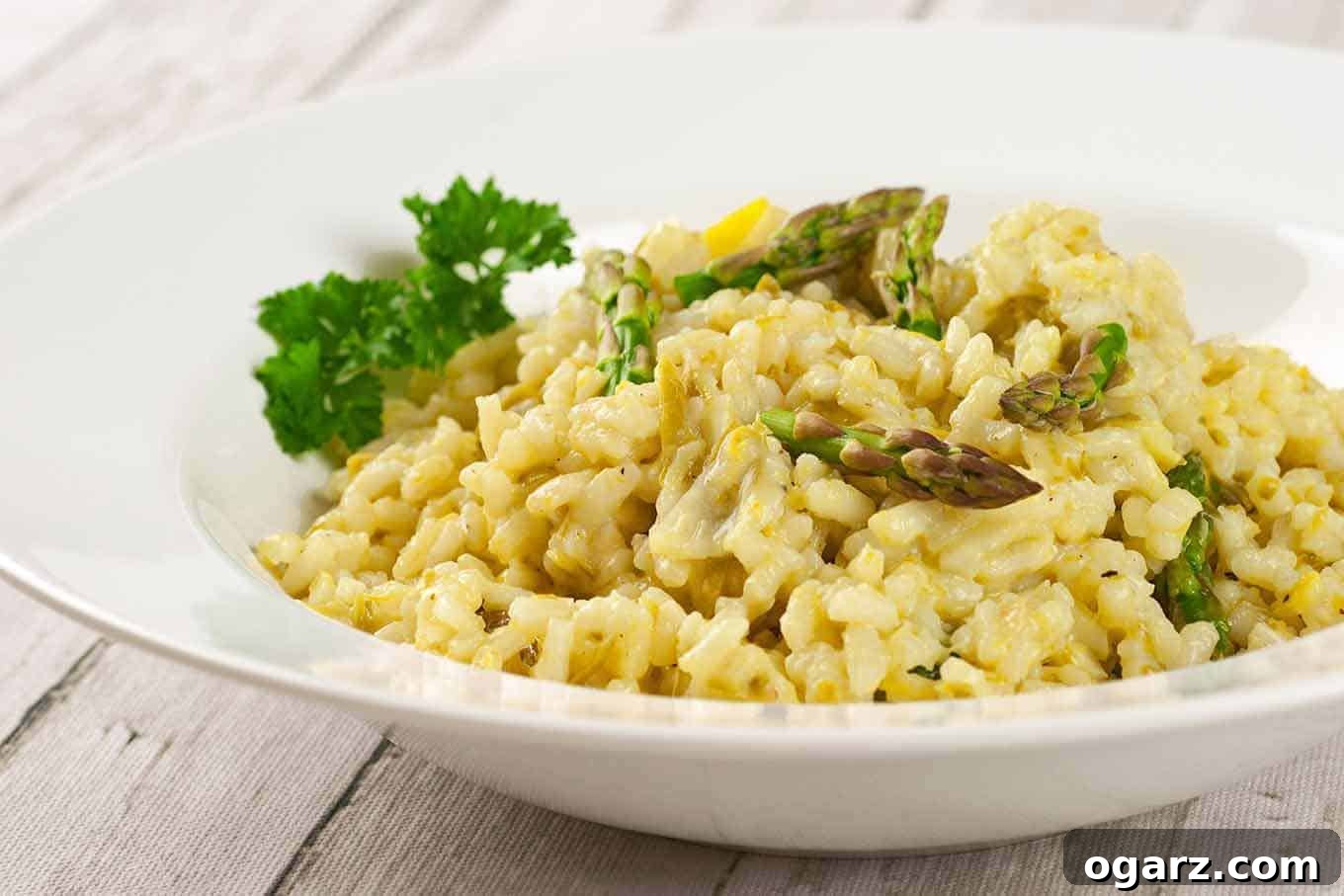
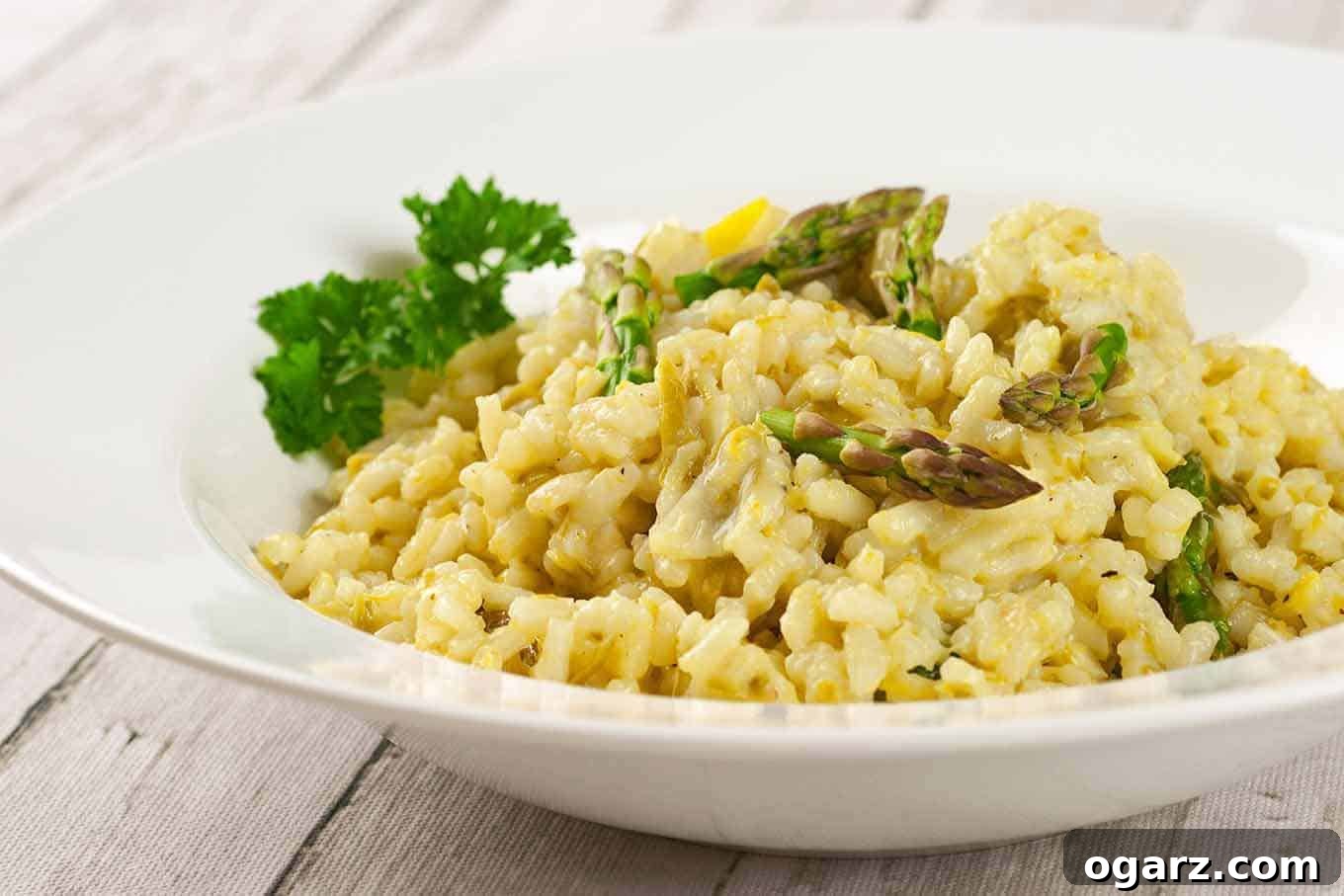
Asparagus and Lemon Risotto: A Taste of Spring in Every Creamy Bite
There’s something inherently comforting and luxurious about a perfectly made risotto. Its rich, creamy texture provides an ideal canvas for a myriad of flavors, making it a truly versatile dish for any occasion. This exquisite recipe elevates classic risotto by infusing it with the vibrant essence of spring: tender asparagus, bright fresh lemon, a hint of robust olive oil, and aromatic garlic. The result is a satisfying, one-dish, meatless meal that’s both elegant and incredibly flavorful, perfect for a light lunch, a sophisticated dinner, or a delightful side.
As the days grow longer and the weather warms, our palates often crave fresh, invigorating flavors. This Asparagus and Lemon Risotto perfectly captures that seasonal shift, celebrating the peak of asparagus season and the refreshing zest of citrus. It’s a dish that not only tantalizes your taste buds but also brings a touch of culinary sophistication to your table without demanding hours in the kitchen. Serve it alongside a crisp salad of field greens, dressed with a simple white wine vinaigrette, for a complete and utterly delightful meal.
The Art of Risotto: A Culinary Journey
Risotto, a classic Italian rice dish, is renowned for its signature creamy consistency achieved by slowly adding hot broth to Arborio rice while stirring constantly. Unlike other rice preparations where liquid is added all at once, the gradual addition of broth and continuous stirring are crucial steps that encourage the rice grains to release their starch, creating that characteristic velvety texture. This patient process transforms simple ingredients into a dish that feels both comforting and gourmet.
The choice of rice is paramount in risotto. Arborio rice, with its short, plump grains and high starch content, is the undisputed star. It absorbs liquids beautifully while maintaining a firm, slightly chewy core, known as “al dente.” This unique characteristic allows it to hold its shape and contribute to the creamy mouthfeel without becoming mushy, which is often a challenge with other rice varieties. Opting for quality Arborio rice will make a noticeable difference in the final texture and overall success of your risotto.
Why Asparagus and Lemon? The Perfect Spring Harmony
Asparagus and lemon are a match made in culinary heaven, especially when it comes to celebrating spring. Asparagus, one of the earliest vegetables to emerge in the spring, boasts a distinct earthy, slightly sweet flavor and a delightful crisp-tender texture. It’s also packed with vitamins K, A, C, and folate, making it a nutritious addition to any meal. By pureeing a portion of the asparagus, we ensure its delicate flavor permeates every spoonful of the risotto, while reserving some tips for garnish adds an appealing visual and textural contrast.
Lemon, on the other hand, provides a bright, zesty counterpoint that cuts through the richness of the risotto. Using the whole lemon – peel and all – in the puree intensifies its aromatic qualities and contributes a complex, tangy dimension to the dish. For the best results and peace of mind, choosing an organic lemon is recommended, especially since the peel is incorporated. The essential oils in the zest are powerful flavor enhancers, awakening the other ingredients and providing a truly refreshing finish.

Asparagus and Lemon Risotto
Lynne Webb
10 minutes
35 minutes
45 minutes
6
servings
Rate Recipe
Print Recipe
Ingredients
- 1 lb asparagus
- 1 whole lemon, preferably organic, scrubbed
- 5 tablespoons extra virgin olive oil, divided
- 3 tablespoons water
- 1 lb arborio rice
- 1 large shallot, finely chopped
- 2 cloves garlic, very finely chopped
- 1/2 cup dry white wine
- 4-1/2 to 5 cups low-sodium chicken broth
- Salt and freshly ground black pepper
Instructions
-
Begin by preparing your asparagus for blanching. Bring a large pot of salted water to a rolling boil. Simultaneously, fill a medium-sized bowl with ice water and set it aside; this will be crucial for stopping the cooking process of the asparagus.
-
Rinse the asparagus thoroughly under cold water. Snap or trim off the tough, woody ends – they will naturally break where the tender part begins. Carefully remove the delicate tips of the asparagus and set them aside; these will be used for garnishing the finished dish. Chop the remaining asparagus stems into approximately 1 to 1-1/2-inch pieces. Submerge these chopped stems into the boiling salted water and cook until they are brilliantly bright green and crisp-tender, typically 3 to 4 minutes. Promptly drain the asparagus stems and transfer them into the prepared ice water bath to halt the cooking and preserve their vibrant color. Once cooled, drain them again and place the stems into the work bowl of a food processor. Pulse the food processor on and off until a smooth puree is formed, though small, delightful chunks are perfectly acceptable for added texture. Transfer this asparagus puree to a clean bowl and set it aside.
-
Next, prepare the lemon puree. Using a sharp paring knife or a vegetable peeler, carefully remove the yellow peel from the organic lemon, trying to leave as much of the bitter white pith on the fruit as possible. Add only the yellow peel to the food processor work bowl. Slice the peeled lemon in half crosswise and meticulously remove any visible seeds. With a spoon, scoop the juicy lemon segments into the food processor, discarding the remaining thick white pith. Add 3 tablespoons of the extra virgin olive oil, the water, and a pinch of salt and pepper to the processor. Pulse until the mixture forms a coarse puree; tiny bits of lemon peel are expected and desirable for concentrated flavor. Combine this zesty lemon puree with the reserved asparagus puree and set this flavorful mixture aside.
-
In a separate large saucepan, gently warm 4-1/2 cups of the low-sodium chicken broth over medium heat, bringing it to a slow simmer. Keep this broth warm throughout the cooking process; adding cold broth to hot rice can shock the grains and impede the creamy texture.
-
In a large, heavy-bottomed pan or Dutch oven, heat the remaining 2 tablespoons of extra virgin olive oil over medium heat. Add the finely chopped shallot and sauté, stirring occasionally, until it becomes soft, translucent, and fragrant, typically about 2 minutes. Incorporate the very finely chopped garlic and continue to sauté for another minute until aromatic, being careful not to burn it. Add the Arborio rice to the pan and stir vigorously to ensure each grain is thoroughly coated with the olive oil. Cook for 1 minute, allowing the rice to lightly toast and develop a nutty aroma. Pour in the dry white wine and bring it to a simmer, stirring continuously until the wine has been almost completely absorbed by the rice. Then, add the first 1/2 cup of the hot chicken broth.
-
Continue cooking the risotto, stirring constantly, until the added broth has been completely absorbed by the rice. This constant stirring is vital for releasing the starches from the Arborio rice, which creates the creamy texture. Add the remaining broth in 1/2 cup increments, allowing each addition to be fully absorbed before adding the next. This gradual process usually takes approximately 18 to 20 minutes. Begin tasting the rice after about 15 minutes. The goal is an “al dente” texture – the rice should be tender but still have a slight, pleasant chewiness in the center. Season the risotto to taste with salt and freshly ground black pepper as you go along. You may not need all 5 cups of broth, or you might need a little more; adjust based on the texture of the rice.
-
Once the risotto reaches your desired consistency, stir in the reserved asparagus and lemon puree and cook for just 1 minute to warm it through and integrate the flavors. Add the reserved blanched asparagus tips and cook for 1 minute longer, ensuring they are heated but still retain their crispness. To serve, plate individual portions generously. For an extra touch of richness and flavor, top each serving with freshly grated Parmigiano-Reggiano cheese. Garnish with a sprig of fresh parsley or an extra asparagus tip, if desired.
Notes
Risotto Cooking Tip: Mastering the Broth Absorption
One of the most common challenges in making risotto is knowing precisely when the broth has been fully absorbed by the rice before adding the next increment. As the risotto cooks, the starches released from the rice create a thick, creamy liquid, sometimes making it difficult to gauge the liquid level accurately.
A simple and effective trick to determine proper absorption is the “wooden spoon test.” With your wooden spoon, drag it across the bottom of the pan, creating a clear “path” or channel through the rice.
If the bottom of the pan remains visible for a second or two as you draw the spoon across, the broth has been sufficiently absorbed, and it’s time for the next addition. However, if the path immediately fills in with liquid behind your spoon, the rice needs to cook a little longer to absorb more liquid before you add another increment. This technique ensures your risotto achieves the perfect creamy consistency without becoming soupy or dry.
Nutrition
Calories:
385
,
Total Fat:
17
g
,
Sodium:
333
mg
,
Carbohydrates:
39
g
,
Fiber:
2
g
,
Sugar:
3
g
,
Protein:
22
g
Nutrition information is automatically calculated, so should only be used as an approximation.
Like this recipe? Rate and comment below!
Essential Tips for a Flawless Risotto
Beyond the fundamental technique, a few key practices can elevate your risotto from good to truly exceptional. Firstly, always use warm broth. Adding cold liquid will significantly lower the temperature of the pan, interrupting the cooking process of the rice and resulting in an unevenly cooked, potentially chewy risotto. Keep your broth simmering gently in a separate saucepan throughout the entire cooking time.
Secondly, continuous stirring is your best friend. While it might seem tedious, stirring is what coaxes the starch out of the Arborio rice, creating that signature creamy texture. It also prevents the rice from sticking to the bottom of the pan and ensures even cooking. Don’t over-stir, but maintain a consistent, gentle motion. Finally, tasting as you go is crucial. Rice varieties and even batches can vary slightly, so rely on your palate to determine when the risotto has reached the perfect al dente texture. It should be tender but still offer a slight resistance to the bite, not mushy.
Serving Suggestions and Creative Variations
While this Asparagus and Lemon Risotto is a complete meal in itself, pairing it with a simple side can enhance the dining experience. A light, peppery arugula salad with a bright vinaigrette provides a refreshing contrast to the creamy richness of the risotto. For those who enjoy a little extra crunch, toasted pine nuts or a sprinkle of fresh chopped chives can add another layer of flavor and texture. If you’re not strictly vegetarian, a few seared scallops or grilled shrimp would beautifully complement the delicate flavors of the asparagus and lemon.
Feeling adventurous? This recipe is incredibly adaptable. Consider adding a handful of fresh peas along with the asparagus tips for an extra pop of sweetness and color. A touch of grated Parmesan cheese stirred in at the end, just before serving, will boost the umami and creaminess. For a richer flavor profile, a tablespoon of butter can be swirled in at the very end (a technique known as “mantecatura”) to make the risotto even more unctuous. Experiment with different fresh herbs like dill or tarragon for subtle variations on the theme.
Conclusion: A Springtime Classic Reimagined
This Asparagus and Lemon Risotto is more than just a recipe; it’s an invitation to savor the freshness of spring in a comforting, elegant package. With its vibrant flavors, rich texture, and the satisfying process of creation, it promises to be a delightful addition to your culinary repertoire. Whether you’re a seasoned chef or new to the world of risotto, following these steps will guide you to a perfectly creamy, intensely flavored dish that will impress and nourish. Embrace the season and enjoy every flavorful bite of this beautiful, meatless masterpiece.