

Table of Contents
- Mastering Prime Rib: Insights from the Kitchen
- Essential Ingredients for Your Prime Rib Roast
- How to Prepare a Perfect Standing Rib Roast (Prime Rib)
- Achieving Ideal Doneness: Internal Temperature Guide
- Expert Tips for a Flawless Prime Rib
- Frequently Asked Questions About Prime Rib Roasts
- Complementary Serving Suggestions
- Standing Rib Roast Recipe
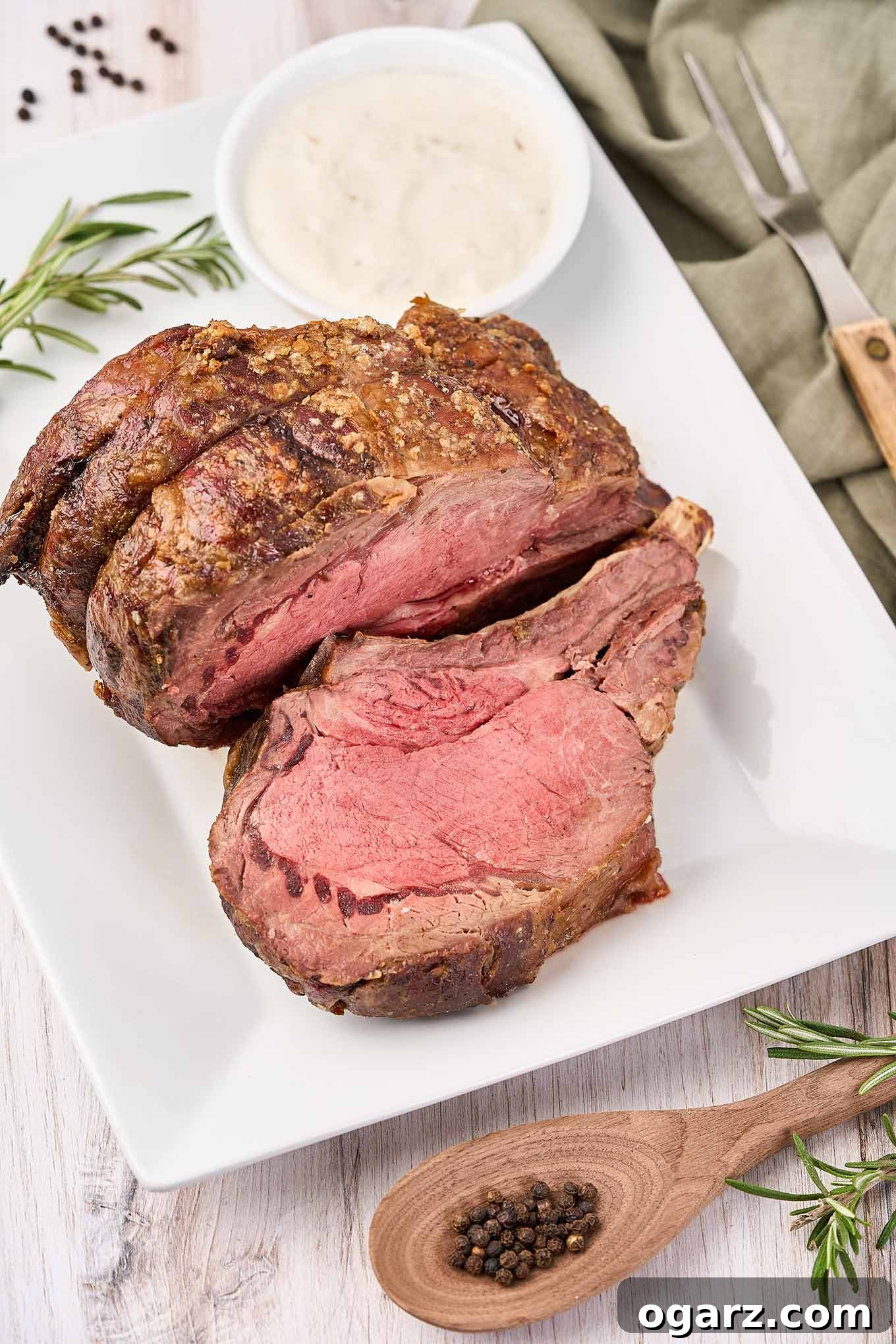
There are few main dishes as impressive or as satisfying as a perfectly cooked standing rib roast, often known as prime rib. Whether you’re planning an elaborate holiday feast, a cozy special Sunday dinner, or simply wish to indulge in a luxurious meal, this elegant beef roast is a brilliant choice that promises to be the star of your table. Our comprehensive guide not only walks you through the steps to achieve a tender, succulent prime rib but also includes a classic, zesty horseradish cream sauce that beautifully complements the meat’s rich, beefy flavor. Paired with simple, make-ahead side dishes, you can create an effortless yet undeniably impressive menu that will delight your guests.
Mastering Prime Rib: Insights from the Kitchen
Cooking a standing rib roast to tender, juicy perfection might seem daunting, but it’s remarkably simple with the right approach. The secret lies in a few basic seasonings and meticulous attention to temperature and roasting times. This makes prime rib one of the most straightforward yet spectacular main dishes you can prepare for any gathering. The meat itself boasts such incredible, inherent flavor that we advocate for minimal seasoning—just a blend of salt, pepper, and olive oil to enhance its natural goodness. This allows the beef to truly shine. To round out the meal, we often opt for comforting side dishes that complement the richness of the roast. Plus, any leftover prime rib makes for exquisite roast beef sandwiches, and the rib bones can be frozen to create a flavorful stock or soup base for future culinary endeavors.

Essential Ingredients for Your Prime Rib Roast
To achieve the best results, understanding your ingredients is key. Here’s what you need to know about the primary components of this recipe. The full list, including precise quantities, is available in the printable recipe card below.
- FIRST CUT STANDING RIB ROAST (also known as prime rib): When selecting your roast, specifically request a three-rib roast from the small end of the rack of ribs from your butcher. This cut, often referred to as the “first cut” or “loin end,” is generally more tender and features less fat and connective tissue, resulting in less waste and a more refined eating experience. Aim for a roast weighing between 6 and 7 pounds, exhibiting beautiful marbling throughout the meat and a generous, even layer of fat on top. These characteristics are crucial for a flavorful and moist roast. For more detailed shopping tips, refer to our FAQ section below.
- SHALLOT: Our recipe incorporates a minced shallot, gently sautéed in olive oil, to lend a delicate, mild onion flavor to the horseradish cream sauce. Shallots offer a sweeter, less pungent aroma compared to onions or garlic, making them ideal for a refined sauce. If shallots are unavailable, a small clove of minced garlic can be used as a substitute, though it will impart a more assertive flavor.
- SOUR CREAM: Sour cream forms the creamy, tangy base for our irresistible horseradish sauce. Its richness provides a smooth texture and a subtle counterpoint to the horseradish’s piquancy. You can use either regular full-fat sour cream for maximum richness or a reduced-fat version if you prefer a lighter sauce.
- CREAM: To further enhance the luxurious texture and flavor of the sauce, we add a touch of cream. Heavy cream will yield the richest, thickest sauce, while light cream or half-and-half can be used for a slightly lighter consistency without sacrificing much flavor.
- HORSERADISH: The star of the cream sauce, horseradish adds a distinctive spicy kick that cuts through the richness of the prime rib. Our recipe specifies a modest amount to create a balanced sauce, but this can be easily adjusted to your personal taste preferences. If you have guests who may not appreciate the full strength of horseradish, consider setting aside a small portion of the sauce before adding the horseradish, or serve extra horseradish on the side for those who enjoy a bolder flavor.
How to Prepare a Perfect Standing Rib Roast (Prime Rib)
Ready to create a memorable meal? Here’s a clear overview of the process to cook a magnificent prime rib. For exhaustive, step-by-step instructions and a printable version, please refer to the recipe card at the end of this article.
PREPARE AND ROAST THE BEEF: Begin by preparing your roast. In a small bowl, thoroughly whisk together the olive oil, kosher salt, and freshly ground black pepper. This simple seasoning blend is all you need to highlight the prime rib’s natural flavor. Generously rub this mixture all over the exterior of the roast. Once seasoned, allow the roast to rest at room temperature for at least one hour. This crucial step promotes more even cooking and helps achieve a beautiful sear. Preheat your oven to a high temperature of 450°F (or 425°F for a convection oven). Place the seasoned roast, fat-side up, on a sturdy rack set within a shallow roasting pan. The fat cap will naturally baste the meat as it cooks, keeping it moist. Roast at this high temperature for an initial 15 minutes. This high heat phase creates a delicious, flavorful crust on the exterior of the beef. Immediately after the initial 15 minutes, without opening the oven door, reduce the oven temperature to 350°F (325°F convection). Continue roasting the beef for an additional 45 minutes before checking its internal temperature. Insert an instant-read meat thermometer into the thickest part of the meat, avoiding any bones, to get an accurate reading.

CHECK FOR DONENESS AND REST: Achieving your desired level of doneness is crucial for prime rib. For a roast that is rare in the center with medium-rare to medium doneness towards the ends and edges, remove it from the oven when your instant-read thermometer registers between 110°F and 115°F. It’s vital to remember that the roast’s internal temperature will continue to rise by several degrees (this is known as carryover cooking) as it rests after being removed from the oven. For a comprehensive guide to internal temperatures for various doneness levels, please refer to our detailed chart below. If the roast has not yet reached your desired temperature after the initial check, return it to the oven and continue roasting, checking the internal temperature every 7 to 10 minutes to prevent overcooking. Once the roast reaches its target temperature, remove it from the oven, tent it loosely with aluminum foil, and allow it to rest undisturbed for 20 to 30 minutes. This resting period is critical as it allows the juices to redistribute throughout the meat, ensuring a tender and incredibly succulent result.
MAKE THE HORSERADISH CREAM SAUCE: While your magnificent prime rib rests, prepare the classic horseradish cream sauce. Heat the olive oil in a small saucepan over medium heat. Add the minced shallot and sauté gently until it softens and becomes translucent, typically 3 to 4 minutes. Be careful not to brown it. Stir in the sour cream, cream (heavy, light, or half-and-half), and the prepared horseradish. Season the sauce to taste with salt and black pepper, adjusting as needed. Allow the sauce to warm through gently, then transfer it to an elegant serving dish. It’s now ready to accompany your prime rib.
CARVE THE PRIME RIB AND SERVE: Proper carving enhances the presentation and enjoyment of your roast. First, carefully remove the bones from the meat. To do this, run a sharp boning knife along the inside curve of the ribs, staying as close to the bone as possible to maximize the meat yield. Once the bones are separated, carve the roast into uniform 1/2-inch thick slices. Arrange these beautiful slices artfully on a warm serving platter. Present the prime rib alongside the freshly prepared horseradish cream sauce, allowing each guest to customize their plate with this flavorful accompaniment. Serve immediately and savor the moment!
Achieving Ideal Doneness: Internal Temperature Guide for Standing Rib Roasts
For a truly perfect prime rib, understanding and monitoring internal temperatures is paramount. Always use an instant-read thermometer inserted into the thickest part of the meat, avoiding bones, for the most accurate reading. Remember that the temperature will rise several degrees during resting.
- Rare: Characterized by a deep red center that transitions to pink towards the edges. Roast until the internal temperature reaches 110°F to 115°F.
- Medium-Rare: Displays a bright pink center, gradually browning towards the edges. Roast until the internal temperature reaches 120°F to 125°F. This is often the preferred doneness for prime rib, offering a perfect balance of tenderness and juiciness.
- Medium: Features a pale pink center with noticeable browning extending towards the edges. Roast until the internal temperature reaches 130°F.
- Medium-Well: Appears mostly brown from the center out to the edges, with only a hint of pink. Roast until the internal temperature reaches 140°F.

Expert Tips for a Flawless Prime Rib
Ensuring your standing rib roast is cooked to perfection every time requires attention to a few key details. Follow these expert tips for an unforgettable culinary experience:
- BRING THE ROAST TO ROOM TEMPERATURE: This is a non-negotiable step for even cooking. Remove your roast from the refrigerator at least one hour, and ideally up to two hours, before you plan to put it in the oven. Allowing the meat to come closer to room temperature prevents the exterior from cooking too quickly while the interior remains cold, helping you achieve a uniform doneness from edge to center and a superior sear on the exterior.
- CHOOSE THE RIGHT ROASTING PAN: The ideal roasting pan should be 2 to 3 inches deep and sufficiently large to comfortably accommodate your prime rib without crowding. Ample space around the roast allows the dry heat of the oven to circulate freely, promoting even cooking and an excellent crust. While a roasting rack is commonly used, the rib bones themselves can act as a natural rack, elevating the meat and preventing the bottom from over-browning. Assess how your roast sits in the pan; if it’s well-elevated by the bones, an additional rack may not be necessary.
- START THE ROAST ON HIGH HEAT: Kickstart your prime rib’s journey by roasting it at a high temperature of 450°F initially. This intense heat is crucial for two reasons: it rapidly seals in the precious juices and promotes the Maillard reaction, developing a deeply flavorful, caramelized crust on the roast’s exterior. Maintain this high temperature for precisely 15 minutes.
- REDUCE HEAT WITHOUT OPENING THE OVEN: After the initial 15 minutes at high heat, reduce the oven temperature to 350°F (or 325°F for convection) *without opening the oven door*. This practice is vital to maintain the oven’s internal temperature and continue the cooking process smoothly without heat loss, which can extend cooking times and affect doneness.
- TEST FOR DONENESS AFTER 45 MINUTES: Begin monitoring the internal temperature of your prime rib after it has roasted for 45 minutes at the lower 350°F setting. Use a reliable instant-read thermometer, inserting it into the thickest part of the meat, away from any bone. Compare your reading to our internal temperature guide to determine if it’s nearing your desired doneness level.
- RE-CHECK THE INTERNAL TEMPERATURE FREQUENTLY: Once you’ve performed the initial temperature check at the 45-minute mark, continue to re-check the internal temperature every 7 to 10 minutes. This frequent monitoring is your best defense against overcooking. Even though it’s called an “instant-read” thermometer, allow it to remain inserted for up to 30 seconds to ensure the reading stabilizes and is accurate.
- LET THE ROAST REST BEFORE CARVING: Patience is a virtue, especially with prime rib. Once your roast reaches your desired internal temperature, remove it from the oven, tent it loosely with aluminum foil, and let it rest for a generous 25 to 30 minutes. This critical resting period allows the muscle fibers to relax and the juices, which have been driven to the center during cooking, to redistribute evenly throughout the entire roast. Rushing this step will result in juices spilling out when you carve, leading to a less tender and less flavorful piece of meat.
Frequently Asked Questions About Prime Rib Roasts
Selecting the right cut of beef is fundamental to a delicious prime rib roast. Here’s essential information to help you make the best purchase for your culinary needs.
A standing rib roast, commonly known as prime rib, is a highly prized and tender cut of beef sourced from the primal rib section of the cow. This is the very same area from which popular rib-eye steaks are cut. It’s important to clarify that the term “prime” in “prime rib” historically refers to the superior cut itself, not necessarily the USDA grading of the beef. If you are specifically looking for beef graded as USDA Prime (which indicates the highest quality, with abundant marbling), you will need to look for additional labeling beyond just the name “prime rib.”
Indeed, there are variations within standing rib roasts. A whole beef rib roast typically weighs around 16 pounds and comprises 7 ribs, which naturally vary in size from one end of the rack to the other. Butchers commonly divide a whole rib roast into two main sections: a 3-rib roast and a 4-rib roast. The 3-rib cut, often taken from the loin end of the rack, is also known as the “first cut” or “small end.” This particular cut is usually more tender and contains fewer large fat pockets, resulting in less trim and a leaner profile. Conversely, the 4-rib roast originates from the opposite end, closer to the shoulder. This “second cut” tends to have larger rib bones and a higher concentration of fat and connective tissue. While this can sometimes impart a deeper, more robust flavor, it may also result in a slightly less tender roast compared to the first cut.
Dry-aging is a traditional process where meat is stored, uncovered, in a carefully controlled, very cold refrigerator (typically around 36°F) for several weeks. During this period, two significant transformations occur: moisture slowly evaporates from the meat, concentrating its beefy flavor, and natural enzymes within the meat begin to break down connective tissues. This enzymatic breakdown dramatically increases the tenderness of the meat. The combined effect of moisture loss and enzymatic action results in an intensely flavorful, exceptionally tender roast. However, this extended process, requiring specific conditions and time, comes with a considerably higher price tag. While dry-aged roasts offer a unique gourmet experience, USDA Choice and Prime grade roasts, which are more readily available, are also perfectly delicious and often represent excellent value.
As a general guideline, you can expect one rib to serve two people, though this can vary based on portion sizes, the appetite of your guests, and the number and richness of accompanying side dishes. A 3-rib roast typically weighs between 6 and 7 pounds and should comfortably feed 6 people. A larger 4-rib roast usually weighs between 8 to 10 pounds and can serve 8 to 10 people. The serving-to-weight ratio for a 4-rib cut is slightly smaller because the bones are larger and there might be more trimming required. Regardless of the size you choose, always look for meat with good visible marbling (small streaks of fat within the muscle) and a substantial, even layer of fat on the outside of the roast. Both marbling and the fat cap are essential; they provide natural basting during the roasting process, contributing significantly to the roast’s juiciness and flavor.
Once you’ve purchased your prime rib roast, it’s best to cook it within three days for optimal freshness and quality. Before cooking, keep the roast tightly wrapped in its original packaging or in butcher paper, and store it in the coldest part of your refrigerator. This helps maintain its temperature and prevents spoilage. If you anticipate needing to store the roast for a longer period, it’s advisable to consult with your butcher about its specific use-by date before purchasing, or consider freezing it if longer storage is absolutely necessary.

Complementary Serving Suggestions
A magnificent prime rib roast is often reserved for special occasions and entertaining, making it the perfect centerpiece for a thoughtfully curated menu. To complement this luxurious entrée, we have a selection of favorite appetizers and side dishes that enhance its rich flavor profile. Given that mushrooms and beef are a classic culinary pairing, we highly recommend starting your meal with our delicate Mushroom Puffs or our savory Spinach Stuffed Mushrooms. For side dishes, we lean into comforting American classics that stand up to the prime rib without overwhelming it, such as our creamy Creamed Spinach and our perfectly textured Rustic Mashed Potatoes.
When it comes to selecting the perfect wine, red wines with soft tannins and subtle spice notes are ideal companions for a standing rib roast. They enhance the beef’s robust flavor without overpowering it. Excellent choices to consider include a well-balanced California Pinot Noir, known for its fruit-forward character and gentle tannins, or a sophisticated Cabernet-Merlot blend, which offers a harmonious balance of structure and dark fruit flavors.

How to Cook a Standing Rib Roast (Prime Rib)
Rate Recipe
Print Recipe
Ingredients
- 1 3-bone standing rib roast (prime rib), about 6 pounds
- 1/4 cup extra-virgin olive oil
- 1-1/2 teaspoons kosher salt
- 1/2 teaspoon freshly ground black pepper
For the Horseradish Cream Sauce
- 1 tablespoon olive oil
- 2 tablespoons minced shallot
- 1/2 cup sour cream
- 1/4 cup heavy cream
- 2 tablespoons prepared horseradish
Instructions
Prepare and roast the prime rib:
-
In a small bowl, whisk together the olive oil, kosher salt, and black pepper. Rub the mixture generously all over the outside of the roast and set aside for an hour to come to room temperature. This step ensures even cooking and a good sear.
-
Preheat your oven to 450°F (425°F convection). Place the roast, fat side up, on a rack in a shallow roasting pan. Roast for 15 minutes at this high temperature to create a flavorful crust. Without opening the oven door, immediately reduce the temperature to 350°F (325°F convection). Continue to roast the beef for 45 minutes longer, then carefully check its internal temperature by inserting an instant-read meat thermometer into the thickest part of the meat, avoiding any bone.
Check for doneness:
-
If you desire your roast rare in the center, with medium-rare to medium doneness towards the ends and around the edges, remove it from the oven when the thermometer registers 110°F to 115°F. Remember that the roast’s internal temperature will continue to rise as it rests before carving (carryover cooking). Refer to our complete internal temperature guide provided in the notes below for more specific doneness levels.
-
If the roast temperature has not yet reached the desired doneness, return it to the oven and check the internal temperature every 7 to 10 minutes to prevent overcooking. Once the roast reaches your target temperature, remove it from the oven, tent it loosely with aluminum foil, and let it rest undisturbed for 20 to 30 minutes before carving. This resting period is crucial for juicy, tender meat.
Make the horseradish cream sauce:
-
While the prime rib is resting, prepare your horseradish cream sauce. Heat the olive oil in a small saucepan over medium heat. Add the minced shallot and cook until it softens and becomes translucent, about 3 to 4 minutes. Stir in the sour cream, cream (heavy, light, or half-and-half), and the prepared horseradish. Season the sauce to taste with salt and freshly ground black pepper. Once the sauce is gently warmed through, transfer it to a serving dish.
Carve the roast and serve:
-
If your roast was not tied with the rib bones separated from the meat (which your butcher can do for you), carefully remove the bones now by running a sharp boning knife along the inside curve of the ribs, as close to the bone as possible.
-
Once the ribs are removed from the roast, carve the meat into uniform 1/2-inch thick slices. Arrange these slices elegantly on a warm serving platter. Serve immediately with the prepared horseradish cream sauce on the side, allowing guests to add as much or as little as they prefer.
ol>
Notes
BRING THE ROAST TO ROOM TEMPERATURE: To ensure even cooking and a beautiful sear, always remove the roast from the refrigerator at least one hour before you begin the roasting process. This helps prevent temperature shock in the oven.
CHOOSE THE RIGHT ROASTING PAN: Select a roasting pan that is 2 to 3 inches deep and large enough to allow ample space around your roast. Proper air circulation is essential for even cooking and crust development. The rib bones often serve as a natural roasting rack, preventing the bottom of the meat from browning excessively.
START THE ROAST ON HIGH HEAT: Initiate the roasting process at a high temperature of 450°F (425°F convection). This initial high heat blast is crucial for searing the exterior, locking in juices, and developing a rich, flavorful crust on your prime rib. Roast at this temperature for 15 minutes.
REDUCE HEAT WITHOUT OPENING THE OVEN: After the initial 15 minutes, reduce the oven temperature to 350°F (325°F convection) *without opening the oven door*. This maintains the oven’s heat and ensures a continuous, even cooking process.
TEST FOR DONENESS AFTER 45 MINUTES: After 45 minutes of roasting at 350°F, begin to test the internal temperature of your prime rib. Insert an instant-read thermometer into the thickest part of the meat, ensuring it doesn’t touch any bone. Refer to the temperature chart below to match the reading with your desired doneness.
RE-CHECK THE INTERNAL TEMPERATURE FREQUENTLY: Once you’ve completed the initial temperature check, continue to monitor the roast every 7 to 10 minutes until it reaches your preferred doneness. Though they are “instant-read,” allow the thermometer to remain inserted for up to 30 seconds for the most stable and accurate reading.
LET THE ROAST REST BEFORE CARVING: This step is paramount for a juicy prime rib. Once the roast reaches its target temperature, remove it from the oven, tent it loosely with foil, and let it rest for 25 to 30 minutes. This allows the internal juices to redistribute, ensuring a tender and moist roast when carved.
INTERNAL TEMPERATURES FOR STANDING RIB ROASTS
Always take the internal temperature at the center of the roast and use an instant-read thermometer for accuracy. Remember, temperatures will rise slightly during resting.
- Rare: Red center, pink toward the edges – roast to 110° to 115°F.
- Medium-Rare: Bright pink center, brown toward the edges – roast to 120° to 125°F.
- Medium: Pale pink center, brown toward the edges – roast to 130°F.
- Medium-Well: Brown from the center out to the edges – roast to 140°F.
Nutrition
Nutrition information is automatically calculated, so should only be used as an approximation.